
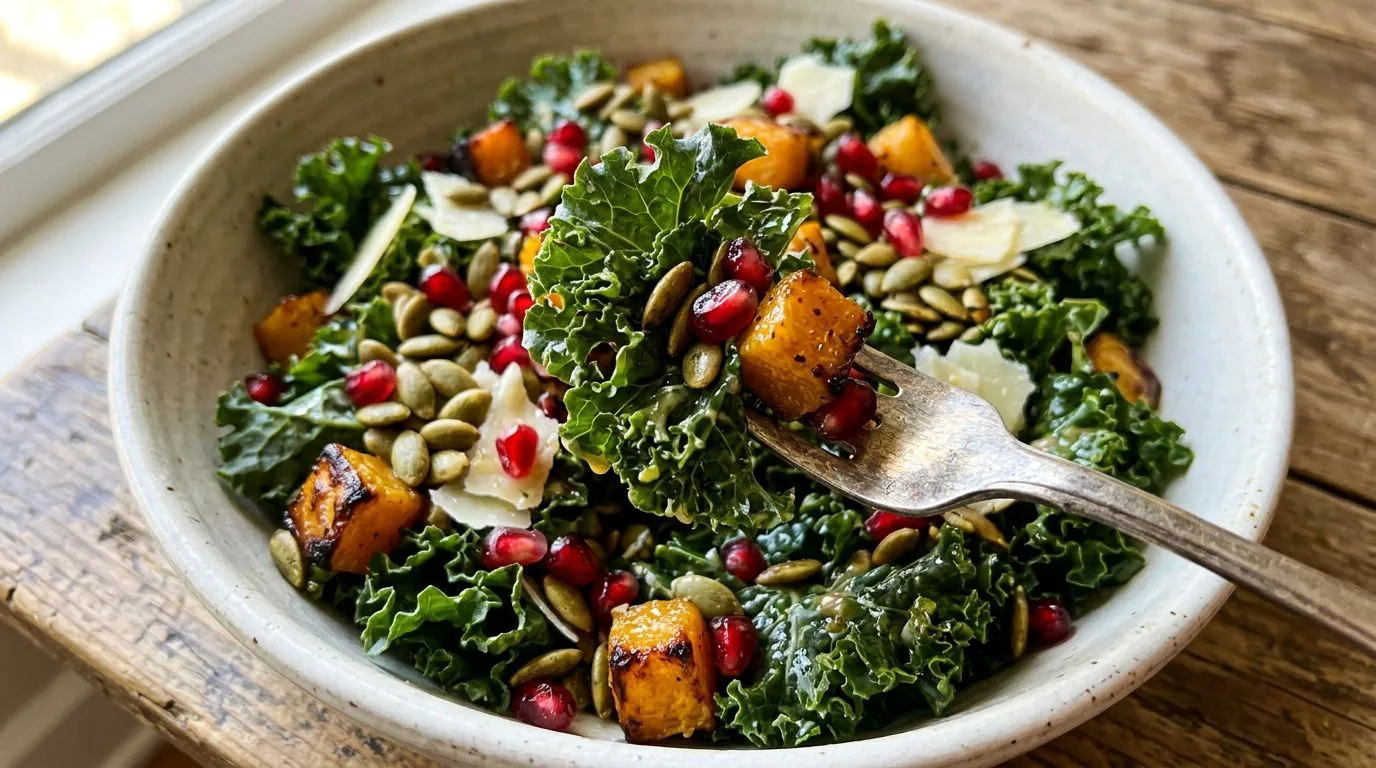
When fall arrives and I’m looking for a salad that feels both nourishing and celebratory, this kale salad with roasted butternut squash always comes to mind. The combination of hearty greens, sweet caramelized squash, jewel-like pomegranate seeds, and crunchy toasted pecans creates a dish that’s as beautiful as it is delicious. I love how the maple-Dijon vinaigrette ties everything together with just the right balance of sweetness and tang.
This salad has become one of my go-to recipes for Thanksgiving and holiday gatherings, but it’s simple enough to make any weeknight special. The roasted butternut squash adds a comforting warmth, while the pomegranate seeds provide bursts of freshness that keep every bite interesting. I find that massaging the kale makes it tender and much more enjoyable to eat, transforming what can sometimes be a tough green into something silky and delicious.
Whether you’re planning a festive dinner or simply want to enjoy the flavors of the season, this colorful salad delivers on both nutrition and taste. It’s substantial enough to serve as a light main course, yet it pairs beautifully alongside roasted meats and other holiday favorites.
Why You’ll Love This Kale Salad with Roasted Butternut Squash
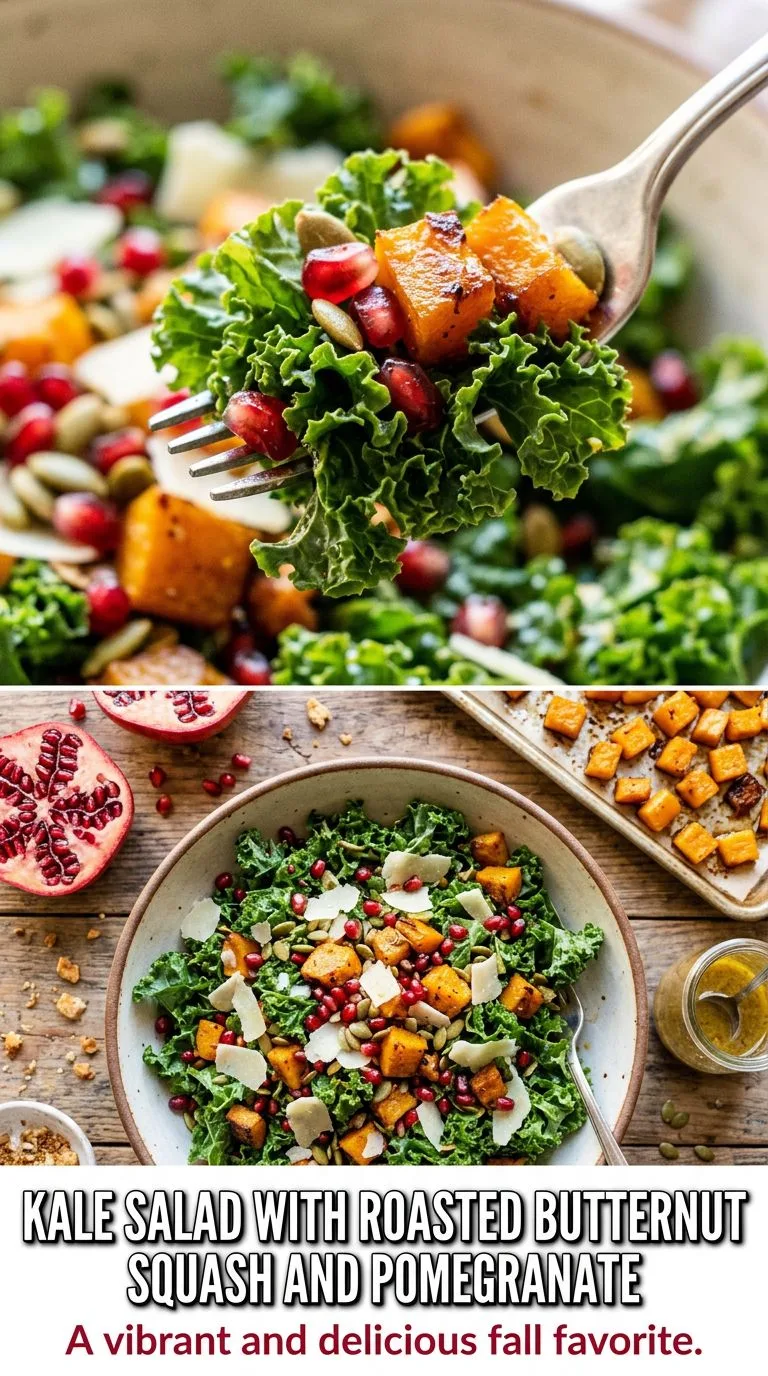
This recipe checks all the boxes for what I look for in a great salad. First, it’s absolutely gorgeous on the table—the deep green kale, golden squash cubes, ruby-red pomegranate seeds, and creamy white feta create a stunning presentation that immediately catches everyone’s eye. I love serving dishes that look as good as they taste, and this one never disappoints.
The flavor and texture combination is what really makes this salad special. You get the earthy, slightly bitter notes from the kale, the sweet caramelized edges of the roasted butternut squash, the tart pop of pomegranate, the buttery crunch of pecans, and the salty creaminess of feta cheese. Every forkful offers something different, which keeps the eating experience exciting from start to finish.
I also appreciate how well this salad holds up. Unlike delicate lettuce-based salads that wilt within minutes of dressing, massaged kale stays sturdy for hours. This makes it perfect for potlucks, buffets, or make-ahead meal prep. The squash can be roasted in advance, and you can prep most components ahead of time, making assembly quick and easy when you’re ready to serve.
From a nutritional standpoint, this salad is a powerhouse. Kale provides vitamins A, C, and K, along with antioxidants and fiber. Butternut squash adds beta-carotene and complex carbohydrates, while pomegranate seeds contribute additional antioxidants. The pecans offer healthy fats and protein, and the olive oil in the dressing helps your body absorb the fat-soluble vitamins. It’s a dish you can feel genuinely good about eating.
Ingredients and Substitutions
Let me walk you through what you’ll need for this beautiful salad and some alternatives that work well if you need to make substitutions.
Kale: I recommend using curly kale or lacinato kale (also called dinosaur kale or Tuscan kale). Both varieties work beautifully when massaged. If you can’t find kale or prefer a milder green, baby spinach or arugula can work, though you won’t need to massage them. The texture will be different, but the flavor combination still works.
Butternut Squash: A medium butternut squash yields about 3-4 cups of cubed squash once peeled and seeded. If butternut squash isn’t available, you can substitute with other winter squashes like delicata, acorn, or kabocha. Sweet potatoes also work well and offer a similar sweetness and texture when roasted. For convenience, pre-cut butternut squash from the grocery store saves significant prep time.
Pomegranate Seeds: Fresh pomegranate seeds (also called arils) provide the best flavor and texture. If pomegranates aren’t in season, dried cranberries or fresh apple chunks make good substitutes, though they’ll change the flavor profile slightly. I find that pomegranate seeds add a unique tartness that’s hard to replicate, but the salad is still delicious with alternatives.
Pecans: Toasted pecans add a buttery richness, but walnuts, almonds, or pumpkin seeds (pepitas) all work well. I like to toast nuts in a dry skillet over medium heat for 3-5 minutes until fragrant, which intensifies their flavor significantly.
Feta Cheese: Crumbled feta adds a salty, tangy element that balances the sweet components. Goat cheese is an excellent substitute with a similar tang, or you can use shaved Parmesan for a different but equally delicious result. For a dairy-free version, simply omit the cheese or use a plant-based alternative.
Dressing Ingredients: The maple-Dijon vinaigrette is simple but flavorful. The olive oil provides richness, maple syrup adds natural sweetness, apple cider vinegar brings acidity, and Dijon mustard acts as an emulsifier while adding depth. If you don’t have apple cider vinegar, white wine vinegar or lemon juice work well. Honey can replace maple syrup if that’s what you have on hand.
How to Make This Recipe
Making this kale salad with roasted butternut squash is straightforward, and I’ll guide you through each step to ensure perfect results.
Roasting the Butternut Squash: Start by preheating your oven to 400°F (200°C). Peel the butternut squash using a vegetable peeler or sharp knife, then cut it in half lengthwise and scoop out the seeds. Cut the flesh into ¾-inch cubes—I find this size roasts evenly and creates nice bite-sized pieces for the salad. Toss the cubes with about 1 tablespoon of olive oil, a generous pinch of salt, and some freshly ground black pepper.
Spread the seasoned squash in a single layer on a baking sheet. Don’t overcrowd the pan, as this can cause steaming rather than roasting. I recommend using parchment paper or a silicone baking mat for easy cleanup. Roast for 25-30 minutes, flipping the pieces halfway through, until the squash is tender when pierced with a fork and has golden, slightly caramelized edges. Let it cool slightly before adding to the salad.
Preparing the Kale: While the squash roasts, prepare your kale. Wash the leaves thoroughly and pat them dry. Remove the tough center stems by holding the stem end and stripping the leaves away with your other hand. Chop the leaves into small, bite-sized pieces—I aim for pieces about 1-2 inches.
Here’s the key step that transforms the kale: place the chopped leaves in a large bowl and drizzle with a small amount of olive oil (about 1 teaspoon). Using your hands, massage the kale by scrunching and squeezing the leaves for 1-2 minutes. You’ll notice the leaves become darker, softer, and more tender. This process breaks down the tough cell walls and makes the kale much more pleasant to eat raw.
Making the Dressing: In a small bowl or jar, whisk together the remaining 2 tablespoons of olive oil, 2 tablespoons of maple syrup, 2 tablespoons of apple cider vinegar, 1 teaspoon of Dijon mustard, and salt and pepper to taste. I like to whisk vigorously or shake in a jar with a tight lid until the dressing is emulsified and slightly thickened. Taste and adjust the seasoning—you might want more maple syrup for sweetness or more vinegar for tang, depending on your preference.
Assembling the Salad: In your large bowl with the massaged kale, add the cooled roasted butternut squash, pomegranate seeds, toasted pecans, and crumbled feta cheese. Drizzle the dressing over everything and toss gently but thoroughly to coat all the ingredients. I recommend using your hands or two large spoons to toss, being careful not to mash the squash or break up the feta too much.
Expert Tips for Best Results
Over time, I’ve learned a few tricks that make this salad even better. First, don’t skip the step of massaging the kale. It truly transforms the texture and makes the salad much more enjoyable. If you’re short on time, you can let the chopped kale sit with a little salt and olive oil for 10-15 minutes, which will also help soften it.
When roasting the butternut squash, make sure your oven is fully preheated and the squash pieces are spread out with space between them. Overcrowding leads to steaming instead of caramelization, and you’ll miss out on those delicious golden edges that add so much flavor. If you have a lot of squash, use two baking sheets rather than cramming everything onto one.
I find that toasting the pecans makes a significant difference in flavor. Even if you buy pre-toasted nuts, a quick refresh in a dry skillet brings out their oils and intensifies their taste. Watch them carefully, though—nuts can go from perfectly toasted to burnt in seconds.
For the best flavor balance, taste your dressing before adding it to the salad. Different brands of vinegar and mustard vary in intensity, and your personal preference for sweetness versus acidity might differ from mine. Adjust the maple syrup, vinegar, or salt until it tastes just right to you.
If you’re making this salad ahead of time, keep the components separate until just before serving. Store the massaged kale, roasted squash, pomegranate seeds, pecans, and feta in separate containers, and keep the dressing in a jar. Assemble and dress the salad no more than 30 minutes before serving for the best texture and presentation.
Serving Suggestions
This kale salad with roasted butternut squash is incredibly versatile when it comes to serving. I love it as part of a Thanksgiving spread alongside maple roasted butternut squash and other seasonal sides. It provides a fresh, bright contrast to rich, heavy dishes like stuffing, mashed potatoes, and gravy.
For a complete meal, I recommend serving this salad with roasted chicken, grilled salmon, or pan-seared pork chops. The sweet and tangy flavors complement proteins beautifully. It also pairs wonderfully with soup—a bowl of butternut squash soup or tomato bisque alongside this salad makes for a satisfying autumn lunch.
If you’re hosting a brunch, this salad works surprisingly well. I like to add a poached or soft-boiled egg on top, which adds protein and makes it more substantial. The runny yolk mixes with the dressing to create an even richer coating for the kale.
For a larger gathering, consider serving this alongside other fall salads like an apple cranberry pecan salad to give guests variety. The different flavor profiles complement each other while maintaining the seasonal theme.
When plating, I like to serve this salad on a large, shallow platter rather than in a deep bowl. This showcases the beautiful colors and makes it easier for guests to serve themselves. A final sprinkle of pomegranate seeds and a few extra pecans on top makes for an attractive presentation.
Variations and Substitutions
One of the things I appreciate about this recipe is how adaptable it is to different tastes and dietary needs. Here are some variations I’ve enjoyed:
Protein Additions: To make this a complete main course, add grilled chicken breast, roasted chickpeas, or quinoa. I particularly love adding crispy chickpeas seasoned with cumin and paprika—they add protein, fiber, and a satisfying crunch that complements the other textures.
Cheese Variations: While feta is my go-to, I’ve made this with crumbled blue cheese for a more pungent flavor, fresh goat cheese for extra creaminess, or shaved aged cheddar for a sharper taste. Each cheese brings its own character to the salad.
Fruit Additions: Beyond pomegranate, I’ve added sliced fresh pears, diced apples, or dried cherries. Fresh fruit adds moisture and sweetness, while dried fruit provides concentrated flavor and chewiness. Just be mindful that adding more sweet elements might require adjusting the dressing to maintain balance.
Grain Additions: For a heartier salad, I sometimes add cooked farro, wild rice, or quinoa. These grains make the salad more filling and add interesting texture. Cook the grains according to package directions, let them cool, and toss them in with the other ingredients.
Different Greens: While kale is traditional, I’ve made successful versions with a mix of kale and arugula, or kale and baby spinach. The combination provides varied textures and flavors while still maintaining the hearty character of the dish.
Spice It Up: For those who enjoy a little heat, adding a pinch of red pepper flakes to the dressing or sprinkling some on top adds a nice kick that contrasts with the sweet elements.
Storage, Freezing, and Reheating
Proper storage is important for maintaining the quality of this salad, and I’ve learned the best methods through experience.
Refrigerator Storage: If you’ve already dressed the salad, store it in an airtight container in the refrigerator for up to 2 days. The kale holds up remarkably well compared to other greens, though the texture of the squash may soften slightly. The pomegranate seeds and pecans will also lose some of their crispness over time.
For better results, I recommend storing the components separately. Keep the massaged kale in one container, the roasted squash in another, and the dressing in a jar. The pomegranate seeds, pecans, and feta can be stored together or separately. This way, you can assemble fresh salads for up to 4 days after prep.
Freezing: I don’t recommend freezing the assembled salad, as the kale, pomegranate seeds, and feta don’t freeze well. However, you can freeze the roasted butternut squash for up to 3 months. Let it cool completely, spread it on a baking sheet to freeze individually, then transfer to a freezer bag. Thaw in the refrigerator overnight before using.
Make-Ahead Tips: This salad is excellent for make-ahead preparation. Roast the squash up to 3 days in advance and store it in the refrigerator. Massage the kale up to 1 day ahead. Toast the pecans and store them in an airtight container at room temperature for up to a week. Make the dressing up to 5 days in advance and store it in the refrigerator—just shake or whisk it before using, as it may separate.
If you’re bringing this to a potluck or holiday gathering, I recommend transporting the components separately and assembling on-site. This ensures maximum freshness and the best texture.
Frequently Asked Questions
Can I use pre-cut butternut squash?
Absolutely! Pre-cut butternut squash from the grocery store is a huge time-saver and works perfectly in this recipe. Just make sure the pieces are roughly the same size for even roasting. If they’re larger than ¾-inch cubes, consider cutting them down a bit.
How do I remove pomegranate seeds easily?
I find the water method works best. Cut the pomegranate in half, hold it cut-side down over a bowl of water, and tap the back firmly with a wooden spoon. The seeds will fall into the water while the white membrane floats. Strain out the membrane, drain the seeds, and pat them dry.
Can I make this salad vegan?
Yes! Simply omit the feta cheese or replace it with a plant-based cheese alternative. The salad is still delicious without cheese, as the other ingredients provide plenty of flavor and texture. You might want to add a pinch more salt to the dressing to compensate for the missing salty element from the feta.
Why does my kale taste bitter?
Kale can taste bitter if it’s not properly massaged or if you’re using very mature leaves. Make sure to massage the kale thoroughly for at least 1-2 minutes with a bit of oil and salt. This breaks down the bitter compounds and makes the kale much sweeter and more tender. Also, removing all the tough stems is important, as they contribute to bitterness.
Can I use a different type of vinegar?
Yes, you can substitute apple cider vinegar with white wine vinegar, red wine vinegar, or fresh lemon juice. Each will give a slightly different flavor profile, but all work well with the other ingredients. I’d avoid balsamic vinegar, as it’s quite sweet and might make the dressing too heavy.
How can I tell when the butternut squash is done roasting?
The squash is done when it’s tender enough to pierce easily with a fork and has golden, slightly caramelized edges. The roasting time can vary depending on how large you cut the pieces and how hot your oven runs, so start checking around 20 minutes and continue roasting until you see those golden edges.
Is this salad gluten-free?
Yes, this recipe is naturally gluten-free as long as you verify that your Dijon mustard doesn’t contain any gluten-containing additives (most brands are gluten-free, but it’s worth checking the label).
Can I serve this salad warm?
While I typically serve this salad at room temperature or slightly chilled, you can certainly serve it warm by adding the still-warm roasted squash to the other ingredients. The warmth will slightly wilt the kale and soften the feta, creating a different but equally delicious experience.
Kale Salad with Roasted Butternut Squash and Pomegranate
This vibrant fall salad combines tender massaged kale with sweet roasted butternut squash, jewel-like pomegranate seeds, crunchy toasted pecans, and creamy feta cheese. Tossed in a maple-Dijon vinaigrette, it’s a colorful and nutritious addition to any meal, especially perfect for Thanksgiving and holiday gatherings.
- Prep Time: 15 minutes
- Cook Time: 30 minutes
- Total Time: 45 minutes
- Servings: 6 servings
- Difficulty: Easy
- Cuisine: American
- Course: Side Dish
Ingredients
- 6 cups chopped kale, stems removed
- 1 medium butternut squash, peeled and cubed (about 3-4 cups)
- 1 cup pomegranate seeds
- ½ cup toasted pecans
- ⅓ cup crumbled feta cheese
- 3 tablespoons olive oil, divided
- 2 tablespoons maple syrup
- 2 tablespoons apple cider vinegar
- 1 teaspoon Dijon mustard
- Salt and pepper to taste
Instructions
- Preheat your oven to 400°F (200°C). Line a baking sheet with parchment paper or a silicone baking mat.
- Peel the butternut squash, cut it in half lengthwise, and scoop out the seeds. Cut the flesh into ¾-inch cubes.
- Toss the butternut squash cubes with 1 tablespoon of olive oil, salt, and pepper until evenly coated.
- Spread the seasoned squash in a single layer on the prepared baking sheet, making sure not to overcrowd the pan.
- Roast for 25-30 minutes, flipping the pieces halfway through, until the squash is tender and has golden, lightly caramelized edges. Remove from the oven and let cool slightly.
- While the squash roasts, wash the kale thoroughly and pat dry. Remove the tough center stems and chop the leaves into bite-sized pieces (about 1-2 inches).
- Place the chopped kale in a large bowl and drizzle with about 1 teaspoon of olive oil. Using your hands, massage the kale by scrunching and squeezing the leaves for 1-2 minutes until they become darker, softer, and more tender.
- In a small bowl or jar, whisk together the remaining 2 tablespoons of olive oil, maple syrup, apple cider vinegar, Dijon mustard, and salt and pepper to taste. Whisk vigorously or shake until the dressing is emulsified.
- Add the cooled roasted butternut squash, pomegranate seeds, toasted pecans, and crumbled feta cheese to the bowl with the massaged kale.
- Drizzle the dressing over the salad and toss gently but thoroughly to coat all ingredients evenly.
- Taste and adjust seasoning if needed. Serve immediately or within 30 minutes for best texture.
Recipe Notes
- For best results, make sure to massage the kale thoroughly—this step is crucial for tender, flavorful greens.
- Pre-cut butternut squash from the grocery store can save significant prep time.
- Toast pecans in a dry skillet over medium heat for 3-5 minutes until fragrant for maximum flavor.
- The salad components can be prepared separately up to 3 days in advance and assembled just before serving.
- If making ahead, keep the dressing separate and toss just before serving to maintain the best texture.
- For a vegan version, simply omit the feta cheese or use a plant-based alternative.
- Leftover dressed salad can be stored in an airtight container in the refrigerator for up to 2 days, though the texture is best when freshly assembled.
Nutrition Information (Per Serving, Estimated)
- Calories: 245
- Carbohydrates: 26g
- Protein: 5g
- Fat: 15g
- Saturated Fat: 3g
- Fiber: 5g
- Sugar: 10g
- Sodium: 185mg
Nutrition information is estimated based on standard ingredient measurements and may vary based on specific products used and portion sizes.
