
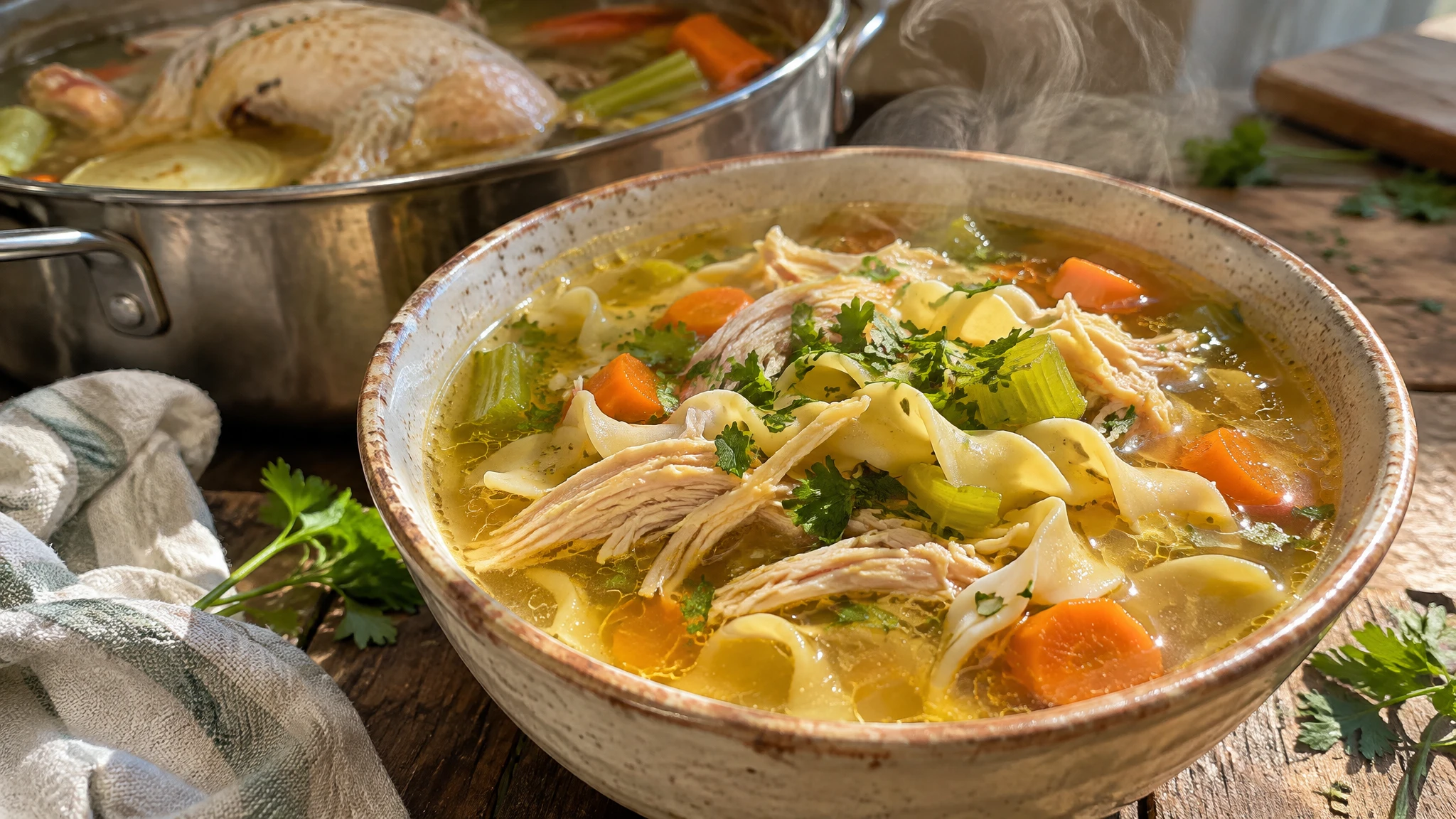
There’s something deeply comforting about a bowl of homemade chicken noodle soup, especially when you’ve made every element from scratch. I love the way a rich, golden broth fills the kitchen with warmth and the promise of a truly nourishing meal. This recipe takes you through the traditional process of building flavor from the ground up, starting with bone-in chicken thighs that create a broth so flavorful, you’ll never want to go back to store-bought stock.
Making chicken noodle soup from scratch might sound time-consuming, but I find the process incredibly rewarding. The gentle simmer of chicken and aromatics transforms plain water into liquid gold, and the tender vegetables and egg noodles soak up all that homemade goodness. Whether you’re nursing a cold, feeding your family on a chilly evening, or simply craving the ultimate comfort food, this classic chicken noodle soup delivers on every level.
What sets this recipe apart is the depth of flavor you achieve by simmering the chicken with aromatics for over an hour. The bay leaves, thyme, peppercorns, and garlic infuse the broth with layers of savory complexity that you simply can’t replicate with shortcuts. By the time you ladle this soup into bowls, you’ll have created something truly special—a bowl of pure comfort that tastes like home.
Why You’ll Love This Homemade Chicken Noodle Soup
This isn’t just another chicken noodle soup recipe—it’s the foundation for understanding how to build incredible flavor from simple ingredients. I love how the bone-in chicken thighs contribute both meat and richness to the broth, creating a soup that’s substantially more flavorful than versions made with boneless chicken or pre-made stock.
The beauty of this recipe lies in its simplicity and authenticity. You’re working with whole, recognizable ingredients and allowing time to do the heavy lifting. The gentle simmer extracts collagen from the bones, creating a broth with body and depth. The vegetables remain tender but not mushy, and the egg noodles provide that classic, comforting texture we all crave in chicken noodle soup.
I recommend this recipe for anyone who wants to experience what real chicken noodle soup should taste like. It’s perfect for meal prep, freezes beautifully, and makes your home smell absolutely incredible while it cooks. Plus, there’s something deeply satisfying about serving a bowl of soup you made entirely from scratch.
Ingredients and Substitutions
The ingredient list for this homemade chicken noodle soup is refreshingly straightforward, focusing on quality over quantity. Each component plays a specific role in building the final flavor profile.
Bone-in chicken thighs are my preferred choice for this soup because they stay moist during the long simmer and contribute more flavor to the broth than chicken breasts. The bones and skin add richness and body. If you prefer white meat, you can use bone-in chicken breasts, though I find the broth won’t be quite as rich. You could also use a whole chicken cut into pieces.
Egg noodles are the traditional choice for chicken noodle soup, and I love their tender texture and ability to absorb the broth. Wide egg noodles work beautifully here. If you need a gluten-free option, use gluten-free egg noodles or rice noodles, though cooking times may vary.
Carrots and celery form the classic vegetable base. I like to slice them into uniform pieces so they cook evenly. You can cut them into rounds, half-moons, or dice them—whatever you prefer. Fresh vegetables are best, but in a pinch, frozen will work.
Yellow onion and garlic provide the aromatic foundation for the broth. Quartering the onion (no need to chop it finely) makes it easy to remove after simmering. Smashing the garlic cloves releases their flavor without requiring you to mince them.
Bay leaves, peppercorns, and thyme are the classic herbs and spices that give chicken soup its recognizable flavor. Fresh thyme is ideal, but you can substitute 1 teaspoon of dried thyme if needed. Don’t skip the bay leaves—they add a subtle depth that’s essential to traditional chicken soup.
Fresh parsley adds a bright, fresh finish. I always add it at the end to preserve its color and flavor. If you don’t have fresh parsley, you can use dried, but reduce the amount to about 1 tablespoon.
How to Make Homemade Chicken Noodle Soup
The process of making this soup from scratch is straightforward, though it does require some patience. I find the hands-on time is actually quite minimal—most of the work happens while the soup simmers away on its own.
Building the Broth
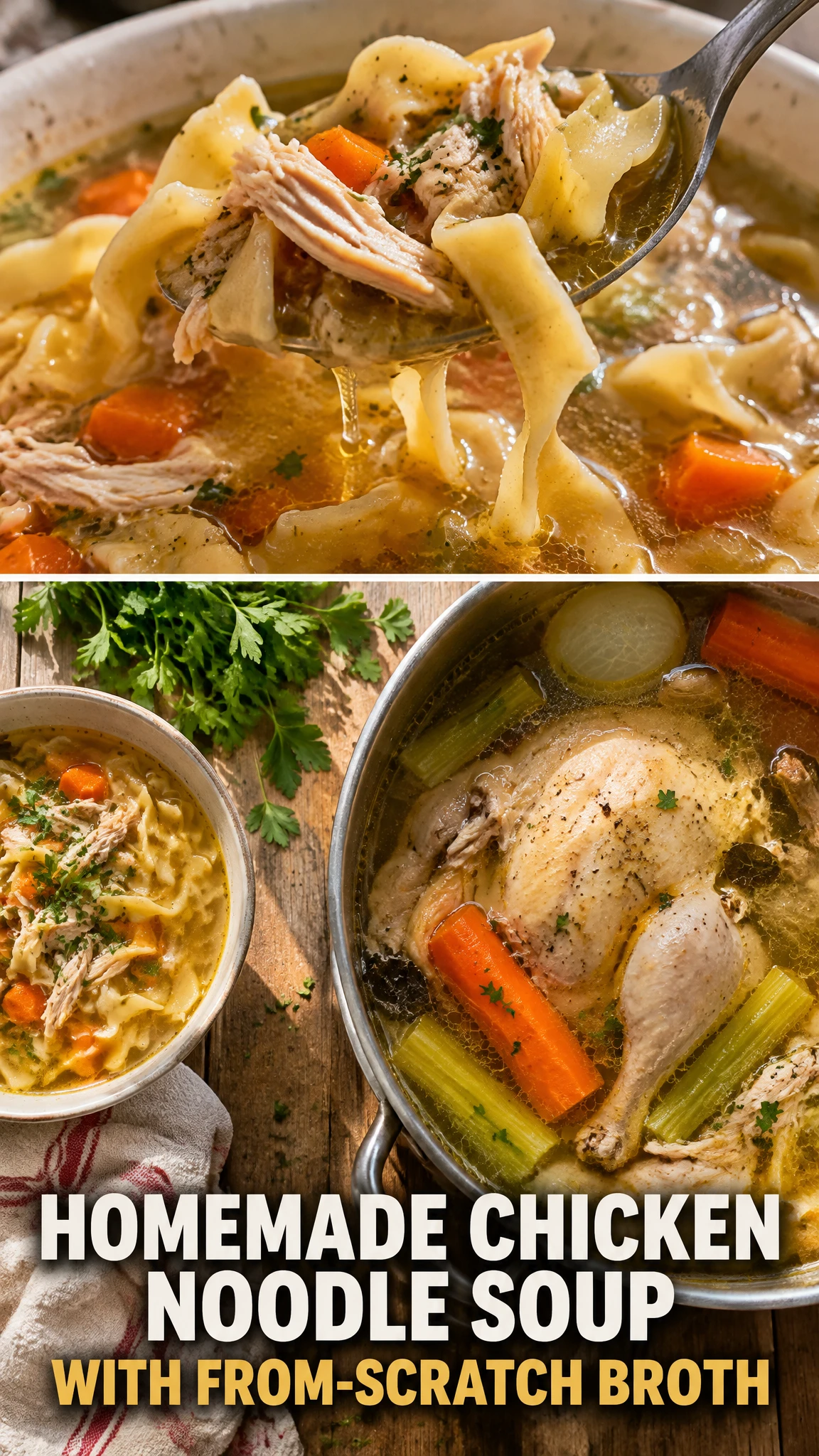
Start by placing your bone-in chicken thighs in a large stockpot along with the quartered onion, smashed garlic cloves, bay leaves, whole peppercorns, fresh thyme sprigs, and water. This is where the magic begins. Bring everything to a gentle boil over medium-high heat, then watch for foam to appear on the surface. I recommend skimming off this foam with a spoon—it’s just impurities from the chicken, and removing it results in a clearer, cleaner-tasting broth.
Once you’ve skimmed the foam, reduce the heat to low and let the pot simmer partially covered for 60 to 75 minutes. The partial cover allows some evaporation while preventing too much liquid from cooking off. You’ll know the broth is ready when the chicken is completely cooked through and the liquid has taken on a beautiful golden color.
Straining and Shredding
After the chicken has simmered, carefully remove the pieces from the pot and set them aside to cool slightly. This is an important step—you want the chicken cool enough to handle comfortably. While it’s cooling, strain the broth through a fine-mesh strainer into a clean pot, discarding all the cooked aromatics, bones, and any solids. You’ve extracted all their flavor, so they’ve done their job.
Once the chicken is cool enough to touch, remove the meat from the bones and shred it into bite-sized pieces. I like to discard the skin and bones at this point. The shredded chicken will go back into the soup later, so set it aside for now.
Cooking the Vegetables and Noodles
Add your sliced carrots and celery to the strained broth and bring it back to a simmer over medium heat. Cook the vegetables for 10 to 12 minutes until they’re nearly tender but still have a slight bite. I find this timing gives you vegetables that are cooked through but not mushy.
Next, add the dry egg noodles directly to the simmering broth. Cook them for 6 to 8 minutes, stirring occasionally, until they’re tender. The noodles will absorb some of the broth and release starch, which slightly thickens the soup and gives it that classic, comforting texture.
Finishing the Soup
Return the shredded chicken to the pot along with the salt. Let everything heat through for 2 to 3 minutes, ensuring the chicken is warmed completely. Taste the soup at this point and adjust the seasoning as needed—you might want a bit more salt depending on your preference.
Finally, stir in the fresh chopped parsley just before serving. This adds a pop of color and a fresh, herbaceous note that brightens the entire bowl. I love how that final addition of parsley transforms the soup from good to absolutely perfect.
Expert Tips for Best Results
After making countless batches of chicken noodle soup, I’ve learned a few tricks that consistently produce the best results.
Don’t rush the simmer. The full 60 to 75 minutes of gentle simmering is essential for developing deep flavor in the broth. I know it’s tempting to speed things up, but patience really pays off here. A gentle simmer (not a rolling boil) extracts flavor without making the broth cloudy.
Skim the foam. Taking a minute to skim off the foam that rises to the surface in the first few minutes of cooking makes a noticeable difference in the clarity and taste of your final broth. It’s a small step that elevates the entire soup.
Strain thoroughly. Use a fine-mesh strainer to remove all the aromatics and solids from the broth. You want a clean, clear broth for the final soup. If you want an even clearer broth, you can line your strainer with cheesecloth.
Cook noodles separately for meal prep. If you’re making this soup ahead or planning to freeze it, I recommend cooking the noodles separately and adding them to individual bowls when serving. Noodles continue to absorb liquid as the soup sits, which can make your soup too thick and your noodles too soft if stored together.
Taste and adjust. The salt measurement in the recipe is a starting point. Depending on how much your broth reduces and your personal preference, you may need more or less. Always taste before serving and adjust the seasoning accordingly.
Use a large pot. Make sure your stockpot is large enough to comfortably hold all the ingredients with room to spare. A crowded pot won’t simmer properly and can lead to uneven cooking.
Serving Suggestions
This homemade chicken noodle soup is a complete meal on its own, but I love pairing it with a few simple sides to round out the experience.
My favorite way to serve this soup is with crusty bread or warm dinner rolls for dipping. The bread soaks up the flavorful broth beautifully. A simple green salad with a light vinaigrette provides a fresh contrast to the rich, warming soup.
For a more substantial meal, I recommend serving the soup alongside grilled cheese sandwiches—it’s a classic combination that never disappoints. Oyster crackers or saltines are traditional toppings that add a pleasant crunch.
If you’re serving this to guests, consider setting out small bowls of fresh lemon wedges, extra chopped parsley, and freshly cracked black pepper so everyone can customize their bowl. A sprinkle of grated Parmesan cheese is also a delicious addition, though not traditional.
This soup works beautifully for casual family dinners, sick-day comfort, or even as an elegant first course for a dinner party when served in smaller portions. I find it’s equally appropriate for a cozy weeknight meal or a special occasion.
Variations and Substitutions
While this classic recipe is perfect as written, there are several ways you can adapt it to suit your preferences or dietary needs.
Vegetable additions: Feel free to add other vegetables like diced potatoes, parsnips, or peas. I sometimes add a cup of frozen peas in the last few minutes of cooking for extra color and sweetness. Chopped spinach or kale can be stirred in at the end for added nutrition.
Herb variations: While thyme and parsley are traditional, you can experiment with fresh dill, which gives the soup a slightly different but delicious flavor profile. A bay leaf and some fresh rosemary also work well.
Spice it up: If you like a bit of heat, add a pinch of red pepper flakes or a dash of hot sauce to your bowl. Some people enjoy a squeeze of fresh lemon juice, which brightens all the flavors.
Different proteins: Turkey works wonderfully in place of chicken, especially around the holidays when you have leftover turkey. You can also use a combination of chicken breasts and thighs for varied texture.
Noodle alternatives: Try different pasta shapes like small shells, orzo, or even broken spaghetti. Rice is another excellent option—use about 1/2 cup of uncooked rice in place of the noodles and adjust cooking time accordingly.
Low-sodium version: If you’re watching your sodium intake, simply reduce or omit the salt and use low-sodium ingredients. You can always add salt to individual bowls as needed.
Storage, Freezing, and Reheating
One of the best things about this homemade chicken noodle soup is how well it stores, making it perfect for meal prep or batch cooking.
Refrigerator storage: Allow the soup to cool completely before transferring it to airtight containers. It will keep in the refrigerator for up to 4 days. I find the flavors actually deepen and improve after a day in the fridge. Keep in mind that the noodles will continue to absorb liquid, so you may need to add a bit of water or broth when reheating.
Freezing: This soup freezes beautifully, though I recommend freezing it without the noodles for best results. The broth, chicken, and vegetables can be frozen together in freezer-safe containers or heavy-duty freezer bags for up to 3 months. Leave some headspace in containers to allow for expansion. When you’re ready to serve, thaw overnight in the refrigerator, reheat, and cook fresh noodles to add to the soup.
Reheating: Reheat refrigerated soup gently on the stovetop over medium-low heat, stirring occasionally until heated through. You can also reheat individual portions in the microwave. If the soup has thickened too much, add a splash of water or chicken broth to reach your desired consistency. For frozen soup, thaw completely before reheating for even warming.
Make-ahead tips: You can make the broth up to 2 days ahead and store it separately from the vegetables and chicken. When you’re ready to serve, simply reheat the broth, add the vegetables and noodles, and proceed with the recipe. This is especially helpful if you’re planning to serve this for a gathering or want to minimize day-of cooking.
Frequently Asked Questions
Can I use boneless chicken instead of bone-in?
Yes, though the broth won’t be quite as rich and flavorful. Bone-in chicken contributes collagen and depth that boneless cuts can’t match. If you do use boneless chicken thighs or breasts, reduce the simmering time to about 30-40 minutes to prevent the meat from becoming tough.
Why is my broth cloudy?
Cloudiness usually comes from boiling the broth too vigorously or not skimming the foam. A gentle simmer produces the clearest broth. If your broth is cloudy, it’s still perfectly safe and delicious to eat—it just won’t look as pristine.
Can I make this in a slow cooker?
Absolutely! Combine the chicken, aromatics, and water in your slow cooker and cook on low for 6-8 hours. Strain the broth, shred the chicken, then return everything to the slow cooker with the vegetables and noodles for the final 30 minutes on high. For more slow cooker inspiration, check out this crockpot chicken noodle soup recipe.
How can I make the broth even richer?
For an extra-rich broth, add a few chicken wings or an additional pound of chicken bones to the initial simmer. You can also roast the chicken pieces in the oven for 20 minutes before adding them to the pot—this adds a deeper, more complex flavor.
My noodles are mushy. What went wrong?
Noodles can become overcooked if the soup sits too long or if they’re cooked at too high a temperature. Cook them at a gentle simmer and serve the soup soon after adding the noodles. For leftovers, store noodles separately and add them when reheating.
Can I use chicken breasts instead of thighs?
Yes, bone-in chicken breasts work fine, though I find thighs stay more moist and contribute more flavor. If using breasts, check for doneness around the 50-minute mark to avoid overcooking.
Do I have to use fresh thyme?
Fresh thyme is ideal, but dried thyme works in a pinch. Use about 1 teaspoon of dried thyme in place of the fresh sprigs. Add it with the other aromatics at the beginning.
How do I know when the broth is done?
The broth is ready when it has a rich, golden color and tastes deeply flavorful. The chicken should be completely cooked through (internal temperature of 165°F), and the liquid should have reduced slightly from evaporation.
Homemade Chicken Noodle Soup with From-Scratch Broth
A traditional homemade chicken noodle soup prepared with rich from-scratch chicken broth, tender chicken, vegetables, and egg noodles. This comforting soup is made entirely from scratch, starting with bone-in chicken thighs that create a deeply flavorful golden broth.
- Prep Time: 15 minutes
- Cook Time: 90 minutes
- Total Time: 1 hour 45 minutes
- Servings: 6 servings
- Difficulty: Medium
- Cuisine: American
- Course: Dinner
Ingredients
- 2 lbs bone-in chicken thighs
- 2 cups dry egg noodles
- 3 medium carrots, sliced
- 3 celery stalks, sliced
- 1 large yellow onion, quartered
- 4 garlic cloves, smashed
- 10 cups water
- 2 bay leaves
- 1 tsp whole black peppercorns
- 4 fresh thyme sprigs
- 1/4 cup fresh parsley, chopped
- 1 1/2 tsp salt
Instructions
- Place the bone-in chicken thighs in a large stockpot with the quartered onion, smashed garlic, bay leaves, whole peppercorns, thyme sprigs, and water.
- Bring to a gentle boil over medium-high heat, skim off any foam that rises to the surface, and reduce heat to low. Simmer partially covered for 60–75 minutes until the chicken is fully cooked and the broth is flavorful and golden.
- Remove the chicken from the pot and allow it to cool slightly until safe to handle. Strain the broth through a fine-mesh strainer into a clean pot, discarding the cooked aromatics, bones, and solids.
- Remove the chicken meat from the bones, shred it into bite-sized pieces, and discard the skin and bones. Set the shredded chicken aside.
- Add the sliced carrots and celery to the strained broth. Bring to a simmer over medium heat and cook for 10–12 minutes until the vegetables are nearly tender.
- Add the dry egg noodles to the simmering broth and cook for 6–8 minutes, stirring occasionally, until the noodles are tender.
- Return the shredded chicken to the pot, add the salt, and heat through for 2–3 minutes, ensuring everything is warmed completely.
- Stir in the fresh chopped parsley, taste and adjust seasoning as needed, and serve hot.
Recipe Notes
- For clearer broth, be sure to skim the foam during the initial boil and maintain a gentle simmer rather than a rolling boil.
- If making ahead or freezing, cook and store the noodles separately to prevent them from becoming mushy. Add fresh-cooked noodles when reheating.
- The soup can be made up to 2 days ahead. Store the broth, chicken, and vegetables together in the refrigerator and add fresh noodles when ready to serve.
- Feel free to add other vegetables like peas, potatoes, or spinach according to your preference.
- Taste the soup before serving and adjust salt as needed—the amount may vary depending on how much the broth reduces during cooking.
Estimated Nutrition (Per Serving)
- Calories: 285
- Carbohydrates: 22g
- Protein: 26g
- Fat: 10g
- Saturated Fat: 2.5g
- Fiber: 2g
- Sugar: 3g
- Sodium: 680mg
Nutrition information is estimated and may vary based on specific ingredients used.
