
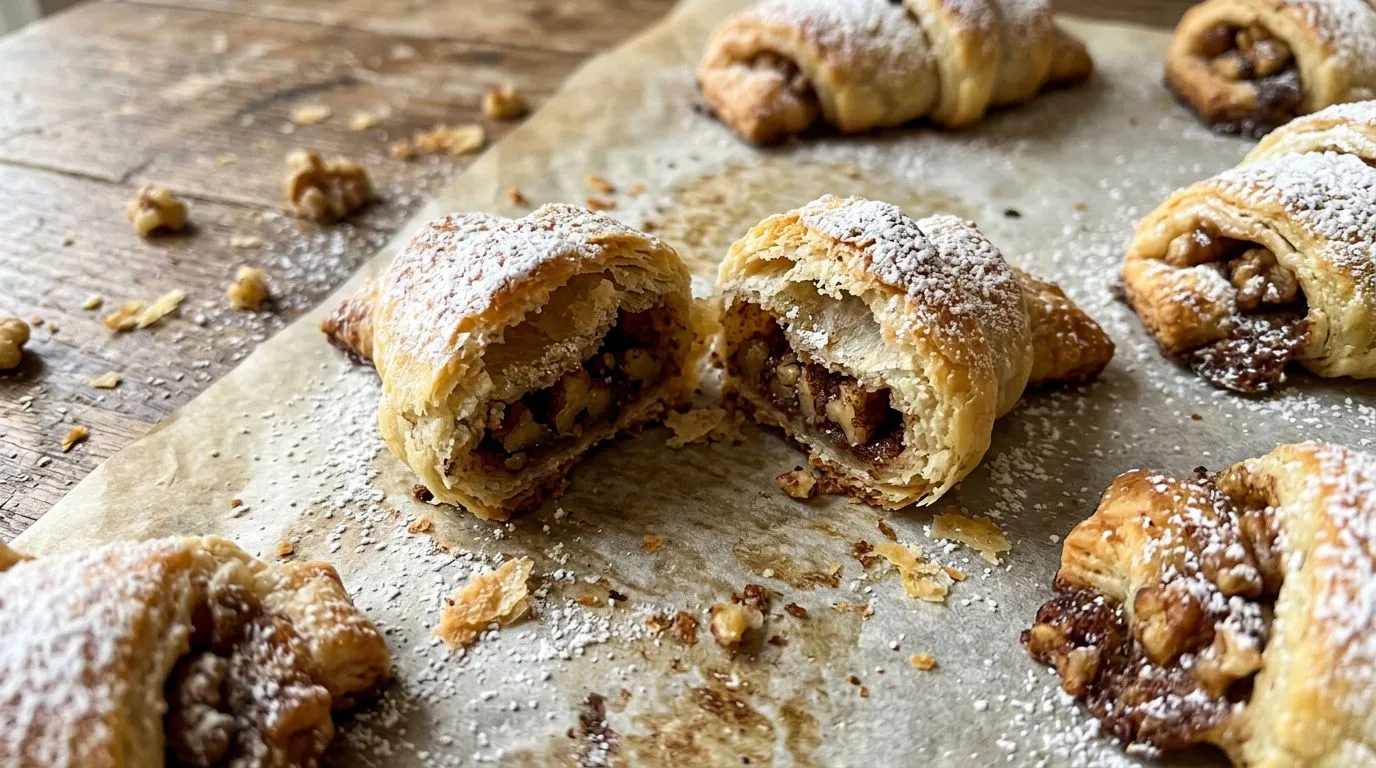
There’s something truly magical about baking Hanukkah Rugelach Cookies during the Festival of Lights. These tender, flaky pastries are a beloved Jewish tradition that combines a rich cream cheese dough with sweet fillings like cinnamon, walnuts, and fruit preserves. I love how these crescent-shaped cookies fill the kitchen with the warm aroma of cinnamon and butter, creating an inviting atmosphere perfect for holiday gatherings.
Rugelach (pronounced “roo-guh-lakh”) has been a cherished treat in Jewish households for generations, and for good reason. The buttery, cream cheese-enriched dough creates layers of tender pastry that practically melt in your mouth, while the sweet filling provides just the right amount of flavor and texture. Whether you’re celebrating Hanukkah or simply want to enjoy a delicious homemade cookie, this traditional recipe delivers bakery-quality results right from your own kitchen.
What I find most appealing about rugelach is its versatility. While I’m sharing a classic cinnamon walnut and preserve filling today, you can easily customize these cookies to suit your preferences. The dough itself is surprisingly simple to work with once chilled, and the rolling and shaping process becomes almost meditative as you create each delicate crescent.
Why You’ll Love This Hanukkah Rugelach Cookies Recipe
I recommend this recipe to anyone looking for an authentic Jewish holiday dessert that’s both impressive and achievable. The cream cheese dough creates an incredibly tender texture that sets rugelach apart from ordinary cookies. Unlike many pastries that require advanced techniques, these cookies are surprisingly forgiving once you understand the basic process.
The combination of cream cheese and butter in the dough creates a rich, flaky texture that’s similar to a croissant but much easier to make at home. I love how the dough holds its shape beautifully during baking, creating those distinctive crescent spirals that look as beautiful as they taste. The contrast between the tender pastry and the sweet, slightly crunchy filling makes every bite interesting.
Another reason I appreciate this recipe is its make-ahead friendly nature. The dough actually benefits from chilling, which means you can prepare it a day or two in advance and bake fresh cookies when you need them. This makes rugelach perfect for holiday entertaining when you want to serve something special without last-minute stress.
These cookies also freeze exceptionally well, both as unbaked dough and as finished cookies. I find this particularly helpful during the busy holiday season when having homemade treats ready to go can be a real lifesaver.
Ingredients and Substitutions
The beauty of traditional rugelach lies in its simple but high-quality ingredients. The dough requires just six basic components: all-purpose flour, cream cheese, unsalted butter, granulated sugar, vanilla extract, and salt. I recommend using full-fat cream cheese and real butter rather than substitutes, as these provide the rich flavor and tender texture that make rugelach so special.
For the cream cheese, make sure it’s fully softened to room temperature before mixing. This ensures it blends smoothly with the butter and creates a uniform dough. If you’re in a hurry, I like to cut the cream cheese into small cubes and let it sit at room temperature for about 30 minutes.
The filling combines brown sugar, ground cinnamon, and finely chopped walnuts with your choice of raspberry or apricot preserves. I find that seedless preserves work best, as they spread more evenly and create a smoother filling. If you prefer, you can substitute pecans for walnuts, or use a combination of both for added complexity.
For those with nut allergies, you can replace the walnuts with mini chocolate chips or simply increase the amount of preserves slightly. The cookies will still be delicious, though they’ll have a different texture. Some bakers also enjoy adding a thin layer of cinnamon sugar without nuts for a simpler but equally tasty variation.
The egg wash and coarse sugar topping are essential for achieving that beautiful golden-brown finish and slight crunch on the outside. I recommend using turbinado or sanding sugar for the best visual appeal, though regular granulated sugar works in a pinch.
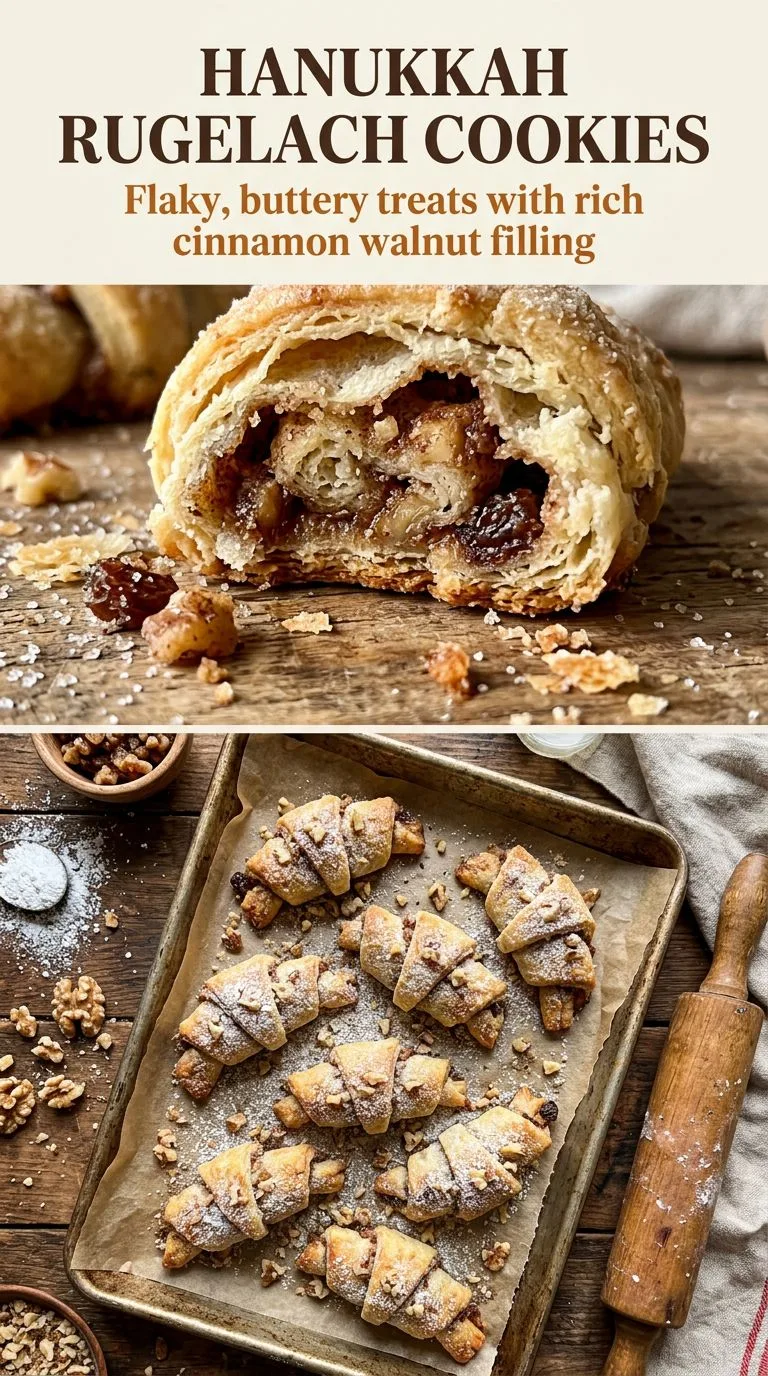
How to Make Hanukkah Rugelach Cookies
Making rugelach is a straightforward process that becomes easier with practice. I like to break it down into three main stages: preparing the dough, assembling the cookies, and baking them to golden perfection.
Preparing the Dough
Start by beating the softened cream cheese and butter together in a large mixing bowl until the mixture is smooth and creamy with no lumps remaining. This usually takes about 2-3 minutes with an electric mixer on medium speed. Add the granulated sugar, vanilla extract, and salt, mixing until everything is well combined and fluffy.
Gradually add the flour, mixing on low speed just until a soft dough forms. I recommend not overmixing at this stage, as that can make the dough tough. The dough should come together and pull away from the sides of the bowl but still feel slightly soft and pliable.
Divide the dough into four equal portions and flatten each into a disc about 1 inch thick. Wrap each disc tightly in plastic wrap and refrigerate for at least 2 hours, or preferably overnight. This chilling time is crucial—it allows the dough to firm up so it’s easier to roll out and helps develop the flaky texture.
Rolling and Filling
When you’re ready to assemble the cookies, preheat your oven to 350°F and line two baking sheets with parchment paper. In a small bowl, combine the brown sugar, cinnamon, and chopped walnuts to create your filling mixture.
Working with one chilled dough disc at a time (keep the others refrigerated), roll it out on a lightly floured surface into a 10-inch circle. I find it helpful to use a light touch and work quickly so the dough doesn’t warm up too much. If it becomes too soft, simply return it to the refrigerator for 10-15 minutes.
Spread a thin, even layer of preserves over the entire circle, leaving about a half-inch border around the edge. Sprinkle about a quarter of the cinnamon walnut mixture evenly over the preserves. Using a pizza cutter or sharp knife, cut the circle into 12 equal wedges, like slicing a pizza.
Shaping and Baking
Starting from the wide outer edge of each wedge, roll it toward the pointed center to form a crescent shape. I like to roll them fairly tightly but not so tight that the filling squeezes out. Place each rugelach seam-side down on the prepared baking sheet, spacing them about 2 inches apart.
Brush each cookie lightly with beaten egg and sprinkle with coarse sugar. This creates that beautiful golden finish and adds a pleasant crunch. Bake for 20-25 minutes until the rugelach are golden brown and the pastry looks flaky. The bottoms should be lightly browned as well.
Let the cookies cool on the baking sheet for about 5 minutes before transferring them to a wire rack. This brief cooling period helps them set up so they don’t fall apart when moved.
Expert Tips for Best Results
I’ve learned several tricks over the years that help ensure perfect rugelach every time. First, keep everything cold. If your kitchen is warm or the dough becomes too soft while working, don’t hesitate to pop it back in the refrigerator. Cold dough is much easier to handle and produces flakier results.
When rolling out the dough, use just enough flour to prevent sticking but not so much that you dry out the dough. I like to dust my rolling pin and work surface lightly, adding more only as needed. If the dough starts to stick, it’s usually a sign that it needs more chilling time rather than more flour.
For the filling, don’t overfill the cookies. A thin, even layer of preserves and filling mixture is better than a thick layer that will ooze out during baking. I recommend spreading the preserves with an offset spatula or the back of a spoon for the most even coverage.
If you notice any filling leaking out during baking, don’t worry—this is normal and actually creates delicious caramelized edges. Just be sure to use parchment paper to prevent sticking and make cleanup easier.
For the most uniform cookies, I suggest using a ruler or measuring tape to ensure your dough circle is actually 10 inches in diameter. This helps all the cookies bake evenly and look consistent.
Serving Suggestions
Hanukkah Rugelach Cookies are traditionally served during the eight nights of Hanukkah, often alongside other holiday treats like soft gingerbread cookies or snowball cookies. I love arranging them on a decorative platter as part of a dessert spread, where their beautiful crescent shape and golden color make them visually appealing.
These cookies pair wonderfully with coffee or tea, making them perfect for afternoon gatherings or after-dinner treats. My favorite way to serve them is slightly warm from the oven, when the pastry is at its most tender and the filling is still soft and fragrant.
For a festive presentation, I like to dust the cooled cookies with a light sprinkle of powdered sugar, which adds a snowy appearance perfect for winter celebrations. You can also arrange them in decorative tins or boxes as homemade gifts—they’re always well-received.
Rugelach also makes an excellent addition to brunch spreads, cookie exchanges, or any gathering where you want to offer something a bit more special than standard cookies. Their elegant appearance and rich flavor make them feel celebratory without being overly sweet.
Variations and Substitutions
While the classic cinnamon walnut and preserve filling is traditional, rugelach is wonderfully adaptable to different flavor combinations. I enjoy experimenting with chocolate fillings by spreading a thin layer of Nutella or chocolate hazelnut spread instead of preserves, then sprinkling with mini chocolate chips.
For a more decadent version, you can use a combination of finely chopped dark chocolate and toasted almonds. Some bakers also add a touch of orange zest to the filling for a bright, citrusy note that complements the richness of the dough.
If you prefer a simpler approach, cinnamon sugar alone makes a delicious filling. Just mix together brown sugar and cinnamon, brush the dough lightly with melted butter, and sprinkle generously before rolling. This creates a cookie reminiscent of cinnamon rolls but with that distinctive rugelach texture.
For the preserves, feel free to experiment with different flavors. Strawberry, cherry, or even fig preserves all work beautifully. I find that slightly tart preserves balance the richness of the dough particularly well.
You can also make savory rugelach by omitting the sugar from the dough and filling them with combinations like caramelized onions and Gruyère, or pesto and sun-dried tomatoes. These make excellent appetizers for holiday parties.
Storage, Freezing, and Reheating
Properly stored rugelach stays fresh and delicious for several days. I recommend keeping them in an airtight container at room temperature for up to 5 days. Layer them between sheets of parchment paper to prevent sticking, especially if your kitchen is warm.
For longer storage, rugelach freezes exceptionally well. You can freeze the baked cookies in an airtight container or freezer bag for up to 3 months. I like to freeze them in single layers on a baking sheet first, then transfer to a container once frozen solid. This prevents them from sticking together.
To refresh frozen rugelach, let them thaw at room temperature for about an hour, then warm them in a 300°F oven for 5-7 minutes. This restores their flaky texture and makes them taste freshly baked.
You can also freeze the unbaked, shaped rugelach before baking. Arrange them on a parchment-lined baking sheet and freeze until solid, then transfer to a freezer bag. When you’re ready to bake, there’s no need to thaw—just add a few extra minutes to the baking time.
The dough itself freezes beautifully for up to 3 months. Wrap the discs tightly in plastic wrap and then in aluminum foil before freezing. Thaw overnight in the refrigerator before rolling and shaping.
Frequently Asked Questions
Can I make rugelach dough without a mixer?
Yes, you can make the dough by hand. Just make sure your cream cheese and butter are very soft, then use a wooden spoon or spatula to beat them together until smooth. It will take a bit more effort, but the results will be just as good.
Why is my dough too sticky to roll out?
If your dough is too sticky, it likely needs more chilling time. The dough should be cold and firm before rolling. If your kitchen is particularly warm, you may need to chill it for longer than 2 hours, or even work in a cooler room.
Can I use low-fat cream cheese?
I don’t recommend using low-fat or fat-free cream cheese, as it contains more moisture and less fat, which will affect the texture of the dough. Full-fat cream cheese is essential for achieving that tender, flaky pastry.
How do I prevent the filling from leaking out?
Use a thin layer of filling and don’t overfill the cookies. Also, make sure to roll them snugly but not too tightly. Some leakage is normal and creates delicious caramelized edges, but excessive filling will cause more problems.
Can I make these ahead of time?
Absolutely! Rugelach is perfect for making ahead. You can prepare the dough up to 2 days in advance, or freeze it for up to 3 months. You can also bake the cookies and store them in an airtight container for several days, or freeze the baked cookies for up to 3 months.
What’s the best way to cut the dough into wedges?
I find a pizza cutter works best for cutting clean, even wedges. You can also use a sharp knife or bench scraper. For the most uniform pieces, cut the circle in half, then in quarters, then cut each quarter into three wedges.
Can I use salted butter instead of unsalted?
You can, but I recommend reducing or omitting the added salt in the recipe. Unsalted butter gives you better control over the final flavor and is generally preferred for baking.
Why are my rugelach tough instead of flaky?
Tough rugelach usually results from overmixing the dough or using too much flour when rolling out. Mix the dough just until it comes together, and use flour sparingly when rolling.
Hanukkah Rugelach Cookies
Tender, flaky cream cheese pastries rolled with sweet cinnamon sugar, walnuts, and fruit preserves. These traditional Jewish cookies are perfect for Hanukkah celebrations and holiday gatherings.
- Prep Time: 30 minutes
- Chilling Time: 2 hours
- Cook Time: 25 minutes
- Total Time: 2 hours 55 minutes
- Yield: 48 cookies
- Difficulty: Medium
- Cuisine: Jewish
- Course: Dessert
Ingredients
For the Dough:
- 2 cups all-purpose flour
- 8 oz cream cheese, softened
- 1 cup unsalted butter, softened
- ¼ cup granulated sugar
- 1 tsp vanilla extract
- ¼ tsp salt
For the Filling:
- ½ cup brown sugar
- 1 tbsp ground cinnamon
- ¾ cup finely chopped walnuts
- ½ cup raspberry or apricot preserves
For Topping:
- 1 egg, beaten (for egg wash)
- 2 tbsp coarse sugar
Instructions
- In a large mixing bowl, beat softened cream cheese and butter together until smooth and creamy, about 2-3 minutes.
- Add granulated sugar, vanilla extract, and salt, mixing until well combined and fluffy.
- Gradually add flour and mix on low speed just until a soft dough forms. Do not overmix.
- Divide the dough into four equal portions and flatten each into a disc about 1 inch thick. Wrap tightly in plastic wrap and refrigerate for at least 2 hours or overnight.
- When ready to bake, preheat the oven to 350°F (175°C) and line two baking sheets with parchment paper.
- In a small bowl, combine brown sugar, ground cinnamon, and finely chopped walnuts. Set aside.
- Working with one chilled dough disc at a time (keep others refrigerated), roll it into a 10-inch circle on a lightly floured surface.
- Spread a thin, even layer of raspberry or apricot preserves over the dough circle, leaving a small border around the edge.
- Sprinkle about one-quarter of the cinnamon walnut mixture evenly over the preserves.
- Using a pizza cutter or sharp knife, cut the circle into 12 equal wedges.
- Starting from the wide outer edge, roll each wedge toward the pointed center to form a crescent shape.
- Arrange the rugelach seam-side down on the prepared baking sheets, spacing them about 2 inches apart. Repeat with remaining dough discs.
- Brush each cookie lightly with beaten egg and sprinkle with coarse sugar.
- Bake for 20-25 minutes until golden brown and flaky.
- Cool on the baking sheets for 5 minutes, then transfer to a wire rack to cool completely before serving.
Recipe Notes
- Make sure cream cheese and butter are fully softened to room temperature for easiest mixing.
- Don’t skip the chilling time—cold dough is essential for easy rolling and flaky texture.
- Work quickly when rolling out dough. If it becomes too soft, return it to the refrigerator for 10-15 minutes.
- Use seedless preserves for the smoothest filling.
- Some filling leakage during baking is normal and creates delicious caramelized edges.
- For best results, use parchment paper to prevent sticking.
- Store in an airtight container at room temperature for up to 5 days.
- Freeze baked cookies for up to 3 months, or freeze unbaked shaped cookies and bake from frozen.
Nutrition Information (Per Cookie, Estimated)
- Calories: 110
- Carbohydrates: 11g
- Protein: 2g
- Fat: 7g
- Saturated Fat: 4g
- Fiber: 0.5g
- Sugar: 5g
- Sodium: 45mg
Nutrition information is estimated and will vary based on exact ingredients and portion sizes.
