
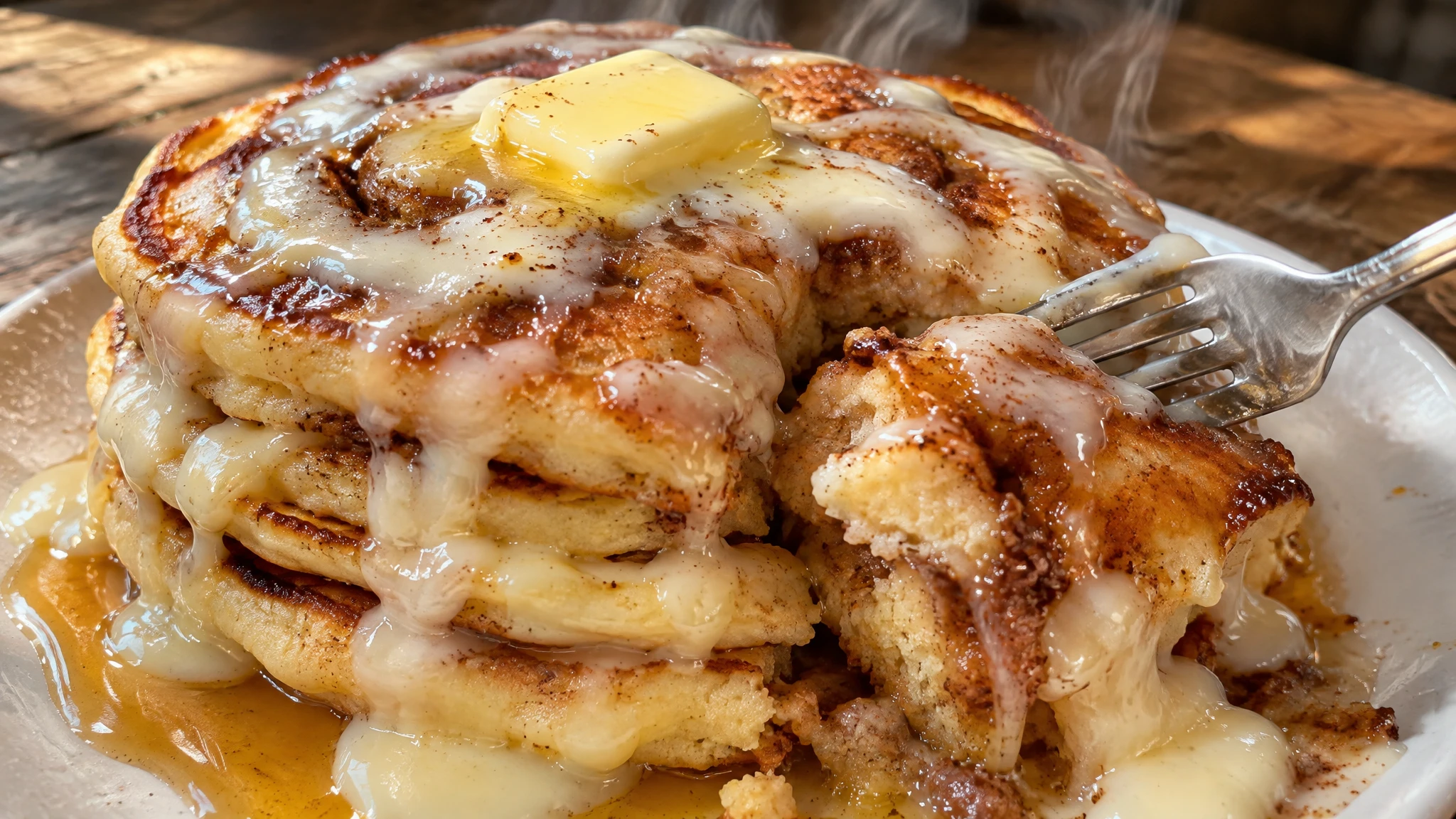
There’s something absolutely magical about combining two beloved breakfast classics into one irresistible dish. These cinnamon roll pancakes bring together the fluffy, golden perfection of traditional pancakes with the sweet, swirled cinnamon goodness of cinnamon rolls—all topped with a luscious cream cheese glaze that takes them completely over the top. I love making these for weekend brunch when I want something special that still comes together in about the same time as regular pancakes.
What makes these pancakes truly special is the buttery cinnamon swirl that gets piped directly onto the cooking pancakes, creating beautiful ribbons of cinnamon sugar throughout each bite. The cream cheese glaze adds that signature cinnamon roll finish, transforming simple pancakes into an indulgent breakfast treat that tastes like it came from a bakery. Whether you’re celebrating a special occasion or just want to make an ordinary Saturday morning feel extraordinary, these cinnamon roll pancakes deliver impressive results without requiring any advanced baking skills.
Why You’ll Love This Recipe
These cinnamon roll pancakes offer the best of both worlds without the time commitment of making traditional cinnamon rolls from scratch. While homemade cinnamon rolls require yeast, rising time, and careful rolling, these pancakes deliver similar flavors in a fraction of the time. I find that they’re perfect for those mornings when you’re craving something decadent but don’t want to spend hours in the kitchen.
The recipe is surprisingly approachable, even for beginner cooks. The pancake batter comes together quickly using standard pantry ingredients, and the cinnamon swirl is simply a mixture of butter, brown sugar, and cinnamon that you pipe onto the cooking pancakes. The cream cheese glaze requires no cooking—just a quick whisk and it’s ready to drizzle. I recommend making these when you want to impress guests at brunch or treat your family to something memorable on a lazy weekend morning.
Another reason I love this recipe is its flexibility. You can easily double the batch to feed a crowd, and the components can be prepared ahead of time to streamline your morning cooking. The cinnamon swirl mixture and cream cheese glaze both store well in the refrigerator, so you can make them the night before and simply reheat or bring to room temperature when you’re ready to cook.
Ingredients and Substitutions
The ingredient list for these cinnamon roll pancakes is straightforward and uses items you likely already have in your kitchen. The pancake base relies on all-purpose flour, buttermilk, eggs, and butter—classic ingredients that create tender, fluffy pancakes with a slight tang from the buttermilk. I find that buttermilk is essential for achieving the right texture and flavor, but if you don’t have it on hand, you can make a quick substitute by adding one tablespoon of white vinegar or lemon juice to regular milk and letting it sit for five minutes.
The cinnamon swirl component uses softened butter, brown sugar, and ground cinnamon. I recommend using light or dark brown sugar depending on your preference—dark brown sugar will give you a deeper molasses flavor, while light brown sugar keeps things a bit milder. Make sure your butter is truly softened to room temperature so it mixes smoothly with the sugar and cinnamon. If your butter is too cold, the mixture will be difficult to pipe; if it’s too warm, it may separate.
For the cream cheese glaze, you’ll need softened cream cheese, powdered sugar, milk, and vanilla extract. Full-fat cream cheese works best here, as reduced-fat versions can make the glaze too thin or give it an off texture. If you prefer a thicker glaze, use less milk; for a thinner, more pourable consistency, add an extra tablespoon. You can also substitute the milk with heavy cream for an even richer glaze, or use a dairy-free cream cheese and plant-based milk if you need a dairy-free option.
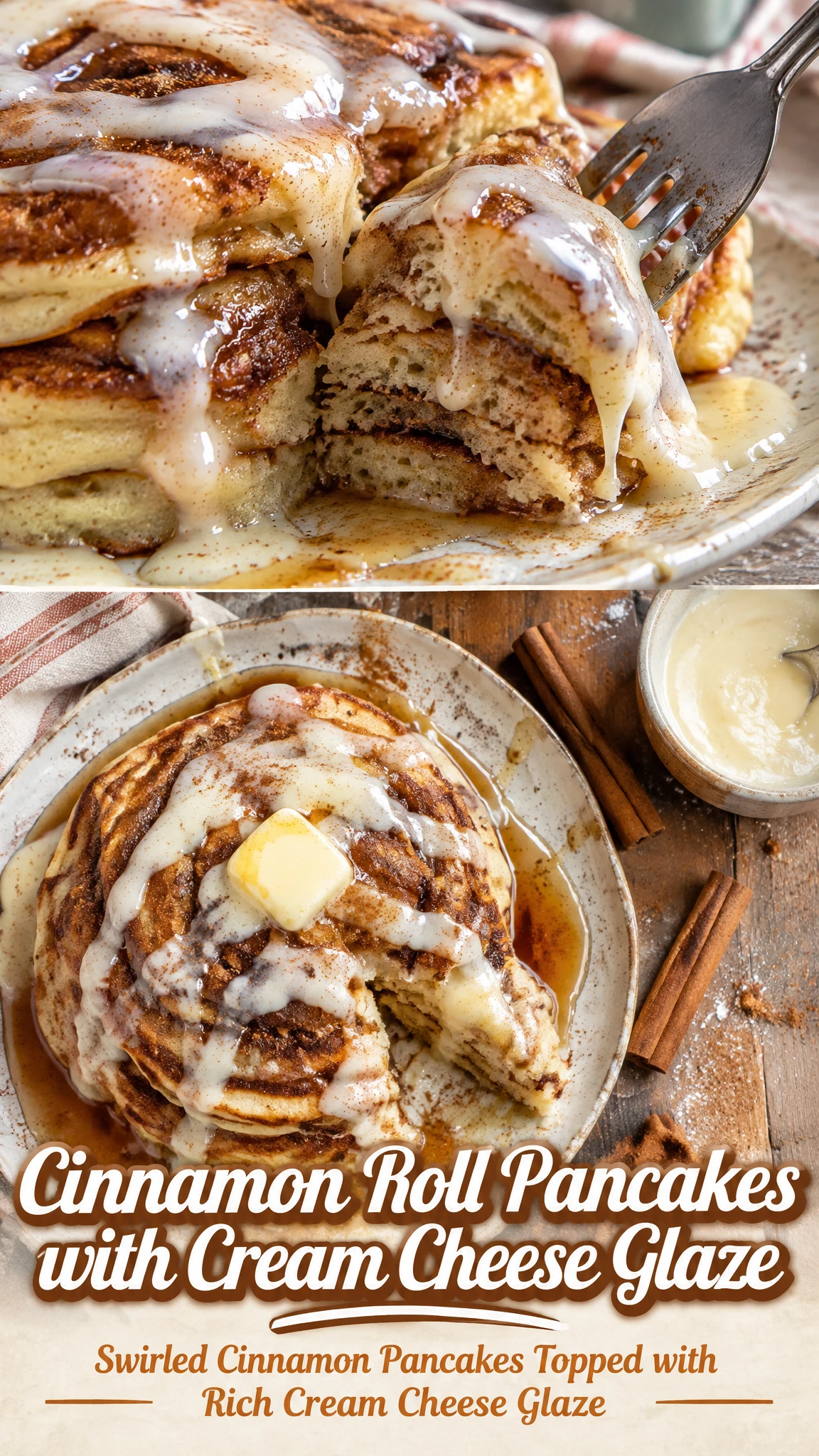
How to Make Cinnamon Roll Pancakes
The key to successful cinnamon roll pancakes is proper preparation and timing. Start by making your cinnamon swirl mixture first, as it needs to be transferred to a piping bag or zip-top bag before you begin cooking. Mix the softened butter, brown sugar, and ground cinnamon until completely smooth and well combined. I like to use a small zip-top bag with one corner snipped off—it gives you excellent control when piping the swirl onto the pancakes.
Next, prepare your cream cheese glaze by beating together the softened cream cheese, powdered sugar, milk, and vanilla extract until the mixture is smooth and pourable. Set this aside at room temperature while you make the pancakes. If you make it ahead and refrigerate it, just give it a good stir and let it come to room temperature before serving, as cold glaze won’t drizzle as nicely over the warm pancakes.
For the pancake batter, whisk together your dry ingredients in one bowl and your wet ingredients in another, then gently combine them until just mixed. I recommend not overmixing the batter—a few lumps are perfectly fine and will result in fluffier pancakes. Overmixing develops the gluten in the flour, which can make your pancakes tough and dense instead of light and tender.
When cooking the pancakes, use medium-low heat rather than high heat. This is important because the cinnamon swirl contains sugar that can burn easily. Pour your batter onto a lightly greased skillet, then immediately pipe a spiral or swirl of the cinnamon mixture onto the uncooked surface. I find that starting from the center and spiraling outward works well, but you can also create any pattern you like—just leave a small border around the edges to prevent the sugar from burning on the pan.
Watch for bubbles to form on the surface of the pancake and for the edges to look set before flipping. This usually takes about 2-3 minutes. Flip carefully, as the cinnamon swirl can make the pancakes a bit more delicate than regular pancakes. Cook for another 1-2 minutes on the second side until golden brown and cooked through. Between batches, wipe out any caramelized sugar from the pan to prevent burning.
Expert Tips for Best Results
Temperature control is crucial when making these cinnamon roll pancakes. I recommend starting with medium-low heat and adjusting as needed. If your heat is too high, the cinnamon sugar will burn before the pancake cooks through, leaving you with bitter spots and an undercooked center. If you notice the sugar starting to darken too quickly, reduce your heat immediately.
Make sure your cinnamon swirl mixture is the right consistency for piping. It should be soft enough to squeeze through the bag easily but thick enough to hold its shape on the pancake. If it’s too stiff, microwave it for just a few seconds to soften slightly. If it’s too runny, refrigerate it briefly to firm up. I find that room temperature butter mixed thoroughly with the sugar and cinnamon creates the perfect texture.
Don’t skip the step of wiping your pan between batches. The caramelized sugar from the cinnamon swirl can build up and burn, affecting the flavor and appearance of subsequent pancakes. A quick wipe with a paper towel between batches keeps your cooking surface clean and prevents bitter, burnt flavors from developing.
For the fluffiest pancakes, avoid pressing down on them with your spatula while they cook. Let them rise naturally, and flip them only once. Multiple flips or pressing down will deflate the air bubbles that make pancakes light and fluffy. I also recommend letting your batter rest for about five minutes after mixing, which allows the baking powder to activate and creates even fluffier results.
Serving Suggestions
These cinnamon roll pancakes are rich and sweet, so I like to serve them with some complementary sides that add variety to the plate. Fresh berries—especially strawberries, blueberries, or raspberries—provide a tart contrast to the sweet glaze and add a pop of color. Sliced bananas also pair beautifully with the cinnamon flavors and add natural sweetness.
For a complete brunch spread, consider serving these pancakes alongside crispy bacon or breakfast sausage. The savory, salty elements balance the sweetness of the pancakes perfectly. Scrambled eggs or a simple fruit salad also make excellent accompaniments. I find that offering both sweet and savory options gives everyone at the table something they’ll enjoy.
While the cream cheese glaze is absolutely delicious, you can also offer additional toppings on the side. Warm maple syrup, whipped cream, chopped pecans or walnuts, or even a dusting of extra cinnamon all make wonderful additions. My favorite way to serve these is stacked high on a warm plate, drizzled generously with the cream cheese glaze, and garnished with a light sprinkle of cinnamon on top.
These pancakes are best enjoyed immediately while they’re still warm and the glaze is soft and creamy. If you’re serving a crowd, you can keep finished pancakes warm in a 200°F oven on a baking sheet while you finish cooking the rest of the batch. Just don’t add the glaze until you’re ready to serve, as it can become too thin if heated.
Variations and Substitutions
One of the great things about this recipe is how easily it adapts to different preferences and dietary needs. For a whole grain version, you can substitute half of the all-purpose flour with whole wheat flour or white whole wheat flour. This adds fiber and nutrients while still maintaining good texture. I recommend not replacing all the flour, as 100% whole wheat can make the pancakes dense.
If you want to add extra flavor to the pancakes themselves, try mixing in a teaspoon of cinnamon or a pinch of nutmeg to the dry ingredients. You can also add a tablespoon of maple syrup to the batter for additional sweetness and depth of flavor. For a fun twist, fold in some mini chocolate chips or chopped pecans just before cooking.
The cream cheese glaze can be customized in several ways. Add a pinch of cinnamon for extra spice, or use maple syrup instead of vanilla extract for a different flavor profile. For a lighter glaze, you can substitute half of the cream cheese with Greek yogurt, though this will give you a tangier result. If you prefer a traditional cinnamon roll icing, you can skip the cream cheese entirely and make a simple powdered sugar glaze with milk and vanilla.
For those following a gluten-free diet, you can use a 1:1 gluten-free flour blend in place of the all-purpose flour. Make sure your blend contains xanthan gum or add 1/2 teaspoon to help bind the ingredients. The texture may be slightly different, but the pancakes will still be delicious. If you’re looking for similar cinnamon-forward breakfast treats, you might also enjoy apple pie cinnamon rolls or pumpkin cinnamon rolls with cream cheese frosting.
Storage, Freezing, and Reheating
Leftover cinnamon roll pancakes can be stored in an airtight container in the refrigerator for up to three days. I recommend storing the pancakes and the cream cheese glaze separately, as the glaze can make the pancakes soggy if stored together. Layer the cooled pancakes between sheets of parchment paper to prevent them from sticking together.
To reheat refrigerated pancakes, you have several options. The microwave is quickest—simply heat individual pancakes for 20-30 seconds until warmed through. For better texture, I prefer reheating them in a toaster or toaster oven, which crisps up the edges slightly while warming the center. You can also reheat them in a 350°F oven for about 5-7 minutes. Warm the cream cheese glaze slightly in the microwave if it has thickened in the refrigerator, stirring well before drizzling.
These pancakes freeze beautifully, making them perfect for meal prep. Let the pancakes cool completely, then arrange them in a single layer on a baking sheet and freeze until solid. Once frozen, transfer them to a freezer-safe bag or container, separating layers with parchment paper. They’ll keep for up to two months in the freezer. Freeze the cream cheese glaze separately in a small airtight container.
To reheat frozen pancakes, you can microwave them directly from frozen for about 45-60 seconds, or thaw them overnight in the refrigerator and reheat using any of the methods mentioned above. I find that toasting frozen pancakes works particularly well—just pop them in the toaster on a medium setting and toast until heated through and slightly crispy on the outside. Thaw the frozen glaze in the refrigerator overnight, then stir well and warm slightly if needed before serving.
Frequently Asked Questions
Can I make the batter ahead of time?
While you can prepare the dry and wet ingredients separately the night before and store them in the refrigerator, I recommend mixing them together just before cooking for the best results. Pancake batter that sits too long can lose its leavening power, resulting in flatter, denser pancakes. However, the cinnamon swirl mixture and cream cheese glaze can both be made 1-2 days ahead and stored in the refrigerator.
Why are my pancakes turning out flat?
Flat pancakes usually result from overmixing the batter, which deflates the air bubbles and overdevelops the gluten. Make sure you’re mixing just until the ingredients are combined—lumps are okay. Also check that your baking powder and baking soda are fresh, as expired leavening agents won’t provide proper lift. Finally, avoid pressing down on the pancakes while they cook, as this deflates them.
Can I use regular milk instead of buttermilk?
Buttermilk provides both tanginess and helps activate the baking soda, creating fluffier pancakes. If you don’t have buttermilk, you can make a substitute by adding 1 tablespoon of white vinegar or lemon juice to 1 1/4 cups of regular milk. Stir and let it sit for 5 minutes before using. This creates the acidity needed for the recipe to work properly.
How do I prevent the cinnamon swirl from burning?
The key is using medium-low heat rather than high heat. The sugar in the cinnamon swirl caramelizes quickly and can burn if your pan is too hot. If you notice the sugar darkening too quickly, reduce your heat immediately. Also, make sure to wipe out any caramelized sugar residue from the pan between batches to prevent burning.
Can I make these without a piping bag?
Absolutely! A small zip-top bag with one corner snipped off works just as well as a piping bag. You can also use a squeeze bottle if you have one. In a pinch, you can even carefully drizzle the cinnamon mixture from a spoon, though you’ll have less control over the pattern. The important thing is getting the swirl onto the pancake while it’s still uncooked on top.
How thick should the cream cheese glaze be?
The glaze should be pourable but not too thin—think of the consistency of honey or slightly thickened syrup. It should drizzle smoothly over the pancakes but not run off completely. If your glaze is too thick, add milk one teaspoon at a time until you reach the desired consistency. If it’s too thin, add more powdered sugar gradually until it thickens.
Cinnamon Roll Pancakes with Cream Cheese Glaze
Fluffy cinnamon roll pancakes swirled with buttery cinnamon sugar and drizzled with sweet cream cheese glaze for a delicious breakfast treat that combines the best of pancakes and cinnamon rolls.
- Prep Time: 15 minutes
- Cook Time: 20 minutes
- Total Time: 35 minutes
- Servings: 4 (about 8-10 pancakes)
- Difficulty: Easy
- Cuisine: American
- Course: Breakfast
Ingredients
For the Pancakes:
- 1 1/2 cups all-purpose flour
- 2 tbsp granulated sugar
- 2 tsp baking powder
- 1/2 tsp baking soda
- 1/2 tsp salt
- 1 1/4 cups buttermilk
- 1 large egg
- 3 tbsp unsalted butter, melted
- 1 tsp vanilla extract
- 1 tbsp butter for greasing skillet
For the Cinnamon Swirl:
- 1/4 cup unsalted butter, softened
- 1/3 cup packed brown sugar
- 1 tbsp ground cinnamon
For the Cream Cheese Glaze:
- 4 oz cream cheese, softened
- 1/2 cup powdered sugar
- 2 tbsp milk
- 1/2 tsp vanilla extract
Instructions
- Prepare the cinnamon swirl by mixing softened butter, brown sugar, and cinnamon in a small bowl until smooth and well combined. Transfer the mixture to a piping bag or small zip-top bag and snip off one corner. Set aside.
- Prepare the cream cheese glaze by beating softened cream cheese, powdered sugar, milk, and vanilla extract in a medium bowl until smooth and pourable. Set aside at room temperature.
- In a large bowl, whisk together flour, granulated sugar, baking powder, baking soda, and salt until well combined.
- In a separate bowl, whisk together buttermilk, egg, melted butter, and vanilla extract until smooth.
- Pour the wet ingredients into the dry ingredients and gently stir with a wooden spoon or spatula until just combined. Do not overmix; a few lumps are fine and expected. Let the batter rest for 5 minutes.
- Heat a nonstick skillet or griddle over medium-low heat and lightly grease with butter.
- Pour approximately 1/4 cup of pancake batter onto the skillet for each pancake. Immediately pipe a thin cinnamon swirl onto the uncooked surface of each pancake in a spiral pattern, leaving a small border around the edges.
- Cook for 2-3 minutes until bubbles form on the surface and the edges look set. The bottom should be golden brown.
- Carefully flip the pancakes using a wide spatula and cook for another 1-2 minutes until the second side is golden brown and the pancake is cooked through. Reduce heat if the cinnamon sugar begins to burn.
- Transfer cooked pancakes to a plate and wipe any excess caramelized sugar from the pan with a paper towel before cooking the next batch.
- Repeat with remaining batter, greasing the pan as needed between batches.
- Stack the warm pancakes on serving plates, drizzle generously with cream cheese glaze, and serve immediately.
Recipe Notes
- Make sure the butter for the cinnamon swirl is softened to room temperature for easy mixing and piping. If it’s too cold, microwave for 5-10 seconds.
- Don’t skip wiping the pan between batches—caramelized sugar buildup can burn and affect the flavor of subsequent pancakes.
- For even cooking, maintain medium-low heat throughout. High heat will burn the cinnamon sugar before the pancakes cook through.
- The cream cheese glaze can be made 1-2 days ahead and stored in the refrigerator. Bring to room temperature and stir well before using.
- If the glaze is too thick, add milk one teaspoon at a time. If too thin, add more powdered sugar.
- Leftover pancakes can be refrigerated for up to 3 days or frozen for up to 2 months. Store glaze separately.
Estimated Nutrition Per Serving (2-3 pancakes with glaze)
- Calories: 485
- Carbohydrates: 62g
- Protein: 9g
- Fat: 22g
- Saturated Fat: 13g
- Fiber: 2g
- Sugar: 32g
- Sodium: 520mg
Nutrition information is estimated and may vary based on specific ingredients and portion sizes.
