
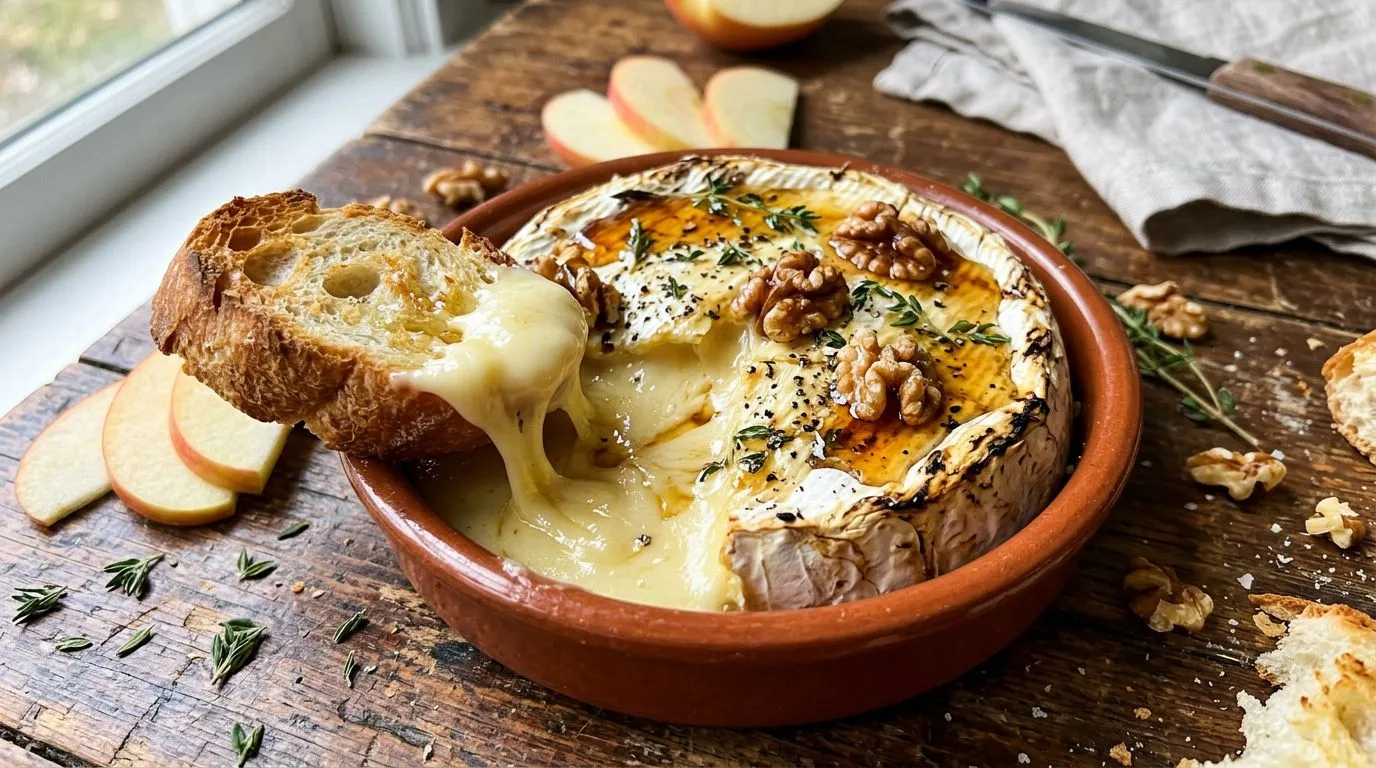
There’s something undeniably luxurious about serving warm, melted cheese as an appetizer, and Baked Camembert with Honey and Thyme takes this indulgence to the next level. I love how this elegant dish transforms a simple wheel of Camembert into a show-stopping centerpiece that’s perfect for holiday gatherings, dinner parties, or any occasion when you want to impress your guests without spending hours in the kitchen. The combination of creamy, molten cheese with sweet honey, aromatic thyme, and crunchy walnuts creates a flavor profile that’s both sophisticated and comforting.
What makes this recipe particularly special is how the honey caramelizes slightly in the oven, creating a beautiful golden glaze that mingles with the rich, earthy cheese. The fresh thyme and garlic add savory depth, while the walnuts provide a delightful textural contrast to the velvety Camembert. I find that this appetizer disappears within minutes of being served, with guests eagerly scooping up the warm cheese with crusty baguette slices. It’s one of those recipes that looks and tastes like you spent far more effort than you actually did—always a win in my book.
Whether you’re planning a festive holiday spread or simply want to elevate your next gathering, this Baked Camembert with Honey and Thyme is guaranteed to become a favorite. The recipe is remarkably simple, requiring just a few quality ingredients and about 15 minutes of your time, yet it delivers restaurant-quality results that will have everyone asking for the recipe.
Why You’ll Love This Baked Camembert Recipe
This Baked Camembert with Honey and Thyme checks all the boxes for the perfect appetizer. First and foremost, it’s incredibly easy to prepare—even if you’re not an experienced cook, you can pull this off beautifully. I love that it requires minimal hands-on time, which means you can focus on other dishes or spend time with your guests instead of being stuck in the kitchen.
The flavor combination is absolutely divine. The creamy, slightly funky Camembert pairs beautifully with the floral sweetness of honey, while the fresh thyme adds an herbaceous note that cuts through the richness. The garlic provides a subtle savory backbone, and the walnuts add both crunch and a nutty depth that ties everything together. I find that this balance of sweet, savory, and creamy elements makes it universally appealing, even to guests who might typically be hesitant about strong cheeses.
Another reason I recommend this recipe is its impressive presentation. When you bring a bubbling, golden wheel of cheese to the table, it creates an immediate wow factor. It’s interactive too—guests love gathering around to dip their bread into the molten cheese, making it a natural conversation starter. Plus, it’s incredibly versatile and works equally well as a holiday appetizer, a wine-pairing centerpiece, or even a light dinner when served with a fresh salad.
Finally, this recipe is budget-friendly considering how impressive it looks and tastes. A single wheel of Camembert serves 6-8 people as an appetizer, and the other ingredients are pantry staples or affordable additions. It’s the kind of recipe that delivers maximum impact with minimal investment.
Ingredients and Substitutions
The beauty of this recipe lies in its simplicity, using just a handful of quality ingredients that work together harmoniously. Let me walk you through what you’ll need and some helpful substitutions if you want to customize the dish to your preferences or work with what you have on hand.
The star of the show is, of course, the Camembert cheese wheel. I recommend using an 8-9 ounce wheel, which is the standard size you’ll find at most grocery stores. Look for a cheese that’s soft to the touch but not overly ripe—you want it to melt beautifully without becoming too runny. If you can’t find Camembert, Brie makes an excellent substitute and behaves very similarly when baked. Some specialty stores also carry flavored Camembert varieties that can add an interesting twist to the recipe.
Honey provides the essential sweetness that balances the rich cheese. I like to use a good-quality honey with a mild, floral flavor, but you can experiment with different varieties. Wildflower honey, clover honey, or even orange blossom honey all work beautifully. If you prefer a different sweetener, maple syrup can be substituted, though it will give the dish a slightly different flavor profile. For a more sophisticated touch, truffle honey is absolutely divine if you can find it.
Fresh thyme is my preferred herb for this recipe because its earthy, slightly minty flavor complements the cheese perfectly. If you don’t have fresh thyme, you can use fresh rosemary instead, though I’d recommend using slightly less as it has a stronger flavor. Dried thyme can work in a pinch—use about 1 teaspoon—but fresh herbs really do make a noticeable difference in both flavor and presentation.
The walnuts add a wonderful crunch and nutty richness. If you’re not a fan of walnuts or have an allergy, pecans, almonds, or hazelnuts all make excellent substitutes. I’ve also made this with pistachios for a pop of color, which looks particularly festive during the holidays. For a nut-free version, you can use toasted pumpkin seeds or sunflower seeds instead.
Extra virgin olive oil helps carry the flavors and prevents the cheese from drying out during baking. You can substitute with melted butter if you prefer a richer flavor. The garlic adds a subtle savory note—make sure to slice it thinly so it softens and mellows in the oven. If you’re a garlic lover, feel free to add an extra clove.
Finally, the sea salt and black pepper enhance all the other flavors. I prefer flaky sea salt for its texture and clean taste, but regular kosher salt works fine too. Freshly ground black pepper is always best for maximum flavor.
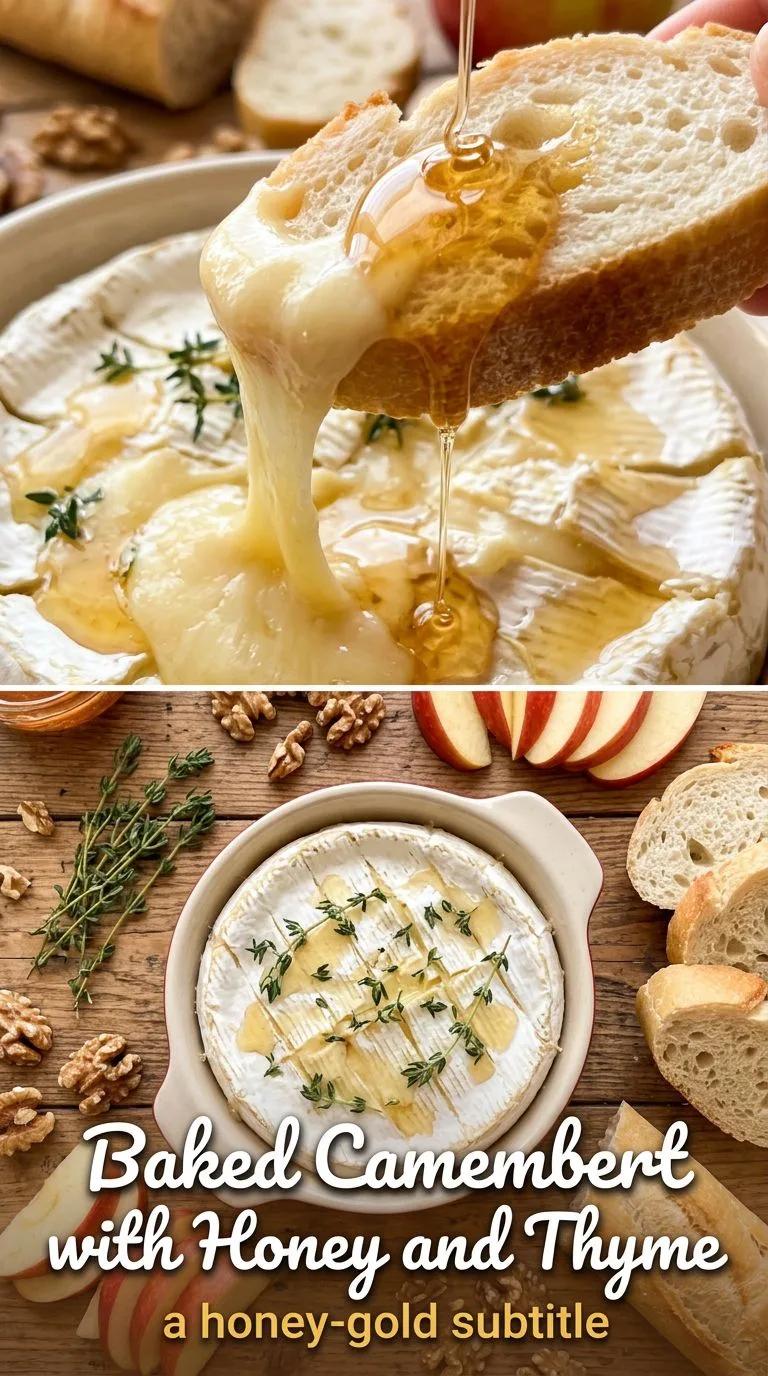
How to Make Baked Camembert with Honey and Thyme
Making this impressive appetizer is surprisingly straightforward, and I’ll walk you through each step to ensure perfect results every time. The key is to work gently with the cheese and not overbake it—you want it melted and gooey inside while still holding its shape.
Start by preheating your oven to 350°F (175°C). This moderate temperature is ideal for melting the cheese evenly without causing it to split or become oily. While the oven heats, remove your Camembert from the refrigerator and unwrap it. I recommend letting it sit at room temperature for about 10-15 minutes before baking, as this helps it melt more evenly.
Place the Camembert wheel in a small oven-safe baking dish. I like to use a dish that’s just slightly larger than the cheese wheel itself—this keeps everything contained and makes for a beautiful presentation. You can also use a small cast-iron skillet, which retains heat beautifully and can go straight from oven to table.
Next, score the top rind of the cheese in a crosshatch pattern using a sharp knife. Make shallow cuts about 1/4 inch deep, creating a diamond pattern across the surface. This step is important because it allows the honey, garlic, and herbs to penetrate into the cheese while also creating attractive visual appeal. Be careful not to cut all the way through to the bottom—you want the cheese to hold its shape during baking.
Now comes the fun part: tucking thin garlic slices and fresh thyme leaves into the scored surface. I like to gently press them into the cuts so they’re partially embedded in the cheese. This ensures they’ll infuse their flavors throughout as the cheese melts. Strip the leaves from 2-3 thyme sprigs for this step, reserving one sprig for garnish.
Drizzle the cheese with the olive oil and 2 tablespoons of honey, making sure to get some into the scored cuts. The oil and honey will pool around the cheese and create a delicious sauce for dipping. Sprinkle the chopped walnuts evenly over the top, then season with sea salt and freshly ground black pepper. I find that a light hand with the salt is best, as the cheese itself is already quite salty.
Transfer the baking dish to your preheated oven and bake for 12-15 minutes. The exact timing will depend on how soft your cheese was to begin with and how melted you like it. I recommend checking at the 12-minute mark—the cheese should be soft and jiggly when you gently shake the dish, and you might see it starting to ooze slightly at the edges. If it still feels firm in the center, give it another 2-3 minutes.
Remove the dish from the oven (be careful, as the dish and cheese will be very hot) and immediately drizzle with the remaining tablespoon of honey. Garnish with fresh rosemary and additional thyme sprigs for a beautiful finishing touch. The residual heat will warm the herbs and release their aromatic oils.
Serve immediately while the cheese is still warm and melted. I like to arrange toasted baguette slices around the cheese or serve them on a separate plate. The cheese will stay warm and dippable for about 15-20 minutes, though in my experience, it rarely lasts that long!
Expert Tips for Best Results
Over the years, I’ve learned a few tricks that make this recipe even better. First, don’t skip the scoring step. While it might be tempting to just bake the cheese as-is, scoring really does make a difference in how the flavors penetrate and how beautifully the cheese melts.
I recommend using a cheese that’s not overly ripe. If your Camembert is very soft and almost runny at room temperature, it may become too liquid when baked and could leak out of its rind. Look for cheese that’s soft but still holds its shape when you press it gently. If you’re buying cheese a few days in advance, store it in the refrigerator and let it come to room temperature just before baking.
Toast your walnuts before adding them to the cheese for even more flavor. I like to spread them on a baking sheet and toast them in the oven for 5-7 minutes at 350°F until fragrant. This brings out their natural oils and adds a deeper, richer flavor to the finished dish. Just make sure they’ve cooled slightly before chopping and adding them to the cheese.
Watch your baking time carefully. The difference between perfectly melted and overcooked Camembert is just a few minutes. I find that setting a timer for 12 minutes and then checking frequently is the best approach. You want the cheese to be soft and gooey but still contained within its rind. If you overbake it, the cheese can become oily and separate.
For the best presentation, I recommend baking the cheese in the dish you’ll serve it in. This eliminates the need to transfer hot, melted cheese and reduces the risk of it breaking apart. Small cast-iron skillets, ceramic baking dishes, or even the wooden box the cheese sometimes comes in (if it’s oven-safe) all work beautifully.
Finally, prepare your bread in advance. I like to slice a baguette into 1/2-inch thick rounds and toast them lightly in the oven or on a grill pan. This can be done while the cheese is baking. Toasted bread holds up better to the soft cheese and won’t become soggy as quickly as fresh bread.
Serving Suggestions
The classic way to serve Baked Camembert with Honey and Thyme is with toasted baguette slices, and this remains my favorite approach. I like to slice the baguette on a slight diagonal to create larger pieces, then toast them until they’re golden and crispy. The contrast between the crunchy bread and the creamy cheese is absolutely perfect.
Beyond baguette, there are many other delicious dipping options. Crackers work wonderfully—I particularly like water crackers or artisanal whole grain crackers that won’t overpower the cheese. Apple slices provide a fresh, sweet-tart contrast that cuts through the richness beautifully. Pear slices are equally delicious and feel especially appropriate for fall and winter gatherings. For a more substantial option, soft pretzel bites or breadsticks are always popular.
I love serving this as part of a larger appetizer spread. It pairs beautifully with other cheese-based appetizers like Baked Brie with Cranberries and Pecans or Baked Goat Cheese Bruschetta Dip. Add some cured meats, olives, fresh grapes, and fig jam, and you’ve got an impressive cheese board that requires minimal effort.
For wine pairing, I recommend a crisp white wine like Sauvignon Blanc or Pinot Grigio, which cuts through the richness of the cheese. If you prefer red wine, a light-bodied Pinot Noir works beautifully. Champagne or sparkling wine is also a lovely choice, especially for holiday celebrations. For non-alcoholic options, sparkling apple cider or a crisp white grape juice complement the flavors nicely.
This appetizer also works wonderfully as a light dinner when paired with a fresh green salad. I like to serve it with a simple arugula salad dressed with lemon vinaigrette—the peppery greens and bright citrus provide a perfect counterpoint to the rich cheese.
Variations and Substitutions
One of the things I love about this recipe is how easily it adapts to different flavor profiles and dietary needs. Here are some of my favorite variations that you might want to try.
For a savory version, omit the honey and instead top the cheese with caramelized onions, crispy bacon bits, and fresh rosemary. This creates a more savory, umami-rich appetizer that’s perfect for those who prefer less sweetness. You can also try topping it with sun-dried tomatoes and fresh basil for an Italian-inspired twist.
If you want to emphasize the nutty flavors, try using a combination of nuts. I’ve made this with a mixture of walnuts, pecans, and hazelnuts, which creates wonderful complexity. You can also toast the nuts with a little brown sugar and cayenne pepper before adding them to the cheese for a sweet-and-spicy kick.
For a festive holiday version, add dried cranberries along with the walnuts and use cranberry honey if you can find it. The tart cranberries provide beautiful color and a nice contrast to the rich cheese. Fresh pomegranate seeds also make a stunning garnish and add bright, juicy bursts of flavor.
To make this recipe more gourmet, try drizzling it with truffle honey instead of regular honey, or add a few drops of truffle oil along with the olive oil. The earthy truffle flavor pairs incredibly well with the Camembert. You can also top it with edible flowers for an elegant presentation.
For a spicy version, add a pinch of red pepper flakes or drizzle with hot honey. The heat provides an exciting contrast to the creamy cheese and sweet honey. I also love adding a few thin slices of jalapeño along with the garlic for those who enjoy more pronounced heat.
If you’re looking for a nut-free option, replace the walnuts with toasted pumpkin seeds or sunflower seeds. You can also use crispy fried shallots or caramelized onions for crunch. Another option is to top the cheese with everything bagel seasoning for a fun, modern twist.
Storage, Freezing, and Reheating
While this appetizer is best enjoyed fresh from the oven, I understand that sometimes you need to prepare components ahead or deal with leftovers. Here’s what I’ve learned about storing and reheating Baked Camembert.
Honestly, I don’t recommend making this dish too far in advance, as it’s really at its best when served immediately after baking. However, you can prepare all the components ahead of time. Score the cheese, prepare the garlic and herbs, chop the nuts, and toast the bread up to 4 hours in advance. Keep everything refrigerated (except the bread) until you’re ready to assemble and bake. This way, you can have the dish in the oven within minutes when your guests arrive.
If you do have leftovers, store the cooled cheese in an airtight container in the refrigerator for up to 2 days. I find that the texture changes once it’s been baked and cooled—it becomes firmer and less creamy. To reheat, place it in a 300°F oven for about 10 minutes until warmed through. It won’t be quite as perfect as the first time, but it’s still delicious. You can also enjoy leftover baked Camembert cold, spread on crackers or bread.
I don’t recommend freezing this dish. Camembert doesn’t freeze well—the texture becomes grainy and separated when thawed, and it won’t melt properly if you try to bake it after freezing. If you want to plan ahead, it’s better to keep an unbaked wheel of Camembert in your refrigerator (it keeps for several weeks) and bake it fresh when needed.
For the bread, store any leftover toasted baguette slices in an airtight container at room temperature for up to 2 days. If they’ve softened, you can re-crisp them in a 350°F oven for a few minutes before serving.
Frequently Asked Questions
Can I use Brie instead of Camembert?
Absolutely! Brie and Camembert are very similar cheeses and can be used interchangeably in this recipe. Brie tends to be slightly milder and creamier, while Camembert has a bit more earthy, mushroom-like flavor. Both melt beautifully and create a delicious appetizer. Just make sure to use a similar-sized wheel (8-9 ounces) for consistent baking times.
Do I need to remove the rind before baking?
No, you should definitely keep the rind on! The white, bloomy rind of Camembert is completely edible and helps the cheese hold its shape during baking. Without the rind, the cheese would simply melt into a puddle. The rind becomes softer and more pleasant to eat when baked, and many people enjoy eating it along with the melted cheese.
What if my cheese becomes too runny?
If your cheese becomes very runny, it’s likely been overbaked or was overly ripe to begin with. The cheese should be soft and gooey but still contained within its rind. If it does become too liquid, don’t worry—it’s still delicious! Just serve it more like a fondue, with plenty of bread for dipping. For next time, reduce the baking time by a few minutes and choose a cheese that’s less ripe.
Can I make this in the microwave?
While you technically can warm Camembert in the microwave, I don’t recommend it for this recipe. The oven allows the honey to caramelize slightly and the nuts to toast, creating much better flavor and texture. The microwave also heats unevenly and can cause the cheese to become rubbery. If you’re short on time, the oven method only takes 15 minutes total, which is worth it for the superior results.
How do I know when the cheese is done?
The cheese is done when it feels soft and jiggly when you gently shake the baking dish. You might see it starting to ooze slightly at the edges, and the top should look glossy from the melted honey and oil. If you insert a knife into the center, it should slide in easily with little resistance. The cheese should still hold its round shape—if it’s collapsing or spreading significantly, it’s been overbaked.
What’s the best way to serve this at a party?
I recommend baking the cheese right before your guests arrive or during the early part of your gathering. It stays warm and dippable for about 15-20 minutes, which gives everyone time to enjoy it while it’s at its best. Place the baking dish on a trivet or heat-safe surface on your appetizer table, surround it with toasted bread and other dippers, and provide small spreaders or knives for serving. If you’re hosting a longer event, you might want to prepare two wheels and bake the second one about 30 minutes after the first.
Baked Camembert with Honey and Thyme
An elegant and easy holiday appetizer featuring warm, melted Camembert cheese topped with golden honey, fresh thyme, crunchy walnuts, and aromatic garlic. Perfect for dipping crusty bread and impressing your guests with minimal effort.
- Prep Time: 5 minutes
- Cook Time: 15 minutes
- Total Time: 20 minutes
- Servings: 6-8 people
- Difficulty: Easy
- Cuisine: French
- Course: Appetizer
Ingredients
- 1 whole Camembert cheese wheel (8-9 oz)
- 3 tbsp honey
- 4 fresh thyme sprigs
- 2 tbsp chopped walnuts
- 1 tbsp extra virgin olive oil
- 1 garlic clove, thinly sliced
- ¼ tsp sea salt
- ¼ tsp freshly ground black pepper
- 1 baguette, sliced, for serving
- Fresh rosemary for garnish
Instructions
- Preheat the oven to 350°F (175°C) and place the Camembert wheel in a small oven-safe baking dish.
- Score the top rind lightly in a crosshatch pattern without cutting through the cheese.
- Tuck thin garlic slices and fresh thyme leaves into the scored surface.
- Drizzle the cheese with olive oil and 2 tablespoons of honey.
- Sprinkle chopped walnuts, sea salt, and freshly ground black pepper over the top.
- Bake for 12-15 minutes until the cheese is soft and melted inside but still holds its shape.
- Remove from the oven and drizzle with the remaining tablespoon of honey.
- Garnish with fresh rosemary and additional thyme if desired.
- Serve immediately with toasted baguette slices for dipping.
Recipe Notes
- Choose a Camembert that’s soft but not overly ripe for best results. The cheese should hold its shape when baked.
- Toast the walnuts beforehand for enhanced flavor and crunch.
- Watch the baking time carefully—the difference between perfectly melted and overcooked is just a few minutes.
- The cheese stays warm and dippable for about 15-20 minutes after baking.
- You can prepare components ahead: score the cheese, slice the garlic, and toast the bread up to 4 hours in advance.
- Brie can be substituted for Camembert with similar results.
- For a nut-free version, use toasted pumpkin seeds or sunflower seeds instead of walnuts.
Estimated Nutrition (Per Serving, based on 8 servings)
- Calories: 185 kcal
- Carbohydrates: 9g
- Protein: 7g
- Fat: 13g
- Saturated Fat: 6g
- Fiber: 0.5g
- Sugar: 7g
- Sodium: 285mg
Nutrition information is estimated and does not include the baguette for serving. Actual values may vary depending on specific ingredients used.
