
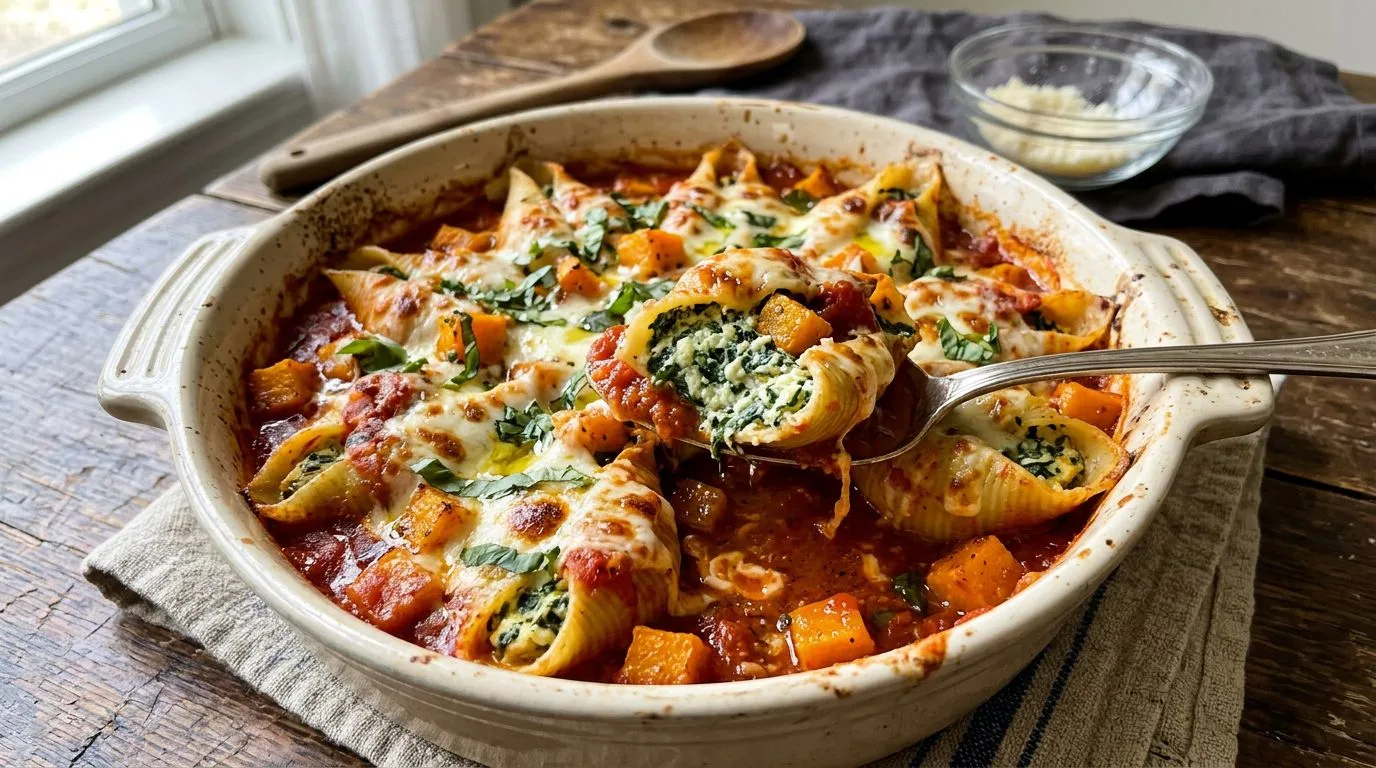
When fall arrives and I’m craving something cozy yet elegant, I turn to these Spinach Ricotta Stuffed Shells with butternut squash sauce. This vegetarian pasta bake combines tender jumbo shells filled with creamy ricotta and fresh spinach, all nestled in a velvety butternut squash sauce that tastes like autumn in every bite. The combination of rich cheese, earthy spinach, and sweet roasted squash creates a dish that’s both comforting and sophisticated enough for holiday entertaining.
I love how this recipe transforms simple ingredients into something truly special. The butternut squash sauce is silky and flavorful, infused with sage and nutmeg that complement the natural sweetness of the squash. Unlike traditional marinara-based stuffed shells, this version feels lighter yet equally satisfying, making it perfect for those times when you want something hearty but not overly heavy. Whether you’re planning a vegetarian Thanksgiving main dish or simply looking for a delicious fall dinner, these stuffed shells deliver on both flavor and presentation.
What makes this recipe particularly appealing is how well it works for entertaining. You can assemble the entire dish ahead of time, refrigerate it, and simply pop it in the oven when guests arrive. The golden, bubbling cheese on top and the vibrant orange sauce make for a stunning presentation that always impresses.
Why You’ll Love This Recipe
I find that this recipe checks all the boxes for a perfect fall dinner. First, it’s completely vegetarian but so satisfying that even dedicated meat-eaters won’t miss it. The combination of three cheeses—ricotta, mozzarella, and Parmesan—creates incredible richness and depth of flavor that makes every bite memorable.
The butternut squash sauce is a game-changer. Instead of the typical tomato-based sauce, this creamy squash version adds natural sweetness and a gorgeous color that makes the dish look as good as it tastes. I love how the sage and nutmeg enhance the squash’s flavor without overpowering it, creating a sauce that’s complex yet balanced.
This recipe is also wonderfully make-ahead friendly. You can roast the squash, cook the shells, and prepare the filling a day in advance, then assemble and bake when you’re ready. This makes it ideal for busy weeknights or when you’re hosting and want to minimize last-minute kitchen stress.
Finally, the presentation is stunning. When you bring this dish to the table with its golden cheese topping and vibrant orange sauce peeking through, it looks like something from a restaurant. Yet it’s surprisingly straightforward to prepare, making it accessible for home cooks of all skill levels.
Ingredients and Substitutions
Let me walk you through the key ingredients that make these Spinach Ricotta Stuffed Shells so delicious, along with some helpful substitutions if you need to adapt the recipe.
Jumbo Pasta Shells: These large shells are perfect for stuffing. I recommend buying a few extra in case some break during cooking. If you can’t find jumbo shells, you could use manicotti tubes instead, though the presentation won’t be quite the same.
Ricotta Cheese: Full-fat ricotta gives the best creamy texture and flavor. You can use part-skim ricotta if you prefer, though the filling will be slightly less rich. For a dairy-free version, cashew-based ricotta works surprisingly well.
Fresh Spinach: I prefer fresh spinach for its bright flavor and texture. You can substitute frozen spinach—just thaw it completely and squeeze out all the excess moisture before using. You’ll need about 10 ounces of frozen spinach to replace the 2 cups of fresh.
Mozzarella and Parmesan: These cheeses add flavor and that irresistible melted cheese topping. I recommend shredding your own from blocks rather than using pre-shredded, as it melts better and has superior flavor.
Butternut Squash: Fresh butternut squash is ideal, but you can use pre-cut cubed squash from the store to save time. In a pinch, you could substitute with pumpkin or sweet potato, though the flavor will be slightly different.
Heavy Cream: This makes the sauce luxuriously creamy. You can use half-and-half for a lighter version, or for dairy-free, try full-fat coconut milk or cashew cream.
Sage and Nutmeg: These warm spices are essential for that classic fall flavor. Fresh sage is wonderful if you have it—use about 1 tablespoon of chopped fresh sage in place of the dried.
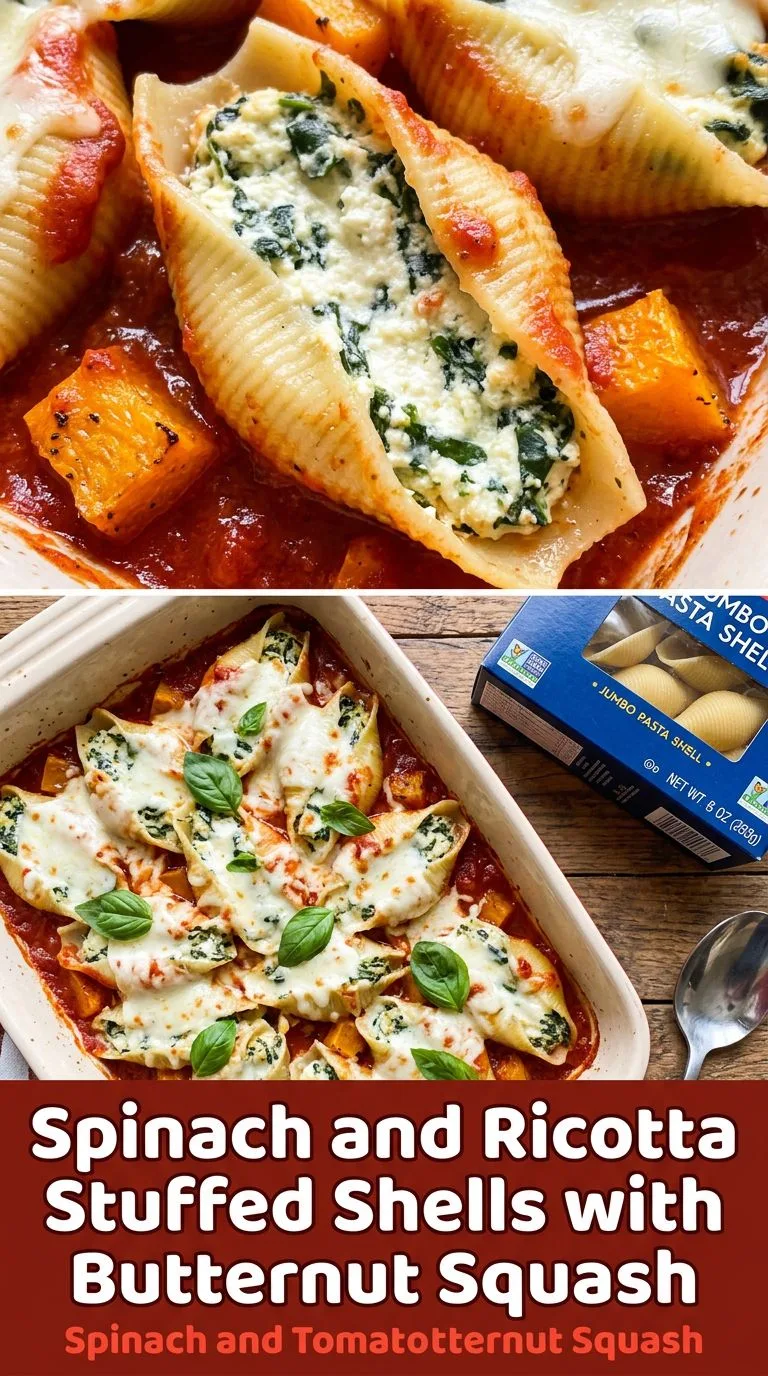
How to Make Spinach Ricotta Stuffed Shells
Making these stuffed shells involves a few simple steps that come together beautifully. I like to break the process into manageable parts, and you’ll find it’s quite straightforward once you get started.
Roasting the Butternut Squash
Start by preheating your oven to 400°F. Toss the cubed butternut squash with olive oil, salt, and pepper, then spread it in a single layer on a baking sheet. Roast for 25-30 minutes until the squash is tender and lightly caramelized. This roasting step is crucial—it concentrates the squash’s natural sweetness and adds depth to the sauce.
Cooking the Pasta Shells
While the squash roasts, cook your jumbo shells in a large pot of salted boiling water. I recommend cooking them just until al dente, as they’ll continue cooking in the oven. Drain them and rinse briefly with cool water to stop the cooking process and make them easier to handle. Lay them out on a baking sheet so they don’t stick together.
Preparing the Filling
In a mixing bowl, combine the ricotta cheese, chopped spinach, half the mozzarella, Parmesan, egg, minced garlic, and a pinch of salt and pepper. Mix until everything is well combined. The egg helps bind the filling and gives it structure when baked. I find that mixing with a fork works perfectly for this step.
Making the Butternut Squash Sauce
Once your squash is roasted and tender, transfer it to a blender or food processor. Add the vegetable broth, heavy cream, melted butter, dried sage, and nutmeg. Blend until completely smooth and creamy. The sauce should be pourable but not too thin—it should coat the back of a spoon nicely. If it’s too thick, add a splash more broth; if too thin, that’s fine as it will thicken slightly during baking.
Assembling the Dish
Reduce your oven temperature to 375°F. Spread half the butternut squash sauce across the bottom of a greased 9×13-inch baking dish. This creates a flavorful base that prevents the shells from sticking. Fill each cooked pasta shell generously with the spinach ricotta mixture—I use about 2-3 tablespoons per shell. Arrange them in a single layer over the sauce, nestling them close together.
Spoon the remaining butternut squash sauce around and lightly over the shells. You want some sauce visible but also want to see the tops of the shells for that beautiful presentation. Sprinkle the remaining mozzarella cheese over the top.
Baking to Perfection
Cover the dish loosely with foil and bake for 20 minutes. This allows the shells to heat through and the flavors to meld. Remove the foil and bake for another 10-15 minutes until the cheese is bubbling and golden, and the center reaches 165°F. Let the dish rest for 5 minutes before serving—this helps the sauce set slightly and makes serving easier.
Expert Tips for Best Results
I’ve learned a few tricks over time that really elevate this dish. First, don’t overcook the pasta shells. They should be just al dente when you drain them, as they’ll continue cooking in the oven. Overcooked shells can tear when you try to stuff them.
When roasting the butternut squash, make sure the cubes are roughly the same size so they cook evenly. I aim for about 1-inch cubes. If some pieces are much larger, they won’t be tender when the smaller pieces are done.
For the smoothest sauce, blend it longer than you think necessary. A truly silky sauce makes a big difference in the final dish. If you have an immersion blender, you can use that instead, though a regular blender typically gives a smoother result.
I recommend tasting your butternut squash sauce before assembling the dish. Depending on the sweetness of your squash, you might want to add a pinch more salt or a tiny bit more nutmeg. The sauce should be well-seasoned on its own since it’s a major component of the dish.
When stuffing the shells, a small spoon works well, but I find that using a piping bag or a zip-top bag with the corner cut off makes the job faster and neater. You can fill the bag with the ricotta mixture and pipe it directly into each shell.
Don’t skip the resting time after baking. Those 5 minutes allow the dish to set up slightly, making it much easier to serve neat portions. Plus, it brings the temperature down to a more comfortable eating temperature.
Serving Suggestions
These Spinach Ricotta Stuffed Shells are substantial enough to serve as a main course, especially for a vegetarian meal. I like to serve them with a simple green salad dressed with a light vinaigrette to balance the richness of the pasta. The crisp, fresh greens provide a nice contrast to the creamy, warm shells.
For a heartier meal, consider serving them alongside roasted vegetables like Brussels sprouts, green beans, or asparagus. The vegetables add color and nutrition while complementing the fall flavors in the dish. If you’re looking for more inspiration, this creamy pumpkin pasta offers similar autumn vibes with a different preparation style.
Crusty bread is always welcome at my table with this dish. It’s perfect for soaking up any extra butternut squash sauce on your plate. Garlic bread or a warm baguette both work beautifully.
For wine pairing, I recommend a medium-bodied white wine like Chardonnay or Viognier. The richness of these wines complements the creamy sauce and cheese. If you prefer red, a light Pinot Noir won’t overpower the delicate squash flavors.
This dish also makes an excellent addition to a holiday buffet. It holds well in a warming dish and looks impressive alongside other festive offerings. My favorite way to serve it for entertaining is in individual gratin dishes—portion out 3-4 shells per person for an elegant presentation.
Variations and Substitutions
One of the things I love about this recipe is how adaptable it is. For a protein boost, you can add cooked Italian sausage to the ricotta filling. Just crumble and brown about 8 ounces of sausage, let it cool, and mix it into the cheese mixture.
If you want to increase the vegetable content, try adding sautéed mushrooms to the filling or mixing some roasted red peppers into the ricotta mixture. Both add wonderful flavor and texture without changing the basic character of the dish.
For a vegan version, use cashew ricotta, vegan mozzarella, and nutritional yeast in place of the Parmesan. Replace the egg with a flax egg (1 tablespoon ground flaxseed mixed with 3 tablespoons water), and use full-fat coconut milk instead of heavy cream in the sauce.
You can also change up the herbs. Fresh basil or thyme work beautifully in place of sage, giving the dish a different but equally delicious flavor profile. I sometimes add a pinch of red pepper flakes to the sauce for a subtle kick.
If you’re short on time, you can simplify by using store-bought Alfredo sauce mixed with some pureed butternut squash instead of making the sauce from scratch. It won’t be quite the same, but it’s a reasonable shortcut for busy weeknights.
Storage, Freezing, and Reheating
These stuffed shells store beautifully, making them perfect for meal prep or planned leftovers. Once cooled, cover the baking dish tightly with plastic wrap or transfer portions to airtight containers. They’ll keep in the refrigerator for up to 4 days.
To reheat refrigerated shells, I recommend covering them with foil and warming in a 350°F oven for about 20-25 minutes until heated through. You can also microwave individual portions for 2-3 minutes, though the oven method gives better results with the cheese staying creamy rather than rubbery.
This recipe freezes exceptionally well, which I love for make-ahead meals. You can freeze the assembled, unbaked dish or freeze leftovers after baking. For unbaked, assemble completely but don’t bake. Cover tightly with plastic wrap and then foil, and freeze for up to 3 months. When ready to bake, you can cook from frozen—just add an extra 20-30 minutes to the covered baking time.
For already-baked shells, let them cool completely, then portion into freezer-safe containers. Freeze for up to 2 months. Thaw overnight in the refrigerator before reheating in the oven.
I find that the butternut squash sauce freezes particularly well. If you want to prep ahead, you can make a double batch of sauce and freeze half for another use. It’s delicious tossed with any pasta shape or even used as a base for soup.
Frequently Asked Questions
Can I make this dish ahead of time? Absolutely! You can assemble the entire dish up to 24 hours in advance, cover it tightly, and refrigerate until you’re ready to bake. Just add a few extra minutes to the baking time since it’s starting cold.
Why are my pasta shells breaking? This usually happens when the shells are overcooked or when you try to stuff them while they’re still too hot. Cook them just until al dente and let them cool enough to handle comfortably before filling.
Can I use a different type of pasta? While jumbo shells are ideal for this recipe, you can use manicotti tubes or even large rigatoni. The presentation will be different, but the flavors will still be delicious.
How do I know when the dish is done? The cheese should be bubbling and lightly golden, and the internal temperature should reach 165°F. If you insert a knife into the center, it should come out hot to the touch.
Can I make this without eggs? Yes, the egg helps bind the filling but isn’t absolutely essential. You can omit it, though the filling may be slightly looser. A flax egg works as a substitute if you prefer.
What can I do with leftover butternut squash sauce? The sauce is versatile! Toss it with any pasta shape, use it as a pizza sauce, spread it on sandwiches, or thin it with more broth to make a creamy soup. It’s also wonderful drizzled over roasted vegetables.
Is this recipe gluten-free? Not as written, but you can use gluten-free jumbo pasta shells to make it gluten-free. Just follow the package directions for cooking, as gluten-free pasta often has different cooking times.
Can I add meat to this recipe? Definitely! Cooked Italian sausage, ground turkey, or shredded chicken all work well mixed into the ricotta filling. Just make sure any meat is fully cooked before adding it to the filling.
If you enjoy comforting fall soups alongside your pasta dishes, you might also like this creamy spinach artichoke soup that shares similar flavors and makes a wonderful starter course.
Spinach and Ricotta Stuffed Shells with Butternut Squash
Tender jumbo pasta shells stuffed with creamy spinach and ricotta, nestled in a savory butternut squash sauce, and baked until bubbly. This comforting vegetarian pasta dish is ideal for fall gatherings and holiday entertaining.
- Prep Time: 25 minutes
- Cook Time: 60 minutes
- Total Time: 1 hour 25 minutes
- Servings: 6-8 servings
- Difficulty: Medium
- Cuisine: Italian-American
- Course: Main Course
Ingredients
- 20–24 jumbo pasta shells
- 15 oz ricotta cheese
- 2 cups fresh spinach, chopped
- 1 cup shredded mozzarella cheese, divided
- 1/2 cup grated Parmesan cheese
- 1 large egg
- 2 lb butternut squash, peeled and cubed
- 1 cup vegetable broth
- 1/2 cup heavy cream
- 3 garlic cloves, minced
- 2 tbsp olive oil
- 2 tbsp unsalted butter, melted
- 1 tsp dried sage
- 1/4 tsp ground nutmeg
- 1 tsp salt
- 1/2 tsp black pepper
Instructions
- Preheat the oven to 400°F (200°C). Toss cubed butternut squash with olive oil, salt, and pepper, then spread in a single layer on a baking sheet. Roast for 25–30 minutes until soft and lightly caramelized.
- Meanwhile, cook jumbo pasta shells in a large pot of salted boiling water until just al dente, following package directions (usually 9-11 minutes). Drain and rinse briefly with cool water to stop the cooking process. Lay shells out on a baking sheet to prevent sticking.
- In a mixing bowl, combine ricotta cheese, chopped spinach, 1/2 cup of the mozzarella cheese, Parmesan cheese, egg, minced garlic, and a pinch of salt and pepper. Mix until well combined and set aside.
- Transfer the roasted butternut squash to a blender or food processor. Add vegetable broth, heavy cream, melted butter, dried sage, and nutmeg. Blend until completely smooth and creamy, about 1-2 minutes.
- Reduce the oven temperature to 375°F (190°C). Spread half of the butternut squash sauce evenly across the bottom of a greased 9×13-inch baking dish.
- Fill each cooked pasta shell generously with the spinach ricotta mixture (about 2-3 tablespoons per shell). Arrange the stuffed shells in a single layer over the sauce in the baking dish, nestling them close together.
- Spoon the remaining butternut squash sauce around and lightly over the shells. Sprinkle the remaining 1/2 cup mozzarella cheese evenly over the top.
- Cover the dish loosely with aluminum foil and bake for 20 minutes. Remove the foil and bake for another 10–15 minutes until the cheese is bubbling and lightly golden, and the center reaches 165°F (74°C).
- Remove from the oven and let rest for 5 minutes before serving. Garnish with additional Parmesan cheese if desired.
Recipe Notes
- You can assemble this dish up to 24 hours in advance. Cover tightly and refrigerate, then add 5-10 minutes to the covered baking time.
- If using frozen spinach instead of fresh, thaw 10 oz completely and squeeze out all excess moisture before mixing into the filling.
- For the smoothest sauce, blend longer than you think necessary—at least 1-2 minutes for a silky texture.
- Store leftovers covered in the refrigerator for up to 4 days. Reheat covered in a 350°F oven for 20-25 minutes.
- This recipe freezes well. Freeze assembled but unbaked for up to 3 months. Bake from frozen, adding 20-30 minutes to the covered baking time.
- Fresh sage can replace dried sage—use about 1 tablespoon of chopped fresh sage.
Estimated Nutrition (Per Serving, based on 8 servings)
- Calories: 385
- Carbohydrates: 38g
- Protein: 17g
- Fat: 18g
- Saturated Fat: 10g
- Fiber: 3g
- Sugar: 5g
- Sodium: 520mg
Nutrition information is estimated and will vary based on exact ingredients and portion sizes.
