
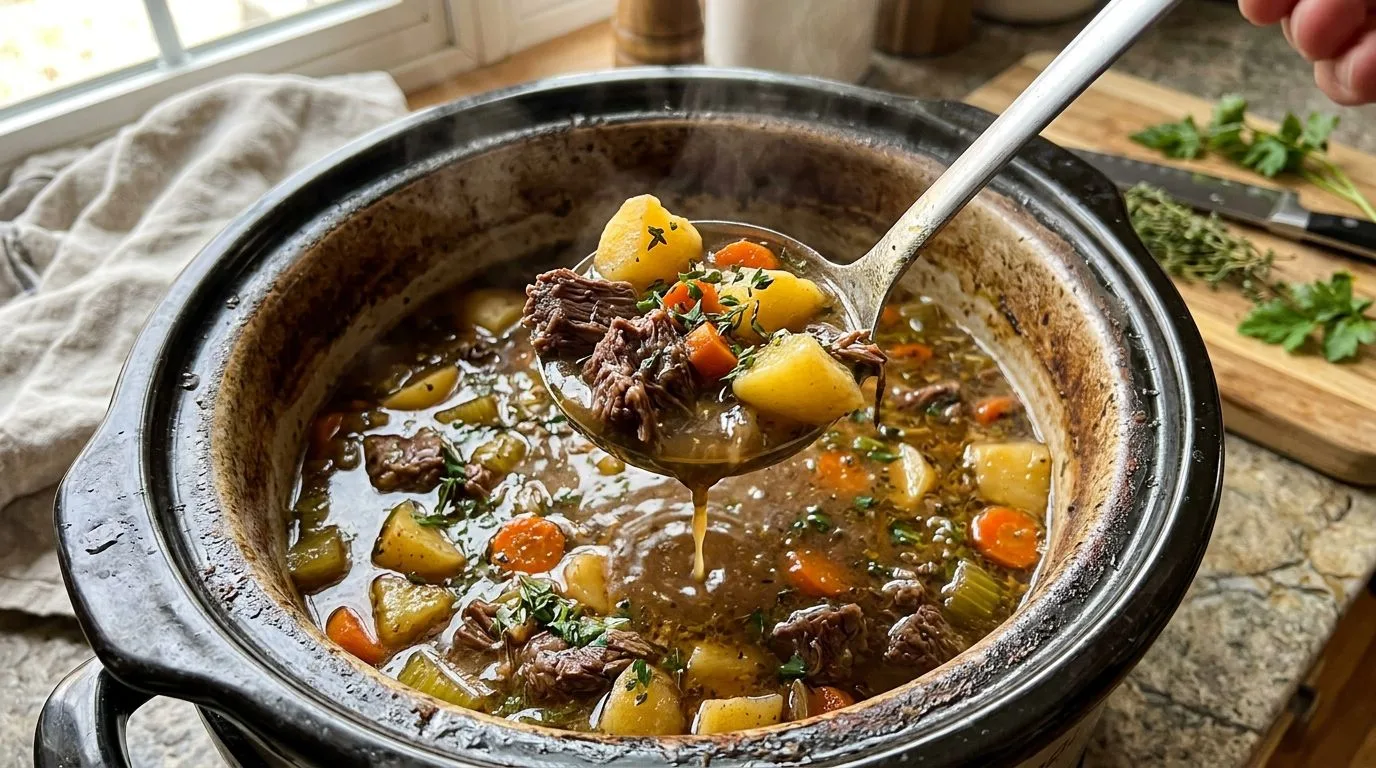
There’s something incredibly satisfying about coming home to the aroma of a hearty, home-cooked meal that’s been simmering away all day. This slow cooker beef and potato soup is exactly that kind of comfort food—tender chunks of beef, creamy potatoes, and vegetables in a rich, savory broth that warms you from the inside out. I love how this recipe transforms simple, wholesome ingredients into a deeply flavorful soup with minimal hands-on effort.
What makes this soup truly special is how the slow cooking process allows the beef to become melt-in-your-mouth tender while the potatoes break down slightly to naturally thicken the broth. The combination of Worcestershire sauce, tomato paste, and aromatic herbs creates layers of flavor that develop beautifully over hours of gentle cooking. Whether you’re feeding a hungry family on a busy weeknight or meal prepping for the week ahead, this Crockpot beef and potato soup delivers maximum comfort with minimum fuss.
Why You’ll Love This Slow Cooker Beef and Potato Soup
This recipe has become one of my go-to winter meals for several compelling reasons. First, the hands-on preparation time is remarkably short—just about 15 minutes of chopping and browning before everything goes into the slow cooker. I find that browning the beef first adds an essential depth of flavor that you simply can’t achieve by skipping this step, and it’s well worth the extra few minutes.
The ingredient list is straightforward and budget-friendly, featuring pantry staples and affordable cuts of meat. Beef chuck roast is perfect for slow cooking because it contains enough marbling to stay moist and tender during the long cooking time. I recommend using Yukon Gold potatoes because they hold their shape well while still contributing to a slightly creamy texture in the broth.
Another reason I love this soup is its versatility. The base recipe is delicious as written, but it’s also incredibly forgiving and adaptable to whatever vegetables you have on hand. The slow cooker does all the heavy lifting, making this an ideal recipe for busy days when you want a homemade meal without standing over the stove.
Ingredients and Substitutions
Let me walk you through the key ingredients and offer some practical substitutions that work well in this hearty soup.
Beef Chuck Roast: This cut is ideal for slow cooking because it becomes incredibly tender after hours of braising. If you can’t find chuck roast, beef stew meat or bottom round roast work well too. I’ve also made this with leftover pot roast with excellent results—just add it during the last hour of cooking to prevent it from becoming too soft.
Yukon Gold Potatoes: These potatoes strike the perfect balance between waxy and starchy, holding their shape while contributing body to the soup. Russet potatoes will break down more and create a thicker, creamier soup, which some people prefer. Red potatoes are another good option if you want the potatoes to stay very firm.
Vegetables: The classic combination of carrots, celery, and onion provides a flavorful foundation. I like to keep the carrot slices fairly thick so they don’t turn to mush. You can add other vegetables like parsnips, turnips, or even frozen peas during the last 30 minutes of cooking.
Beef Broth: I recommend low-sodium broth so you can control the salt level. If you only have regular broth, reduce or omit the added salt. Beef stock works beautifully here, and I’ve even used a combination of beef broth and red wine for a richer flavor profile.
Seasonings: The combination of thyme, rosemary, Worcestershire sauce, and tomato paste creates a deeply savory base. If you don’t have dried herbs, use about one tablespoon of fresh thyme and rosemary instead. The tomato paste adds umami depth without making the soup taste tomato-forward.
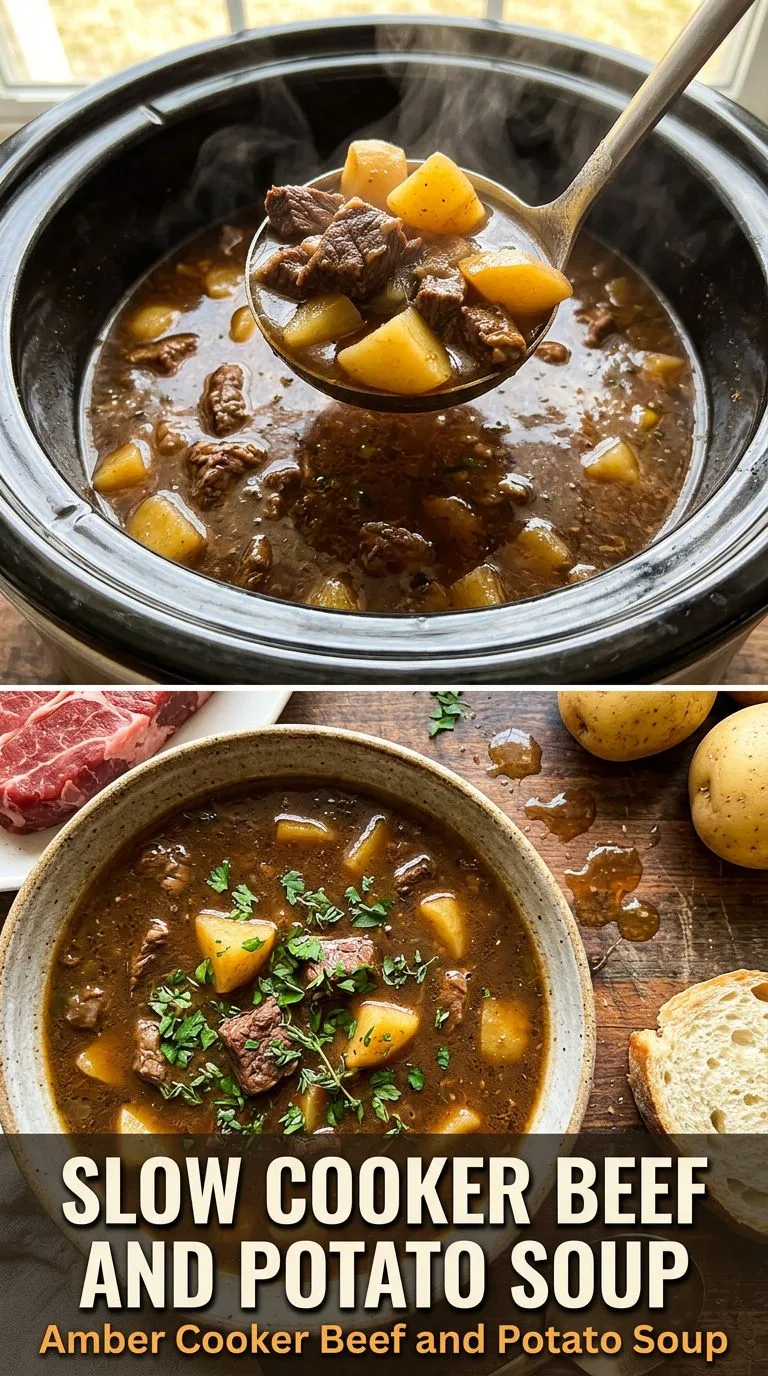
How to Make This Recipe
The preparation process is straightforward, and I’ll guide you through each step to ensure perfect results every time.
Step 1: Brown the Beef
Heat the olive oil in a large skillet over medium-high heat. Working in batches to avoid crowding, brown the beef cubes for 2-3 minutes per side until they develop a nice golden-brown crust. This step is crucial—it creates fond (those flavorful brown bits) and adds complexity to the finished soup. Don’t skip it, even though it’s tempting to throw everything raw into the slow cooker. Transfer the browned beef to your 6-quart slow cooker.
Step 2: Layer the Vegetables
Add the diced potatoes, sliced carrots, diced celery, onion, and minced garlic directly to the slow cooker with the beef. I like to distribute them evenly so everything cooks uniformly.
Step 3: Prepare the Broth Mixture
In a medium bowl, whisk together the beef broth, tomato paste, Worcestershire sauce, dried thyme, dried rosemary, salt, and black pepper. Whisking ensures the tomato paste is fully incorporated rather than leaving clumps. Pour this mixture over the beef and vegetables, then nestle the bay leaf into the liquid.
Step 4: Slow Cook
Cover the slow cooker and set it to LOW for 7-8 hours or HIGH for 4-5 hours. I prefer the LOW setting when I have time because it produces the most tender beef, but the HIGH setting works perfectly when you need dinner ready sooner. The soup is done when the beef is fork-tender and the potatoes are fully cooked through.
Step 5: Final Touches
Remove and discard the bay leaf. Give the soup a gentle stir and taste for seasoning, adding more salt or pepper if needed. If you prefer a thicker consistency, use a potato masher or fork to mash a few potato pieces against the side of the slow cooker, then stir them into the broth. This creates a naturally creamy texture without adding flour or cream. Garnish with fresh parsley just before serving.
Expert Tips for Best Results
After making this soup many times, I’ve learned a few tricks that consistently produce the best results.
Don’t Skip Browning: I know it’s tempting to save time by skipping the browning step, but those caramelized bits add tremendous flavor. The Maillard reaction that occurs during browning creates complex, savory notes that you simply can’t replicate any other way.
Cut Ingredients Uniformly: I recommend cutting the beef into consistent 1-inch cubes and the vegetables into similar-sized pieces. This ensures everything cooks evenly and you get a balanced bite in every spoonful.
Layer Strategically: Place the harder vegetables like potatoes and carrots closer to the bottom and sides of the slow cooker where the heat is most direct. This helps them cook through properly.
Resist Lifting the Lid: Every time you lift the slow cooker lid, you release heat and add 15-20 minutes to the cooking time. Trust the process and let it cook undisturbed.
Adjust Thickness to Preference: If you want a brothier soup, leave it as is. For a thicker, stew-like consistency, mash some potatoes or create a slurry with 2 tablespoons of cornstarch mixed with 2 tablespoons of cold water, stirring it in during the last 30 minutes of cooking.
Fresh Herbs Make a Difference: While the soup cooks with dried herbs, I find that finishing with fresh parsley (or even fresh thyme) brightens the flavors and adds a pop of color.
Serving Suggestions
This slow cooker beef and potato soup is hearty enough to serve as a complete meal, but I love pairing it with a few complementary sides to round out the dinner table.
My favorite way to serve this soup is with crusty bread or warm dinner rolls for dipping into the rich broth. A simple side salad with a tangy vinaigrette provides a fresh contrast to the hearty soup. I also like to set out a toppings bar with shredded cheddar cheese, sour cream, extra fresh parsley, and crispy bacon bits so everyone can customize their bowl.
For a more substantial meal, serve the soup alongside grilled cheese sandwiches or garlic bread. The combination of warm soup and melty cheese sandwiches is pure comfort food perfection. If you’re looking for something lighter, a simple cucumber and tomato salad or coleslaw works beautifully.
This soup also makes an excellent first course for a larger dinner. I’ve served it before roasted chicken or as part of a casual dinner party menu, and it’s always well-received. The presentation is simple but appealing—ladle it into wide, shallow bowls and garnish generously with fresh parsley for a restaurant-quality look.
Variations and Substitutions
One of the things I appreciate most about this recipe is how easily it adapts to different preferences and dietary needs.
Creamy Version: For a richer, creamier soup, stir in 1/2 cup of heavy cream or half-and-half during the last 30 minutes of cooking. You can also add a few ounces of cream cheese, which melts beautifully into the broth.
Loaded Baked Potato Style: Transform this into a loaded baked potato soup by adding shredded cheddar cheese, crumbled bacon, and a dollop of sour cream to each serving. I sometimes add a splash of cream and mash more of the potatoes for an ultra-creamy texture.
Vegetable-Heavy Version: Add more vegetables like diced bell peppers, green beans, or corn. Mushrooms are particularly delicious in this soup and add an earthy depth. Add heartier vegetables at the beginning and more delicate ones like peas or spinach during the last 30 minutes.
Spicy Kick: If you enjoy heat, add 1/2 teaspoon of red pepper flakes or a diced jalapeño pepper. A dash of hot sauce in each bowl also works well.
Gluten-Free: This recipe is naturally gluten-free as long as you verify that your Worcestershire sauce is gluten-free (some brands contain malt vinegar).
Different Proteins: While I love this with beef, you can make it with pork shoulder or even chicken thighs. Adjust the cooking time accordingly—chicken will be done in about 4-5 hours on LOW.
If you enjoy hearty beef soups, you might also love this slow cooker beef stew with potatoes and carrots, which features similar ingredients in a thicker, stew-style preparation. For a different grain-based option, try this beef barley soup that’s equally comforting and satisfying.
Storage, Freezing, and Reheating
This soup stores beautifully, making it perfect for meal prep or enjoying leftovers throughout the week.
Refrigerator Storage: Allow the soup to cool to room temperature, then transfer it to airtight containers. It will keep in the refrigerator for 4-5 days. I find that the flavors actually deepen and improve after a day or two, making leftovers even more delicious than the first serving.
Freezing: This soup freezes exceptionally well for up to 3 months. I recommend portioning it into individual or family-sized containers for easy reheating. Leave about an inch of headspace in each container to allow for expansion during freezing. Label containers with the date and contents. Note that the potatoes may become slightly softer after freezing and thawing, but the flavor remains excellent.
Reheating: For refrigerated soup, reheat it on the stovetop over medium heat, stirring occasionally until heated through. You can also microwave individual portions in 1-2 minute intervals, stirring between each interval. For frozen soup, I recommend thawing it overnight in the refrigerator before reheating, though you can also reheat it directly from frozen—just add extra time and a splash of broth if needed to restore the consistency.
Make-Ahead Tips: You can prep all the ingredients the night before and store them separately in the refrigerator. In the morning, brown the beef and assemble everything in the slow cooker. This makes busy mornings even easier.
Frequently Asked Questions
Can I make this soup on the stovetop instead?
Yes, absolutely. Brown the beef in a large Dutch oven, then add all the remaining ingredients. Bring to a boil, then reduce heat to low, cover, and simmer for 2-3 hours until the beef is tender and the potatoes are cooked through. Stir occasionally and add more broth if needed.
Why is my beef tough?
Beef chuck needs adequate cooking time to break down the connective tissue and become tender. If your beef is tough, it likely needs more time. Continue cooking on LOW until it’s fork-tender. Cutting the beef into smaller pieces can also help it cook faster.
Can I use pre-cut stew meat?
Yes, pre-cut beef stew meat works perfectly in this recipe. Just make sure the pieces are roughly 1-inch cubes for even cooking. You’ll still want to brown them before adding to the slow cooker.
How can I make this soup thicker?
The easiest method is to mash some of the cooked potatoes against the side of the slow cooker and stir them into the broth. Alternatively, make a cornstarch slurry (2 tablespoons cornstarch mixed with 2 tablespoons cold water) and stir it in during the last 30 minutes of cooking. You can also add a roux made from butter and flour.
Can I add noodles or rice?
Yes, but I recommend cooking them separately and adding them to individual bowls rather than cooking them in the soup. This prevents them from absorbing too much liquid and becoming mushy, especially if you’re storing leftovers. If you do want to cook them in the soup, add them during the last 30-45 minutes of cooking time.
Is it necessary to brown the beef first?
While not absolutely necessary, browning the beef significantly improves the flavor of the finished soup. The caramelization creates depth and richness that you won’t achieve by adding raw beef directly to the slow cooker. I highly recommend taking this extra step.
Can I double this recipe?
You can, but make sure your slow cooker is large enough. Slow cookers work best when filled between half and three-quarters full. If doubling, you may need to use a larger slow cooker or make two separate batches.
Slow Cooker Beef and Potato Soup
A hearty slow cooker soup featuring tender beef, soft potatoes, carrots, onions, and a flavorful beef broth. This easy Crockpot meal is perfect for comforting family dinners with minimal preparation.
- Prep Time: 15 minutes
- Cook Time: 7-8 hours (LOW) or 4-5 hours (HIGH)
- Total Time: 7 hours 15 minutes – 8 hours 15 minutes
- Servings: 6-8 servings
- Difficulty: Easy
- Cuisine: American
- Course: Dinner
Ingredients
- 1 1/2 lbs beef chuck roast, cut into 1-inch cubes
- 1 1/2 lbs Yukon Gold potatoes, diced
- 3 medium carrots, sliced
- 2 celery stalks, diced
- 1 medium yellow onion, diced
- 3 cloves garlic, minced
- 5 cups low-sodium beef broth
- 2 tbsp tomato paste
- 1 tbsp Worcestershire sauce
- 1 tsp dried thyme
- 1 tsp dried rosemary
- 1 bay leaf
- 1 tsp salt
- 1/2 tsp black pepper
- 2 tbsp olive oil
- 2 tbsp chopped fresh parsley
Instructions
- Heat olive oil in a large skillet over medium-high heat. Brown the beef cubes in batches for 2-3 minutes per side. Transfer the beef to a 6-quart slow cooker.
- Add the diced potatoes, carrots, celery, onion, and garlic to the slow cooker.
- In a bowl, whisk together the beef broth, tomato paste, Worcestershire sauce, thyme, rosemary, salt, and black pepper. Pour the mixture over the beef and vegetables. Add the bay leaf.
- Cover and cook on LOW for 7-8 hours or HIGH for 4-5 hours until the beef is tender and the potatoes are fully cooked.
- Remove and discard the bay leaf. Gently stir the soup and taste for seasoning.
- If a thicker consistency is preferred, mash a few cooked potato pieces against the side of the slow cooker and stir them into the broth. Garnish with fresh parsley and serve hot.
Recipe Notes
- Browning the beef before slow cooking adds significant depth of flavor and is highly recommended.
- Cut all vegetables into uniform sizes to ensure even cooking.
- For a creamier soup, stir in 1/2 cup heavy cream during the last 30 minutes of cooking.
- This soup thickens as it sits. Add additional broth when reheating if needed.
- Leftovers can be stored in the refrigerator for 4-5 days or frozen for up to 3 months.
- If using regular beef broth instead of low-sodium, reduce or omit the added salt.
Nutrition Information (Per Serving, Estimated)
Based on 8 servings
- Calories: 285
- Carbohydrates: 24g
- Protein: 22g
- Fat: 11g
- Saturated Fat: 3g
- Fiber: 3g
- Sugar: 4g
- Sodium: 680mg
Nutrition information is estimated and may vary based on specific ingredients used.
