
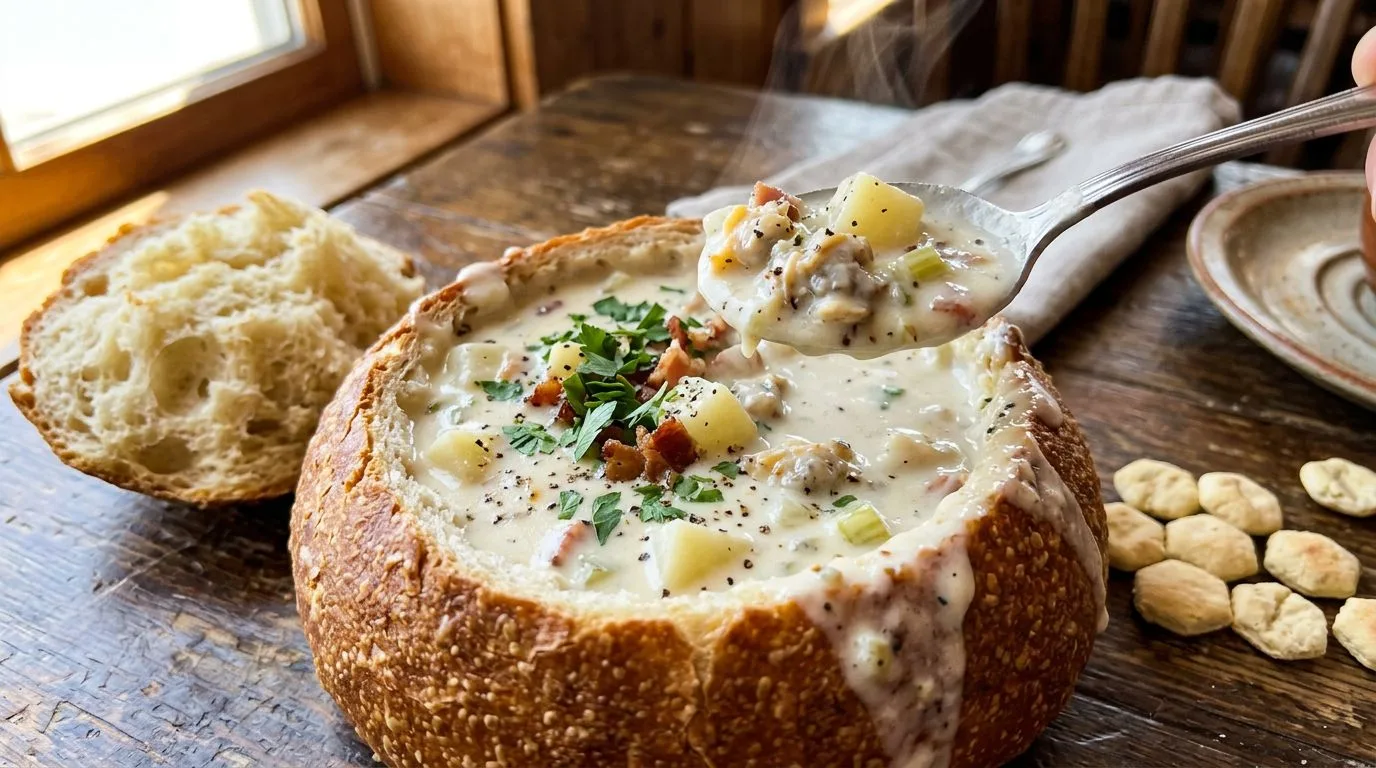
There’s something incredibly comforting about a bowl of creamy New England clam chowder on a chilly evening. This classic seafood soup combines tender clams, hearty potatoes, crispy bacon, and a rich, velvety broth that warms you from the inside out. I love how this traditional recipe brings together simple ingredients to create something truly special—it’s the kind of dish that makes you feel like you’re dining at a cozy seaside restaurant, even if you’re miles from the ocean.
What makes this New England clam chowder so appealing is its perfect balance of flavors and textures. The smoky bacon adds depth, the potatoes provide substance, and the half-and-half creates that signature creamy consistency without being too heavy. I find that using canned clams makes this recipe accessible year-round, so you don’t have to wait for a special occasion to enjoy this beloved New England classic. Whether you’re new to making chowder or you’ve been perfecting your recipe for years, this version delivers authentic flavor with straightforward techniques that work every time.
This homemade clam chowder is perfect for family dinners, casual entertaining, or meal prep for the week ahead. Serve it with a basket of oyster crackers and some crusty bread, and you have a complete, satisfying meal that everyone will love.
Why You’ll Love This New England Clam Chowder
This recipe checks all the boxes for what makes a great homemade soup. First, it’s surprisingly easy to prepare—you don’t need any special cooking skills or hard-to-find ingredients. I love that you can have a pot of restaurant-quality chowder ready in under an hour, making it perfect for busy weeknights when you want something more special than your usual dinner routine.
The flavor is absolutely outstanding. The combination of bacon fat and butter creates a rich foundation, while the clam juice and chicken broth add layers of savory depth. The half-and-half gives you that classic creamy texture without the heaviness of heavy cream, so you can enjoy a generous bowl without feeling weighed down.
I also appreciate how well this chowder holds up for leftovers. The flavors actually deepen overnight, making the second day even better than the first. It’s a practical recipe that feeds a crowd or provides multiple meals for smaller households. Plus, using canned clams means you can make this any time of year without worrying about seasonal availability or the extra work of shucking fresh clams.
Ingredients and Substitutions
Let me walk you through the key ingredients that make this New England clam chowder so delicious, along with some helpful substitutions if you need to adapt the recipe.
Canned Chopped Clams: These are the star of the show. I recommend using three 6.5-ounce cans, and it’s crucial to save every drop of that clam liquid—it’s packed with briny, oceanic flavor. If you prefer fresh clams, you can substitute about 2 cups of chopped fresh clam meat, but you’ll need to add extra bottled clam juice to compensate for the liquid.
Thick-Cut Bacon: The bacon adds smoky depth and richness. I like thick-cut bacon because it provides substantial pieces that hold up well in the soup. If you need a substitute, you can use pancetta or even salt pork for a more traditional approach. For a lighter version, you can reduce the bacon to 2-3 slices or omit it entirely, though you’ll lose some of that signature smoky flavor.
Vegetables: Yellow onion and celery form the aromatic base. You can substitute white onion if that’s what you have on hand. Some people like to add a diced carrot for extra sweetness, though it’s not traditional in New England-style chowder.
Russet Potatoes: These starchy potatoes break down slightly as they cook, helping to thicken the chowder naturally. Yukon Gold potatoes work well too and offer a buttery flavor. I don’t recommend waxy red potatoes for this recipe—they won’t contribute to the creamy texture in the same way.
Half-and-Half: This creates the perfect creamy consistency. You can substitute whole milk for a lighter version, or use heavy cream if you want an extra-rich chowder. I find half-and-half strikes the ideal balance.
Flour: This thickens the broth and creates that classic chowder texture. For a gluten-free version, you can use cornstarch (use about 2 tablespoons mixed with cold water) or a gluten-free flour blend.
Broth and Clam Juice: The combination of chicken broth and bottled clam juice provides the liquid base. You can use seafood stock or vegetable broth instead of chicken broth if you prefer.
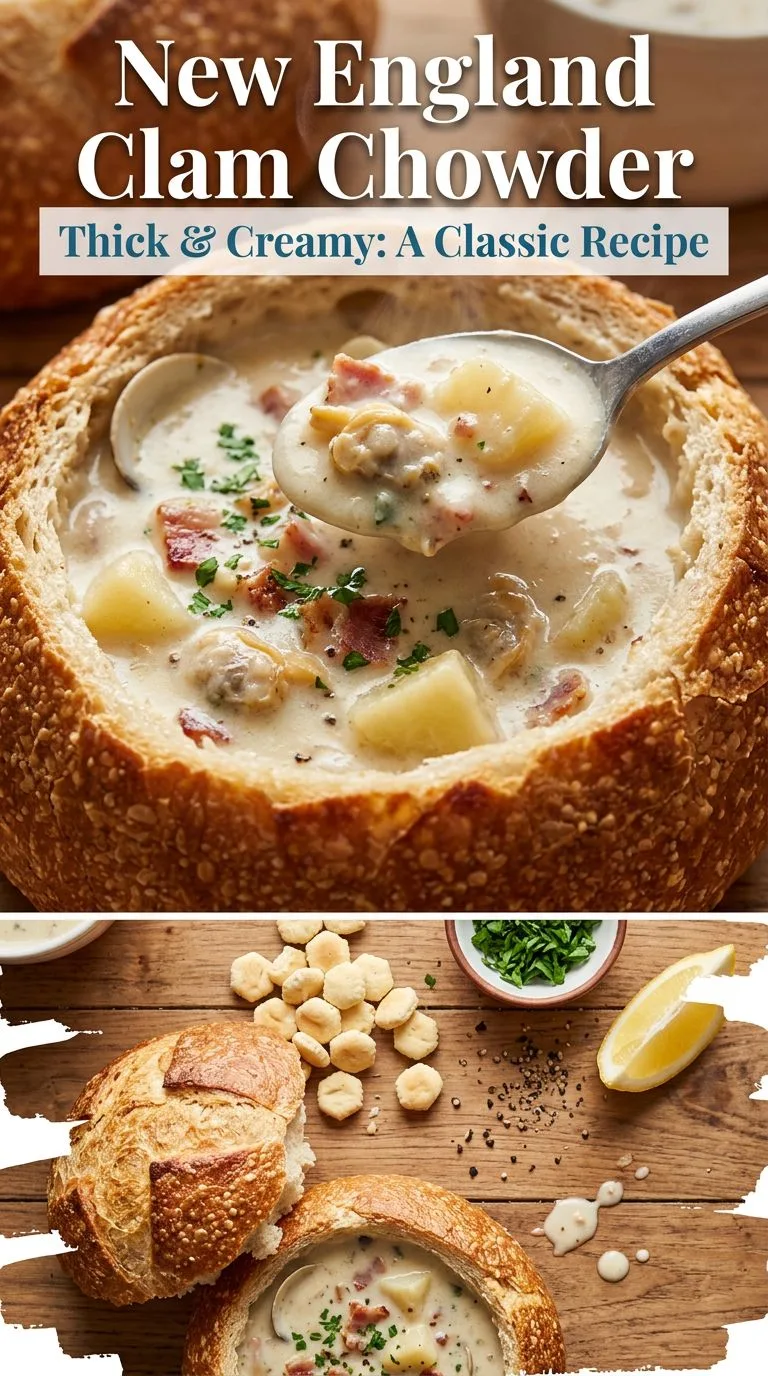
How to Make New England Clam Chowder
Making this classic chowder is a straightforward process that builds flavor in layers. Here’s how I approach each step to ensure the best results.
Prepare the Clams: Start by draining your canned clams through a fine-mesh strainer set over a bowl. This step is important because you want to capture every bit of that flavorful clam liquid. Set both the clam meat and the liquid aside separately—you’ll add them at different stages of cooking.
Cook the Bacon: In a large Dutch oven or heavy-bottomed pot, cook the diced bacon over medium heat for 6-8 minutes until it’s crispy and golden. I like to stir it occasionally to ensure even cooking. Once it’s done, use a slotted spoon to transfer the bacon to a paper towel-lined plate, but leave about a tablespoon of that flavorful bacon fat in the pot.
Build the Base: Add the butter to the bacon fat, then toss in your diced onion and celery. Sauté these aromatics for about 5 minutes until they’re softened and fragrant. This is where the foundation of flavor really starts to develop. Next, sprinkle the flour over the vegetables and stir constantly for about a minute. This creates a roux that will thicken your chowder and eliminate any raw flour taste.
Add the Liquids: This is where things come together. Gradually whisk in the reserved clam liquid, bottled clam juice, and chicken broth. I recommend adding the liquids slowly while whisking to prevent lumps from forming. Once the liquid is incorporated, add your diced potatoes, bay leaf, thyme, salt, and pepper. Bring everything to a gentle simmer.
Cook the Potatoes: Let the chowder simmer uncovered for 15-20 minutes, stirring occasionally to prevent the potatoes from sticking to the bottom. You’ll know the potatoes are done when you can easily pierce them with a fork. As they cook, they’ll release some of their starch, which helps thicken the chowder naturally.
Finish the Chowder: Once the potatoes are tender, reduce the heat to low. Stir in the half-and-half, reserved clams, and cooked bacon. This is an important step—you want to warm everything gently for 3-5 minutes without letting the chowder boil. Boiling can make the clams tough and rubbery, and it can also cause the dairy to separate.
Final Touches: Remove the bay leaf, taste the chowder, and adjust the seasoning if needed. I usually add a bit more black pepper at this stage. Garnish with fresh chopped parsley and serve immediately with oyster crackers on the side.
Expert Tips for Best Results
After making countless batches of clam chowder, I’ve learned a few tricks that make a real difference in the final result.
Don’t Overcook the Clams: This is the most common mistake I see. Canned clams are already cooked, so they only need to be warmed through. Adding them at the very end and keeping the heat low ensures they stay tender. If you boil them for too long, they’ll become tough and chewy.
Use Quality Clam Juice: Not all bottled clam juice is created equal. I recommend choosing a brand with minimal additives and a fresh, briny flavor. The clam juice contributes significantly to the overall taste, so it’s worth seeking out a good one.
Cut Potatoes Uniformly: Dice your potatoes into pieces that are roughly the same size—about ½-inch cubes work well. This ensures they all cook at the same rate, so you don’t end up with some pieces that are mushy while others are still firm.
Don’t Skip the Roux: Taking the time to cook the flour with the butter and vegetables creates a smooth, well-thickened chowder. Make sure to stir it for the full minute to cook out the raw flour taste.
Control the Heat: Once you add the half-and-half, keep the heat on low and avoid boiling. A gentle simmer is all you need. High heat can cause the dairy to curdle and the clams to toughen.
Season Gradually: The bacon, clam juice, and broth all contribute salt to the dish, so I recommend starting with the amount listed and adjusting at the end. You can always add more, but you can’t take it away.
Let It Rest: If you have time, let the finished chowder sit for 10-15 minutes before serving. This allows the flavors to meld together beautifully. Just give it a gentle stir before ladling it into bowls.
Serving Suggestions
New England clam chowder is hearty enough to serve as a main course, especially when paired with the right accompaniments. Here are my favorite ways to serve this classic soup.
Classic Pairings: Oyster crackers are the traditional choice, and I always keep a bowl of them on the table so everyone can add as many as they like. The crackers add a nice textural contrast to the creamy soup. A loaf of crusty bread or some homemade dinner rolls are also excellent for soaking up every last drop of that delicious broth.
Side Dishes: For a complete meal, I like to serve the chowder with a simple green salad dressed with a light vinaigrette. The acidity and freshness of the salad balance the richness of the soup perfectly. Coleslaw is another great option that adds crunch and tang.
Presentation: Serve the chowder in wide, shallow bowls to showcase the chunks of potato, clam, and bacon. A sprinkle of fresh parsley and a few grinds of black pepper on top make it look restaurant-worthy. For a special touch, you can add a small pat of butter in the center of each bowl.
Beverage Pairings: A crisp white wine like Sauvignon Blanc or Chardonnay complements the seafood flavors beautifully. For non-alcoholic options, iced tea or sparkling water with lemon works well.
Variations and Substitutions
While this classic recipe is delicious as written, there are several ways you can customize it to suit your preferences or dietary needs.
Manhattan-Style Chowder: If you prefer a tomato-based chowder instead of cream-based, you can swap the half-and-half for 2 cups of crushed tomatoes and add a bit more broth. This creates the red Manhattan-style version that’s popular in other parts of the country.
Seafood Chowder: Turn this into a mixed seafood chowder by adding shrimp, scallops, or chunks of white fish along with the clams. Add these in the last 5 minutes of cooking so they don’t overcook.
Lighter Version: For a lighter chowder, use whole milk instead of half-and-half and reduce the bacon to 2 slices. You can also use turkey bacon if you prefer. The result won’t be quite as rich, but it’s still delicious.
Extra Vegetables: While not traditional, you can add corn kernels or diced carrots for extra nutrition and color. Add them along with the potatoes so they have time to cook through.
Spicy Kick: If you like a bit of heat, add a pinch of cayenne pepper or some red pepper flakes when you add the other seasonings. A dash of hot sauce at the end works too.
Dairy-Free Option: For a dairy-free version, substitute the butter with olive oil and use full-fat coconut milk or cashew cream instead of half-and-half. The flavor will be different but still creamy and satisfying.
Storage, Freezing, and Reheating
One of the great things about this clam chowder is how well it keeps, making it perfect for meal prep or enjoying leftovers throughout the week.
Refrigerator Storage: Let the chowder cool to room temperature, then transfer it to an airtight container. It will keep in the refrigerator for 3-4 days. I find that the flavors actually improve after a day, as everything has time to meld together. Just give it a good stir before reheating, as some separation is natural.
Freezing: Cream-based soups can be a bit tricky to freeze because dairy sometimes separates when thawed. However, this chowder freezes reasonably well if you follow a few guidelines. Let it cool completely, then transfer to freezer-safe containers, leaving about an inch of headspace for expansion. It will keep frozen for up to 2 months. When you’re ready to use it, thaw it overnight in the refrigerator.
Reheating: The key to reheating clam chowder is using gentle heat. I recommend reheating it on the stovetop over medium-low heat, stirring frequently. If the chowder seems too thick after refrigeration, thin it with a splash of broth, milk, or clam juice. Never boil the chowder during reheating—this can make the clams tough and cause the dairy to separate. Microwave reheating works too; use 50% power and stir every minute until heated through.
Make-Ahead Tips: You can prepare the chowder through step 5 (cooking the potatoes), then cool and refrigerate it. The next day, gently reheat it and add the half-and-half, clams, and bacon just before serving. This method ensures the clams stay tender and the dairy doesn’t separate.
Frequently Asked Questions
Can I use fresh clams instead of canned?
Absolutely! You’ll need about 2 pounds of fresh clams. Steam them in a pot with a cup of water until they open, then remove the meat and chop it. Strain the cooking liquid through cheesecloth and use it in place of the canned clam liquid. Fresh clams will give you a slightly more delicate flavor.
Why is my chowder too thin?
If your chowder is thinner than you’d like, there are a few fixes. You can mash some of the cooked potatoes against the side of the pot to release more starch, which will thicken the soup naturally. Alternatively, mix 2 tablespoons of cornstarch with 2 tablespoons of cold water and stir it into the simmering chowder. Let it cook for a few minutes until thickened.
Can I make this in a slow cooker?
Yes, though the method needs adjustment. Cook the bacon separately, then add the bacon fat, butter, onion, celery, potatoes, broth, clam juice, and seasonings to the slow cooker. Cook on low for 6-7 hours or high for 3-4 hours. In the last 30 minutes, stir in the half-and-half, clams, and bacon. Skip the flour roux method and thicken with cornstarch if needed.
What’s the difference between New England and Manhattan clam chowder?
New England clam chowder is cream-based, thick, and white, while Manhattan clam chowder has a tomato-based broth and is more soup-like. New England style is what most people think of when they hear “clam chowder.”
How can I tell if my chowder has gone bad?
Signs of spoilage include an off smell, visible mold, or a sour taste. Dairy-based soups should be consumed within 3-4 days of refrigeration. If you’re unsure, it’s always better to err on the side of caution and discard it.
Can I leave out the bacon?
Yes, though you’ll lose some of the smoky depth. If you omit the bacon, use 3 tablespoons of butter total for sautéing the vegetables. You might want to add a tiny bit of smoked paprika to compensate for the lost smoky flavor.
Why did my dairy separate or curdle?
This usually happens when the chowder is heated too quickly or brought to a boil after adding the dairy. Always add half-and-half or cream when the heat is on low, and never let it boil. Gentle, slow heating is key to keeping the dairy smooth and creamy.
New England Clam Chowder Recipe
A classic New England clam chowder featuring tender clams, diced potatoes, onions, and savory seasonings in a thick, creamy broth. This homemade seafood favorite is rich, comforting, and perfect with oyster crackers.
Cook Time: 35 minutes
Total Time: 50 minutes
Servings: 6
Difficulty: Easy
Cuisine: American
Course: Dinner
Ingredients
- 3 cans (6.5 oz each) chopped clams, drained with juices reserved
- 4 slices thick-cut bacon, diced
- 1 medium yellow onion, diced
- 2 celery stalks, diced
- 3 medium russet potatoes, peeled and diced
- 3 tbsp unsalted butter
- 1/4 cup all-purpose flour
- 2 cups low-sodium chicken broth
- 1 cup bottled clam juice, plus reserved clam juices
- 2 cups half-and-half
- 1 bay leaf
- 1/2 tsp dried thyme
- 1/4 tsp salt
- 1/2 tsp black pepper
- 2 tbsp chopped fresh parsley
- Oyster crackers, for serving
Instructions
- Drain the canned clams through a fine-mesh strainer, reserving all the clam liquid. Set the clam meat aside.
- Cook the diced bacon in a large Dutch oven over medium heat for 6–8 minutes until crisp. Remove the bacon with a slotted spoon and set aside, leaving about 1 tablespoon of bacon fat in the pot.
- Add the butter, diced onion, and celery to the pot. Sauté for 5 minutes until softened. Sprinkle in the flour and stir for 1 minute.
- Gradually whisk in the reserved clam liquid, bottled clam juice, and chicken broth. Add the diced potatoes, bay leaf, thyme, salt, and pepper. Bring to a gentle simmer.
- Cook uncovered for 15–20 minutes until the potatoes are tender. Stir occasionally to prevent sticking.
- Reduce heat to low and stir in the half-and-half, reserved clams, and cooked bacon. Warm gently for 3–5 minutes without boiling to keep the clams tender.
- Remove the bay leaf, adjust seasoning to taste, garnish with fresh parsley, and serve with oyster crackers.
Recipe Notes
- Do not boil the chowder after adding the half-and-half and clams, as this can cause the dairy to separate and the clams to become tough.
- For a thicker chowder, mash some of the cooked potatoes against the side of the pot before adding the dairy.
- The chowder tastes even better the next day as the flavors have time to develop.
- If using fresh clams, steam about 2 pounds until they open, chop the meat, and use the strained cooking liquid in place of canned clam liquid.
- Store leftovers in an airtight container in the refrigerator for up to 4 days.
Estimated Nutrition (Per Serving)
Nutritional values are estimates and may vary based on specific ingredients used.
- Calories: 385
- Carbohydrates: 28g
- Protein: 18g
- Fat: 22g
- Saturated Fat: 11g
- Fiber: 2g
- Sugar: 5g
- Sodium: 780mg
This New England clam chowder is everything a classic seafood soup should be—creamy, comforting, and packed with flavor. Whether you’re serving it for a cozy family dinner or impressing guests at a casual gathering, this recipe delivers authentic taste with simple techniques. If you’re looking for another comforting soup to add to your repertoire, try this creamy Tuscan white bean soup for a different but equally satisfying option. Enjoy your homemade chowder with plenty of oyster crackers and good company!
