
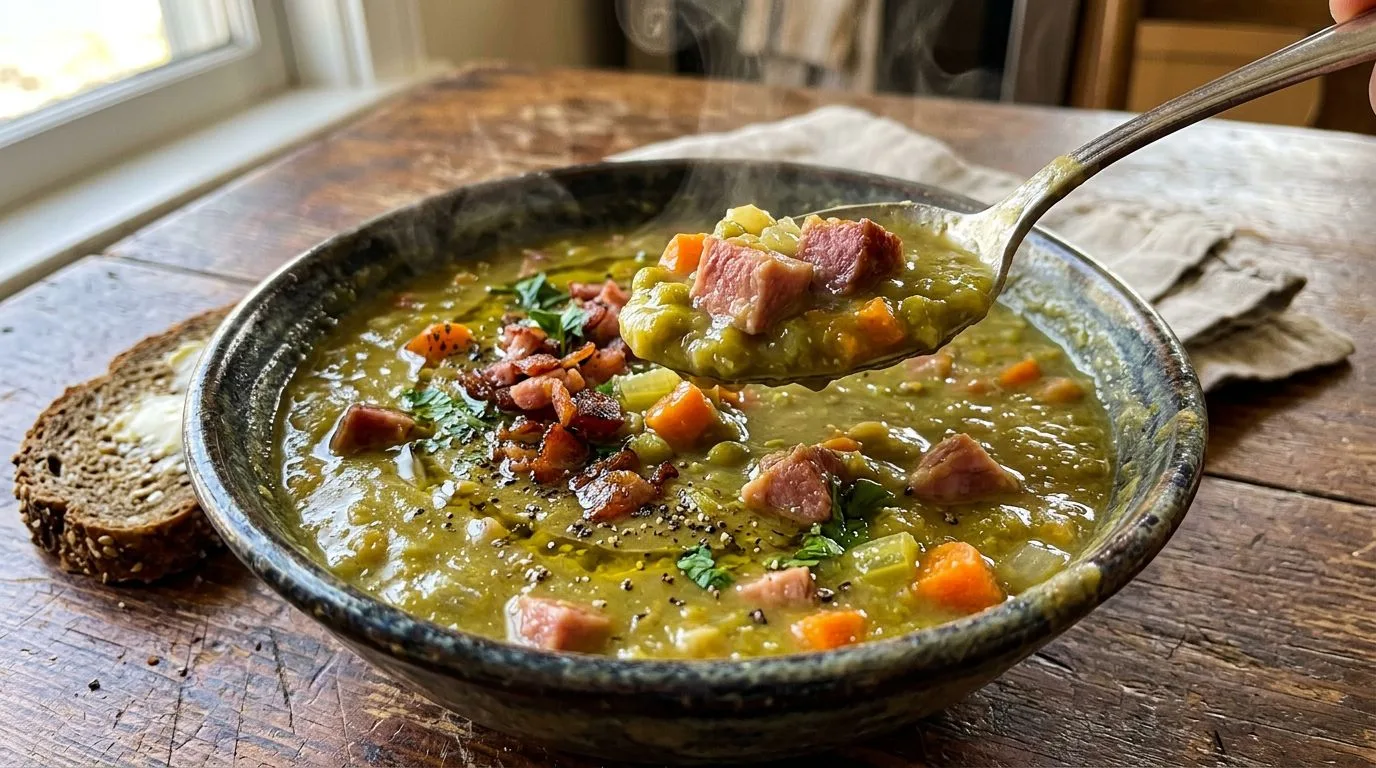
There’s something deeply satisfying about a pot of homemade split pea soup with ham simmering on the stove, filling your kitchen with its comforting aroma. This classic American soup transforms humble ingredients into a thick, creamy, and incredibly flavorful meal that’s perfect for cold winter evenings. I love how the split peas break down naturally during cooking, creating a velvety texture without needing any cream or flour.
This recipe is ideal for using up leftover holiday ham, turning those remnants into something even more delicious than the original meal. The smoky ham adds incredible depth to the broth while the vegetables provide sweetness and texture. I find that this soup actually tastes even better the next day, making it perfect for meal prep or feeding a crowd without spending hours in the kitchen.
Why You’ll Love This Split Pea Soup with Ham
This old-fashioned split pea soup checks all the boxes for comfort food done right. It’s incredibly budget-friendly, using inexpensive dried split peas as the base and transforming leftover ham into a hearty meal. I recommend making this soup when you have a ham bone or leftover holiday ham, but diced smoked ham from the deli works beautifully too.
The soup is naturally thick and creamy without any dairy, making it a healthier option that doesn’t sacrifice richness or satisfaction. The combination of aromatic vegetables, herbs, and smoky ham creates layers of flavor that develop beautifully during the long, gentle simmer. I love that this is a one-pot meal that requires minimal hands-on time—just occasional stirring while the soup does its magic.
Another reason I appreciate this recipe is its versatility. You can easily adjust the thickness to your preference, add extra vegetables, or modify the seasonings to suit your taste. It’s also naturally gluten-free and packed with protein and fiber, making it as nutritious as it is delicious.
Ingredients and Substitutions
The beauty of split pea soup lies in its simplicity. Here’s what you’ll need and how you can adapt the ingredients:
Dried green split peas are the foundation of this soup. I always rinse them thoroughly and check for any small stones or debris. Yellow split peas work equally well if that’s what you have on hand, though they’ll give the soup a slightly different color.
Smoked ham provides the signature flavor. Leftover holiday ham is perfect, but you can also use a ham steak, ham hocks, or even a meaty ham bone. If using a ham bone, you’ll want to simmer it in the soup and then remove it, shredding any meat to stir back in. For a leaner option, use turkey ham or smoked turkey.
Aromatic vegetables—onion, carrots, and celery—form the classic mirepoix base. I like to dice them into similar-sized pieces for even cooking. You can substitute parsnips for some of the carrots or add diced potatoes for extra heartiness.
Chicken broth adds depth, but vegetable broth works if you prefer. I recommend low-sodium broth since the ham can be quite salty. You can also use water, though the flavor won’t be quite as rich.
Herbs and seasonings include thyme, marjoram, bay leaves, salt, and pepper. Marjoram adds a subtle sweetness, but you can substitute additional thyme or a pinch of oregano. Fresh herbs can replace dried—use about three times the amount.
How to Make Split Pea Soup with Ham
Making this traditional split pea soup is straightforward, though it does require some patience for the peas to fully break down and create that signature creamy texture.
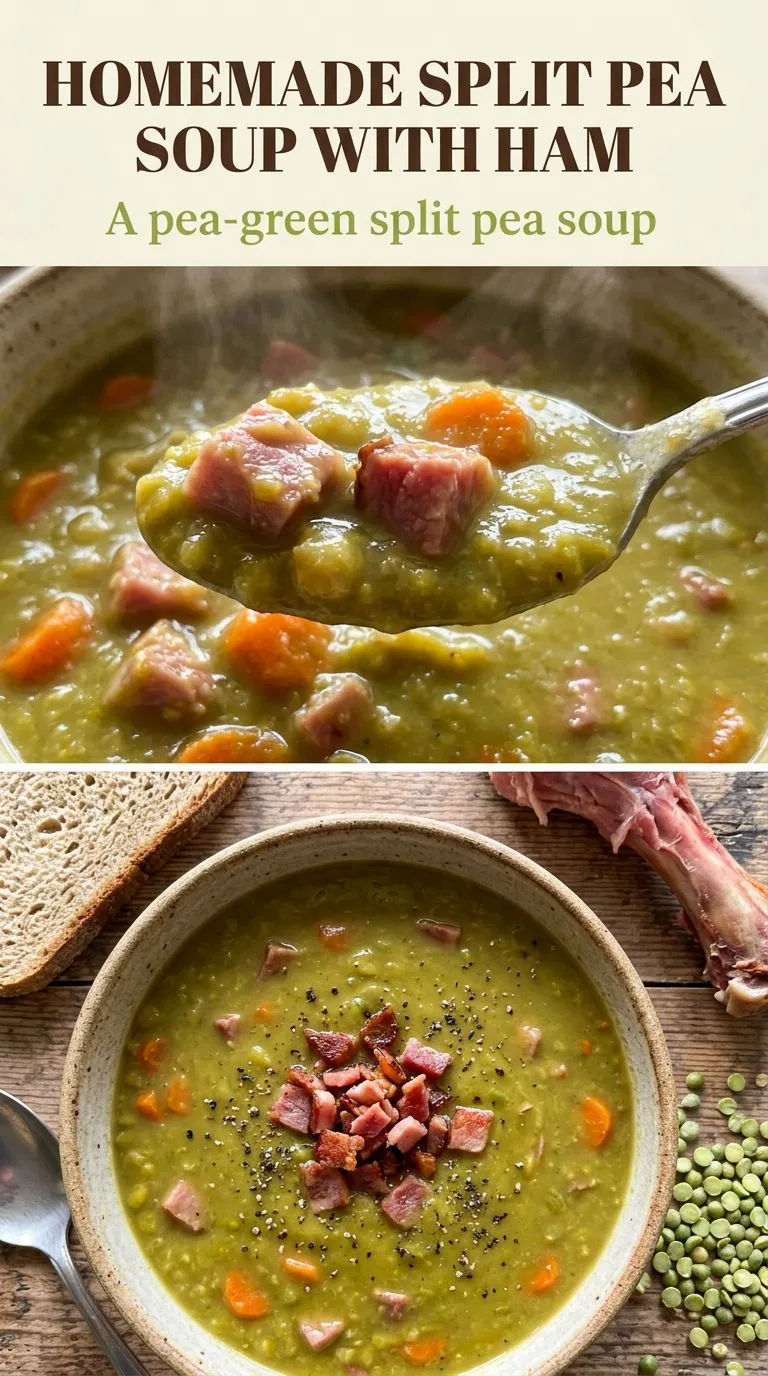
Start by thoroughly rinsing your split peas under cold running water in a fine-mesh strainer. I always take a moment to sort through them, removing any shriveled peas or small stones. Unlike dried beans, split peas don’t require soaking, which makes this recipe even more convenient.
Heat your olive oil in a large Dutch oven or heavy-bottomed pot over medium heat. Add the diced onion, carrots, and celery, and sauté for 5-6 minutes until they begin to soften and the onion becomes translucent. I like to stir them occasionally to ensure even cooking. Add the minced garlic and cook for just 30 seconds until fragrant—be careful not to let it burn.
Now add the rinsed split peas, diced ham, chicken broth, thyme, marjoram, bay leaves, salt, and black pepper. Stir everything together well. Bring the mixture to a boil over medium-high heat, then immediately reduce the heat to low. Partially cover the pot with a lid—this allows some steam to escape while preventing too much liquid from evaporating.
Let the soup simmer gently for 60-90 minutes, stirring occasionally to prevent the peas from sticking to the bottom of the pot. As the peas cook, they’ll gradually break down and thicken the soup. I find that stirring every 15-20 minutes is sufficient. If the soup becomes too thick before the peas are completely tender, add water a half cup at a time until you reach your desired consistency.
Once the split peas have broken down and the soup has reached a thick, creamy consistency, remove the bay leaves. For an even smoother texture, you can use an immersion blender to partially blend the soup, or transfer about 2 cups to a regular blender, puree it, and stir it back in. I prefer leaving some texture, but this is entirely a matter of personal preference.
Taste the soup and adjust the seasoning as needed. Keep in mind that the ham adds saltiness, so you may need less additional salt than you expect. Garnish with fresh chopped parsley just before serving for a pop of color and freshness.
Expert Tips for Best Results
I’ve made countless batches of split pea soup over the years, and these tips will help you achieve perfect results every time:
- Don’t skip the sauté step. Taking the time to soften the vegetables before adding the liquid develops deeper flavors and creates a better foundation for the soup.
- Stir regularly. Split peas tend to settle and can stick to the bottom of the pot as they break down. Stirring every 15-20 minutes prevents scorching and ensures even cooking.
- Adjust thickness to your preference. I like my split pea soup quite thick, almost like a stew, but if you prefer a thinner consistency, simply add more broth or water near the end of cooking.
- Use a ham bone for maximum flavor. If you have a leftover ham bone with some meat still attached, simmer it in the soup for incredible depth. Remove it before serving and shred any meat to add back to the pot.
- Season at the end. The soup concentrates as it cooks and the ham releases salt, so I recommend waiting until the end to add additional salt and pepper.
- Let it rest. Split pea soup continues to thicken as it sits. If you have time, let it rest for 15-20 minutes before serving—the flavors will meld beautifully.
Serving Suggestions
This hearty split pea soup is substantial enough to serve as a complete meal, but I love pairing it with a few simple sides to round out the dinner table.
Crusty bread is my go-to accompaniment—whether it’s a warm baguette, sourdough, or homemade dinner rolls, something to soak up every last drop of that flavorful broth is essential. Cornbread also makes an excellent pairing, adding a slightly sweet contrast to the savory soup.
For a lighter touch, serve the soup alongside a crisp green salad with a tangy vinaigrette. The acidity and freshness balance the richness of the soup beautifully. I also like to offer oyster crackers or saltines at the table for those who enjoy a little crunch with their soup.
If you’re looking for more substantial dinner options, this soup pairs wonderfully with other comfort foods. Try serving it before or alongside dishes like easy vegetable soup for a soup-focused meal, or with cabbage roll soup for a hearty winter dinner spread.
For garnishes, I recommend keeping it simple. Fresh parsley adds color and a hint of freshness, while a drizzle of good olive oil or a dollop of sour cream can add richness. Croutons, crispy bacon bits, or a sprinkle of smoked paprika also make excellent toppings.
Variations and Substitutions
One of the things I love most about split pea soup is how adaptable it is to different preferences and dietary needs.
Vegetarian version: Omit the ham and use vegetable broth instead of chicken broth. Add a teaspoon of smoked paprika and a tablespoon of liquid smoke to replicate that smoky flavor. You can also add diced smoked tofu for protein and texture.
Extra vegetables: Feel free to add diced potatoes, parsnips, or turnips along with the other vegetables. Leafy greens like spinach or kale can be stirred in during the last 10 minutes of cooking for added nutrition.
Spicy version: Add a pinch of red pepper flakes or a diced jalapeño with the other vegetables for a gentle kick. I sometimes finish the soup with a dash of hot sauce for those who like extra heat.
Creamy variation: While the soup is naturally creamy from the broken-down peas, you can stir in a splash of heavy cream or half-and-half at the end for extra richness.
Different proteins: Swap the ham for cooked sausage, bacon, or even leftover rotisserie chicken. Each will give the soup a different character but will be equally delicious.
Instant Pot method: You can make this soup in a pressure cooker by sautéing the vegetables using the sauté function, then adding all remaining ingredients and cooking on high pressure for 15 minutes with a natural release.
Storage, Freezing, and Reheating
Split pea soup is one of those wonderful recipes that keeps beautifully and often tastes even better as leftovers.
Refrigerator storage: Allow the soup to cool completely, then transfer it to airtight containers. It will keep in the refrigerator for up to 5 days. I find that the soup thickens considerably as it chills, which is completely normal. Simply add a little water or broth when reheating to reach your desired consistency.
Freezing: This soup freezes exceptionally well for up to 3 months. Let it cool completely, then portion it into freezer-safe containers or heavy-duty freezer bags. I like to freeze it in individual portions for easy lunches. Leave about an inch of headspace in containers to allow for expansion. Label with the date and contents.
Thawing: For best results, thaw frozen soup overnight in the refrigerator. You can also thaw it more quickly by placing the sealed container in a bowl of cold water, changing the water every 30 minutes.
Reheating: Reheat the soup gently on the stovetop over medium-low heat, stirring occasionally. Add water or broth as needed to thin it to your preferred consistency. You can also reheat individual portions in the microwave, stirring every minute until heated through. I recommend reheating only the amount you plan to eat, as repeated reheating can affect texture and quality.
Frequently Asked Questions
Do I need to soak split peas before making soup?
No, split peas don’t require soaking, which makes them much more convenient than dried beans. Simply rinse them thoroughly before using. They’ll break down naturally during the cooking process.
Why is my split pea soup too thin?
If your soup isn’t thickening, it may need more cooking time. Continue simmering until the peas break down completely. You can also mash some of the peas against the side of the pot or use an immersion blender to puree a portion of the soup.
Why is my split pea soup too thick?
Split pea soup thickens as it cools and can become quite dense. Simply add water or broth a little at a time while reheating until you reach your desired consistency. I usually add about 1/2 cup at a time.
Can I use a ham bone instead of diced ham?
Absolutely! A ham bone adds wonderful flavor. Simmer it in the soup for the full cooking time, then remove it, shred any meat from the bone, and stir the meat back into the soup. This is actually my preferred method when I have a leftover ham bone.
How can I make this soup in a slow cooker?
Sauté the vegetables on the stovetop first for best flavor, then transfer everything to your slow cooker. Cook on low for 8-10 hours or on high for 4-5 hours, until the peas are completely broken down and tender.
Is split pea soup healthy?
Yes! Split peas are high in protein and fiber, low in fat, and packed with vitamins and minerals. This soup is naturally gluten-free and can be made lower in sodium by using low-sodium broth and reducing added salt.
Can I make this soup without ham?
Yes, you can make a vegetarian version by omitting the ham and using vegetable broth. Add smoked paprika or liquid smoke to replicate that smoky flavor, or use smoked salt for seasoning.
Homemade Split Pea Soup with Ham
A thick and hearty homemade split pea soup simmered with smoky ham, tender split peas, carrots, celery, and savory herbs. This budget-friendly comfort food is perfect for chilly days and leftover holiday ham.
Prep Time: 15 minutes
Cook Time: 90 minutes
Total Time: 1 hour 45 minutes
Servings: 6 servings
Difficulty: Easy
Cuisine: American
Course: Dinner
Ingredients
- 1 lb dried green split peas, rinsed and sorted
- 2 cups cooked smoked ham, diced
- 1 medium yellow onion, diced
- 3 medium carrots, diced
- 3 celery stalks, diced
- 3 cloves garlic, minced
- 7 cups low-sodium chicken broth
- 1 tbsp olive oil
- 1 tsp dried thyme
- 1/2 tsp dried marjoram
- 2 bay leaves
- 1/4 tsp salt
- 1/2 tsp black pepper
- 2 tbsp chopped fresh parsley
Instructions
- Rinse the dried split peas thoroughly under cold water and remove any debris.
- Heat olive oil in a large Dutch oven over medium heat. Add the diced onion, carrots, and celery. Sauté for 5–6 minutes until softened. Add the garlic and cook for 30 seconds.
- Stir in the split peas, diced smoked ham, chicken broth, thyme, marjoram, bay leaves, salt, and black pepper.
- Bring the soup to a boil, reduce heat to low, and partially cover. Simmer gently for 60–90 minutes, stirring occasionally, until the split peas break down and the soup becomes thick and creamy.
- Add a little additional water if the soup becomes too thick before the peas are tender.
- Remove the bay leaves. For a smoother texture, blend a small portion of the soup and stir it back in.
- Taste and adjust the seasoning, keeping in mind the saltiness of the ham. Garnish with fresh parsley and serve.
Recipe Notes
- The soup will thicken as it cools. Add water or broth when reheating to reach desired consistency.
- For maximum flavor, use a ham bone and simmer it in the soup, then remove and shred any meat to add back.
- Stirring every 15-20 minutes prevents the peas from sticking to the bottom of the pot.
- The soup tastes even better the next day as the flavors continue to develop.
- Adjust salt carefully at the end of cooking, as the ham adds significant saltiness.
Estimated Nutrition (Per Serving)
Calories: 310
Carbohydrates: 42g
Protein: 24g
Fat: 5g
Saturated Fat: 1g
Fiber: 16g
Sugar: 7g
Sodium: 780mg
Nutrition information is estimated and will vary based on specific ingredients used.
