
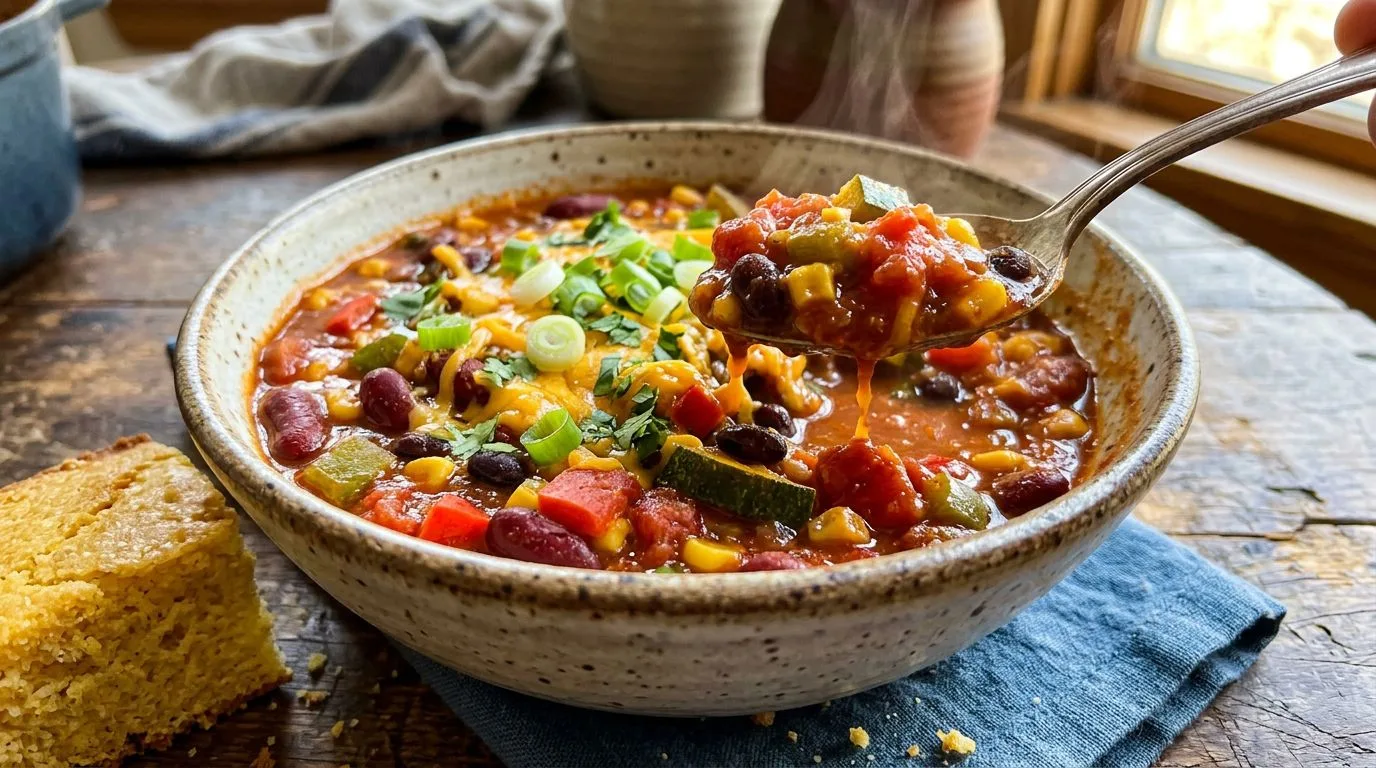
There’s something incredibly satisfying about a big bowl of vegetarian chili that’s packed with colorful vegetables, hearty beans, and bold spices. I love how this meatless version delivers all the comfort and flavor you crave from traditional chili without any meat at all. The combination of three different beans creates wonderful texture and substance, while the mix of bell peppers, carrots, and aromatic spices builds layers of savory, warming flavor that make this dish truly irresistible.
This vegetarian chili has become one of my go-to weeknight dinners because it’s genuinely easy to prepare, uses mostly pantry staples, and feeds a crowd without breaking the bank. I find that simmering the vegetables and beans together allows all those flavors to meld beautifully, creating a thick, rich chili that’s every bit as satisfying as any meat-based version. Whether you’re vegetarian, trying to eat more plant-based meals, or simply looking for a delicious dinner that happens to be meatless, this recipe delivers comfort in every spoonful.
What I appreciate most about this recipe is how versatile and forgiving it is. You can adjust the spice level to your preference, swap vegetables based on what you have on hand, and customize the toppings to suit your family’s tastes. It’s the kind of recipe that gets better as it sits, making it perfect for meal prep or feeding a hungry crowd on game day.
Why You’ll Love This Vegetarian Chili
This hearty vegetarian chili checks all the boxes for a winning weeknight dinner. I love how it comes together in one pot, which means minimal cleanup after a satisfying meal. The combination of kidney beans, black beans, and pinto beans creates a protein-packed base that’s filling and nutritious, while the crushed tomatoes and vegetable broth form a rich, flavorful sauce that coats everything beautifully.
The spice blend in this recipe is what really makes it shine. I find that the combination of chili powder, cumin, smoked paprika, and oregano creates that classic chili flavor profile with just the right amount of warmth and depth. The smoked paprika adds a subtle smokiness that mimics the depth you might get from meat, making this vegetarian version taste complex and satisfying.
Another reason I recommend this recipe is its incredible versatility. It’s naturally vegetarian and can easily be made vegan by ensuring your vegetable broth is plant-based. It’s also budget-friendly, using affordable ingredients that you probably already have in your pantry. Plus, it makes wonderful leftovers that taste even better the next day as the flavors continue to develop.
Ingredients and Substitutions
The beauty of this vegetarian chili lies in its straightforward ingredient list. The three types of beans—kidney, black, and pinto—each bring their own texture and flavor to the pot. I like using this combination because it creates visual interest and varied texture, but you can absolutely use whatever beans you prefer or have on hand. Cannellini beans, navy beans, or even chickpeas would work well as substitutions.
The crushed tomatoes form the base of the sauce and provide that classic chili consistency. If you only have diced tomatoes, you can use those instead, though the texture will be slightly chunkier. Fire-roasted tomatoes add an extra layer of smoky flavor that I particularly enjoy. The vegetable broth adds depth and helps create the right consistency; if you don’t have vegetable broth, water will work in a pinch, though the flavor won’t be quite as rich.
For the vegetables, I recommend sticking with the onion, bell peppers, and carrots as they form the flavor foundation of the chili. The onion provides aromatic sweetness, the bell peppers add color and mild flavor, and the carrots contribute natural sweetness and texture. If you want to add more vegetables, diced zucchini, corn kernels, or diced celery would all be excellent additions.
The spice blend is crucial to achieving that authentic chili flavor. The chili powder is the star, providing the characteristic warmth and color. I find that cumin adds earthy depth, smoked paprika contributes smokiness, and oregano brings an herbal note that ties everything together. If you prefer more heat, you can add cayenne pepper, diced jalapeños, or crushed red pepper flakes to taste.
How to Make Vegetarian Chili
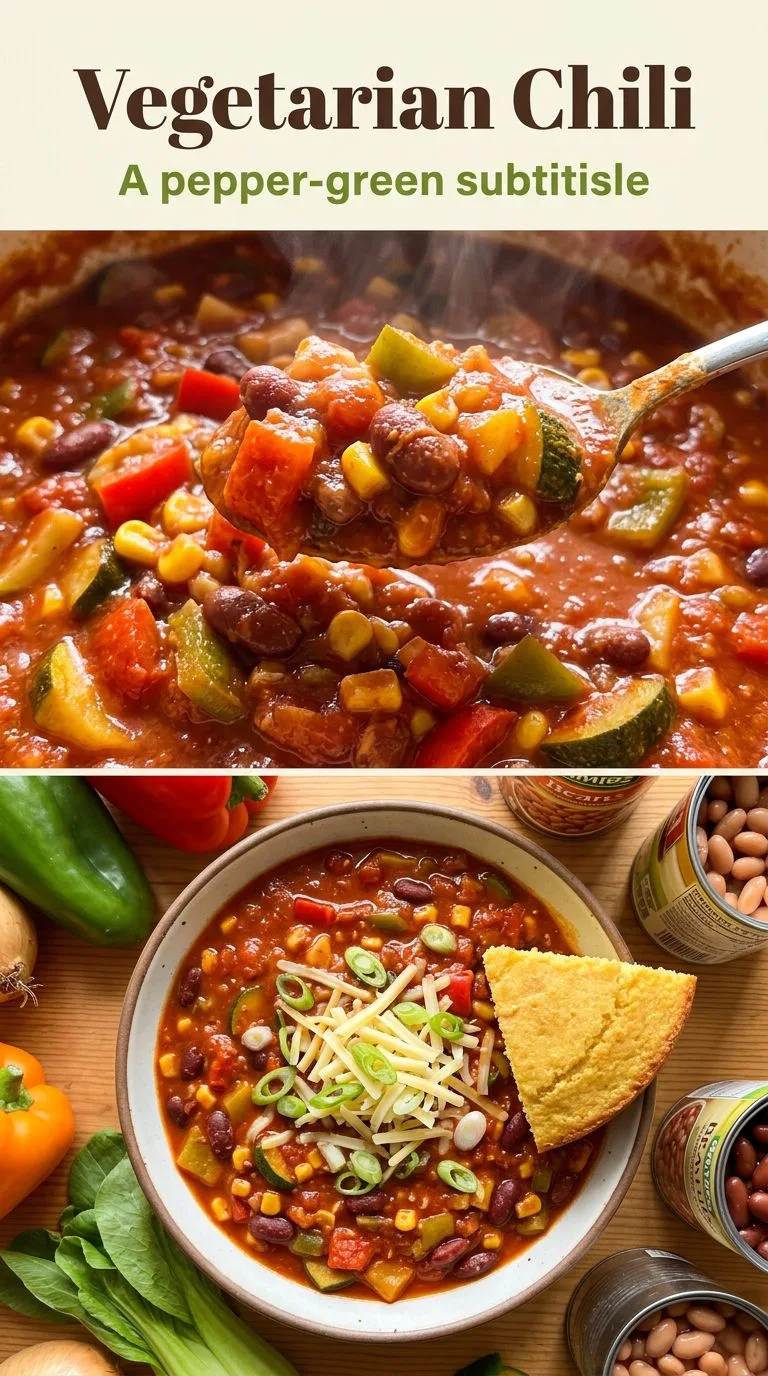
Making this vegetarian chili is wonderfully straightforward. I always start by heating the olive oil in a large Dutch oven or heavy-bottomed pot over medium heat. The Dutch oven is my preferred vessel because it distributes heat evenly and has plenty of room for all the ingredients. Once the oil is shimmering, I add the diced onion, bell peppers, and carrots, letting them cook for 6 to 8 minutes until they begin to soften and the onion becomes translucent.
The next step is crucial for building flavor: adding the garlic and letting it cook for just 30 seconds until fragrant. I recommend mincing the garlic finely so it distributes evenly throughout the chili. Be careful not to let it burn, as burnt garlic can turn bitter. Immediately after the garlic becomes aromatic, I stir in all the spices—chili powder, cumin, smoked paprika, and oregano. Cooking the spices for about a minute in the oil helps bloom their flavors and removes any raw taste.
Once the spices are fragrant, it’s time to add the beans, crushed tomatoes, and vegetable broth. I like to drain and rinse the canned beans before adding them, which removes excess sodium and the slightly thick liquid from the cans. After everything is in the pot, I season with salt and black pepper, then bring the mixture to a gentle boil. This initial boil helps everything come together before the long, slow simmer that follows.
The simmering stage is where the magic happens. I reduce the heat to maintain a gentle simmer and let the chili cook uncovered for 35 to 45 minutes, stirring occasionally to prevent sticking. During this time, the vegetables become tender, the flavors meld together beautifully, and the liquid reduces to create a thick, hearty consistency. I find that leaving the pot uncovered is important because it allows excess moisture to evaporate, concentrating the flavors and achieving that perfect chili texture.
Expert Tips for Best Results
One of my favorite tips for making exceptional vegetarian chili is to not rush the vegetable sautéing stage. Taking the time to properly soften the onions, peppers, and carrots builds a flavorful foundation that makes all the difference in the final dish. I recommend cutting the vegetables into similar-sized pieces so they cook evenly.
When it comes to the beans, I find that using a combination of three different types creates the best texture and visual appeal. If you have time, using dried beans that you’ve cooked yourself will result in even better texture and flavor, though canned beans are perfectly acceptable and much more convenient. If using dried beans, you’ll need about 1½ cups of dried beans total, soaked and cooked according to package directions.
Don’t be afraid to adjust the consistency to your preference. If your chili becomes too thick during simmering, simply add a splash more vegetable broth or water. Conversely, if it seems too thin, let it simmer a bit longer uncovered to reduce and thicken. I like my vegetarian chili to be thick enough that a spoon stands up in it, but not so thick that it’s more like a stew.
Tasting and adjusting the seasoning at the end is crucial. After the long simmer, taste the chili and add more salt, pepper, or chili powder if needed. I often find that a squeeze of fresh lime juice or a splash of apple cider vinegar at the end brightens all the flavors and adds a pleasant tang that balances the richness.
Serving Suggestions
I love serving this vegetarian chili with a variety of toppings that allow everyone to customize their bowl. My favorite toppings include shredded cheddar cheese (or vegan cheese), sour cream (or dairy-free alternative), diced avocado, sliced green onions, fresh cilantro, and a squeeze of lime juice. The cool, creamy toppings provide a wonderful contrast to the warm, spicy chili.
For a complete meal, I recommend serving the chili with golden buttermilk cornbread with honey butter, which is perfect for soaking up every last bit of the flavorful sauce. Tortilla chips, crackers, or warm flour tortillas also make excellent accompaniments. If you’re looking for another comforting vegetarian option, this chili pairs beautifully with creamy vegetarian lasagna soup for a hearty soup-and-chili combo meal.
This chili is also fantastic served over baked potatoes, rice, or even pasta for a heartier presentation. I find that it makes an excellent topping for nachos, a filling for burritos, or a base for chili cheese fries. The possibilities are truly endless, which is one of the reasons I make this recipe so often.
Variations and Substitutions
One of the things I appreciate most about this vegetarian chili is how easily it adapts to different preferences and dietary needs. To make it vegan, simply skip any dairy toppings or use plant-based alternatives. The chili itself is already vegan-friendly as long as you use vegetable broth.
For a spicier version, I recommend adding diced jalapeños with the other vegetables, increasing the chili powder, or stirring in some cayenne pepper or hot sauce. If you prefer a milder chili, reduce the chili powder to 1 tablespoon and omit the black pepper. You can always add heat at the table with hot sauce for those who want it.
To add more vegetables, consider including diced zucchini, corn kernels, diced sweet potato, or chopped kale. I sometimes add a cup of frozen corn in the last 10 minutes of cooking for extra sweetness and texture. Mushrooms, particularly diced portobello or cremini, add a meaty texture that some people really enjoy in vegetarian chili.
For a different flavor profile, try adding a tablespoon of cocoa powder or a square of dark chocolate during the simmering stage. This adds depth and richness without making the chili taste like chocolate. A splash of beer or coffee can also add interesting complexity to the flavor.
Storage, Freezing, and Reheating
This vegetarian chili stores beautifully, making it perfect for meal prep. I recommend letting the chili cool completely before transferring it to airtight containers. It will keep in the refrigerator for up to 5 days, and I actually think it tastes even better on the second or third day as the flavors continue to meld together.
For freezing, I portion the cooled chili into freezer-safe containers or heavy-duty freezer bags, leaving a bit of space at the top for expansion. It freezes well for up to 3 months. I like to freeze it in individual portions for easy lunches or in larger batches for quick family dinners. Be sure to label the containers with the date so you can keep track of how long it’s been frozen.
To reheat refrigerated chili, simply warm it in a pot over medium heat, stirring occasionally and adding a splash of vegetable broth or water if it’s become too thick. For frozen chili, I recommend thawing it overnight in the refrigerator before reheating, though you can also reheat it from frozen over low heat, stirring frequently. The microwave also works well for individual portions—just heat in 1-minute intervals, stirring between each, until heated through.
Frequently Asked Questions
Can I use dried beans instead of canned?
Absolutely! Using dried beans will give you excellent results and is often more economical. You’ll need about 1½ cups of dried beans total (½ cup each of kidney, black, and pinto beans). Soak them overnight, then cook according to package directions until tender before adding them to the chili. Keep in mind this adds significant time to the recipe, so plan accordingly.
How can I make this chili thicker?
If your chili is too thin, simply continue simmering it uncovered until it reaches your desired consistency. You can also mash some of the beans against the side of the pot with a spoon, which releases their starches and naturally thickens the chili. Another option is to stir in a tablespoon of tomato paste or a slurry made from cornstarch and water.
Is this chili spicy?
This recipe has a moderate, warming spice level that most people find comfortable. It’s flavorful without being overly hot. If you’re sensitive to spice, you can reduce the chili powder to 1 tablespoon. If you love heat, feel free to add cayenne pepper, jalapeños, or your favorite hot sauce.
Can I make this in a slow cooker?
Yes! After sautéing the vegetables and spices on the stovetop as directed, transfer everything to a slow cooker. Cook on low for 6-8 hours or on high for 3-4 hours. The slow cooker method results in incredibly tender vegetables and deeply developed flavors.
What can I serve with vegetarian chili?
I love serving this chili with cornbread, tortilla chips, rice, or over baked potatoes. It’s also delicious with a simple green salad, quesadillas, or grilled cheese sandwiches. The toppings are just as important—don’t skip the cheese, sour cream, avocado, and fresh cilantro!
Can I add meat to this recipe?
While this recipe is designed to be vegetarian, you could certainly add ground beef, turkey, or chicken if you prefer. Brown the meat after sautéing the vegetables, then proceed with the recipe as written. You may need to adjust the seasoning slightly.
Vegetarian Chili Recipe
This hearty vegetarian chili is packed with three types of beans, colorful vegetables, crushed tomatoes, and a perfect blend of warming spices. Thick, flavorful, and completely satisfying, it’s an easy one-pot dinner that the whole family will love.
Prep Time: 15 minutes
Cook Time: 50 minutes
Total Time: 1 hour 5 minutes
Servings: 6-8 servings
Difficulty: Easy
Cuisine: American
Course: Dinner
Ingredients
- 1 tablespoon olive oil
- 1 medium onion, diced
- 1 red bell pepper, diced
- 1 green bell pepper, diced
- 2 medium carrots, diced
- 3 garlic cloves, minced
- 2 tablespoons chili powder
- 2 teaspoons ground cumin
- 1 teaspoon smoked paprika
- 1 teaspoon dried oregano
- 1 can (15 oz) kidney beans, drained
- 1 can (15 oz) black beans, drained
- 1 can (15 oz) pinto beans, drained
- 1 can (28 oz) crushed tomatoes
- 2 cups vegetable broth
- 1 teaspoon salt
- ½ teaspoon black pepper
Instructions
- Heat 1 tablespoon olive oil in a large Dutch oven over medium heat. Add the diced onion, red bell pepper, green bell pepper, and carrots. Cook for 6-8 minutes, stirring occasionally, until the vegetables begin to soften.
- Add the 3 minced garlic cloves and sauté for 30 seconds until fragrant.
- Stir in 2 tablespoons chili powder, 2 teaspoons cumin, 1 teaspoon smoked paprika, and 1 teaspoon oregano. Cook for 1 minute, stirring constantly, to bloom the spices.
- Add the drained kidney beans, black beans, and pinto beans to the pot, followed by the 28 oz can of crushed tomatoes and 2 cups vegetable broth. Stir to combine.
- Stir in 1 teaspoon salt and ½ teaspoon black pepper. Bring the mixture to a gentle boil over medium-high heat.
- Reduce the heat to medium-low and simmer uncovered for 35-45 minutes, stirring occasionally, until the vegetables are tender and the chili has thickened to your desired consistency.
- Taste and adjust seasoning if needed. Serve hot with your favorite toppings.
Recipe Notes
- For a spicier chili, add diced jalapeños with the other vegetables or increase the chili powder to 3 tablespoons.
- The chili will thicken as it sits. Add a splash of vegetable broth or water when reheating if needed.
- Rinsing the canned beans removes excess sodium and the thick canning liquid.
- This recipe is easily doubled for a crowd or meal prep.
- Top with shredded cheese, sour cream, diced avocado, sliced green onions, cilantro, and a squeeze of lime juice.
Nutrition Information (Per Serving, Estimated)
Serving Size: 1 cup (based on 8 servings)
Calories: 245
Carbohydrates: 42g
Protein: 12g
Fat: 3g
Saturated Fat: 0.5g
Fiber: 13g
Sugar: 8g
Sodium: 680mg
Nutrition information is estimated and will vary based on exact ingredients and portion sizes.
